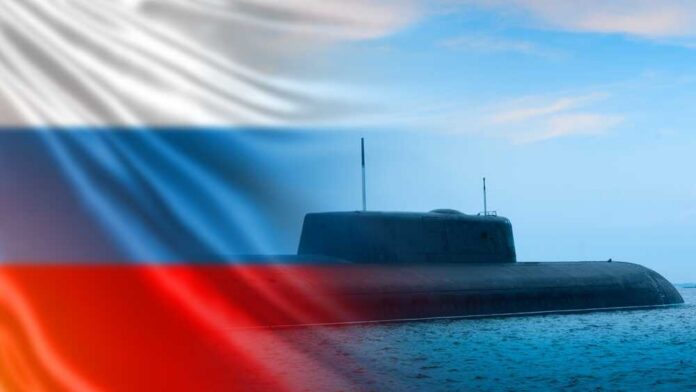
Russia’s billion-dollar titanium submarine gamble promised to dominate the depths and outmaneuver American naval power, but the reality exposes a Cold War-era myth that masks a pattern of costly failures and exaggerated threats.
Story Overview
- Russia’s titanium submarines, including the Alfa-class and Losharik, claimed superiority over U.S. steel-hulled vessels with extreme dive depths up to 19,700 feet.
- The sensationalized claim that America countered this with “a single torpedo” is unverified and appears to be Cold War propaganda rather than documented fact.
- Soviet titanium subs retired by 2000 due to reactor failures and prohibitive costs, while the Losharik suffered a deadly 2019 fire killing 14 crew members.
- U.S. Navy deliberately rejected titanium in favor of cost-effective, scalable steel submarines that remain operationally superior despite shallower dive limits.
The Titanium Submarine Myth Unravels
Russia’s titanium submarine program, launched during the Cold War with the Alfa-class vessels built between 1971-1981, promised revolutionary advantages: diving depths exceeding 3,700 feet, speeds hitting 41 knots submerged, and reduced magnetic signatures. The Soviet Union built seven Alfa-class subs and later developed the Losharik, a specialized deep-dive vessel with seven interconnected titanium spheres reportedly capable of reaching 19,700 feet. However, the narrative that America simply countered this billion-dollar threat with a single torpedo lacks any verifiable evidence. No U.S. weapon system was specifically designed or deployed to target titanium-hulled submarines, exposing the story as Cold War mythology rather than strategic reality.
Costly Failures and Deadly Consequences
The Alfa-class submarines, despite their technical specifications, proved operationally unreliable and were retired between 1996-2000 without ever engaging in combat. Reactor malfunctions, exorbitant maintenance costs, and complex welding requirements for titanium hulls—where mistakes risked catastrophic implosion—rendered these vessels impractical. The more recent Losharik submarine suffered a devastating fire on July 1, 2019, killing 14 crew members and halting operations for over five years. Repairs completed in 2024 preserved the titanium hull and replaced the nuclear reactor, with sea trials planned for 2025, but the incident underscores the safety risks and financial burden of maintaining such specialized assets. Russia’s vast titanium reserves enabled production, but Western analysts dismiss these subs as limited-production curiosities rather than game-changers.
America’s Practical Naval Superiority
The U.S. Navy consciously chose steel over titanium for submarine construction, prioritizing scalability, cost-effectiveness, and proven reliability. American Virginia-class and Columbia-class submarines operate at shallower depths than Russian titanium vessels but deploy superior sonar, weaponry, and operational numbers that ensure dominance. Experts confirm titanium offers a 30 percent displacement reduction and enhanced depth capability—up to 1.5 times deeper than steel equivalents—but fabrication challenges and expense negate strategic advantages. The claim that U.S. torpedoes, such as the Mk 48, rendered titanium subs obsolete is unsupported; these weapons remain effective against any hull material. Russia’s focus on asymmetric warfare through deep-sea operations, including potential cable sabotage and Arctic intelligence gathering, reflects desperation rather than innovation, as NATO’s numerical and technological superiority remains unchallenged.
Lessons for Today’s Defense Priorities
Russia’s titanium submarine saga offers critical lessons as America confronts military overreach in 2026. The Soviet obsession with expensive, niche technology mirrors today’s temptation to chase flashy defense projects while neglecting practical needs. The Losharik’s recent repairs and planned return to service demonstrate Russia’s persistence in underwater hybrid warfare, including threats to undersea communications cables vital to NATO economies. Yet the program’s track record—no combat victories, deadly accidents, and operational limits—reveals the folly of prioritizing spectacle over substance. For American taxpayers weary of endless military commitments and bloated budgets, this story reinforces the value of proven, cost-effective systems over billion-dollar gambles. The narrative also highlights how propaganda inflates threats to justify spending, a tactic familiar to those frustrated with government overreach and fiscal mismanagement domestically and abroad.
Russia Spent Billions on Titanium Submarines That Could Dive Deeper Than Anything in the U.S. Navy: America’s Response Was a Single Torpedohttps://t.co/msZsm6tAjP
— 19FortyFive (@19_forty_five) March 26, 2026
Sources:
Russia Has a Titanium Submarine That Can ‘Deep Dive’ 19,700 Feet
Russia’s Titanium Submarines: Faster and Could Out-Dive the U.S. Navy
We Have Things to Say About Russia’s Titanium Submarines (US Navy Has None)
Why Russia’s Titanium Submarines Are Just a Paper Tiger
Titanium Submarines: A Game Changer Not Made in the USA, Subs Russia Built