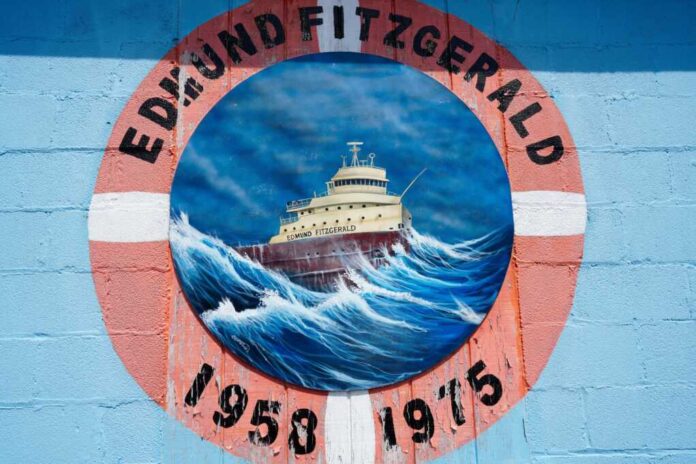
A high-profile story claiming SS Edmund Fitzgerald relics sold for $150,000 exposes a familiar media pattern: sensational headlines that twist history, disrespect families, and divert attention from critical national policy debates. This article scrutinizes the unverified auction claims against the established historical record, emphasizing the Fitzgerald’s protected status as a gravesite and the deeper ethical concerns surrounding media sensationalism.
Story Highlights
- The SS Edmund Fitzgerald auction tale lacks verification in established historical and maritime records.
- The Fitzgerald remains a protected gravesite where 29 American mariners lost their lives in 1975.
- Serious researchers emphasize preservation and respect, not profiteering from tragedy.
- Sensational shipwreck stories echo a broader media pattern that misdirects attention from current policy debates.
Unverified Auction Claims Clash With Established Historical Record
Reports claiming that relics from the SS Edmund Fitzgerald fetched $150,000 at auction run headlong into a basic problem: the event cannot be corroborated by the major English-language records that have documented this ship for decades. Those records focus on the deadly 1975 storm, the loss of 29 crew members, and subsequent investigations, not on modern auctions of recovered artifacts. When basic facts cannot be matched, cautious readers should immediately question the narrative being sold.
Historical timelines from maritime organizations, museums, and researchers instead trace the Fitzgerald’s final voyage from its departure in Superior, Wisconsin, on November 9, 1975, to its disappearance on November 10 during a violent Lake Superior storm. They document its role as a 728-foot iron ore freighter, the cargo of taconite pellets, and the devastating reality that no bodies were recovered. These sources emphasize the tragedy, not commercial resale of debris, undermining the credibility of the auction storyline.
Relics from SS Edmund Fitzgerald’s catastrophic shipwreck sell at auction for $150K https://t.co/WExa8lsgkQ pic.twitter.com/kunewH3qcb
— New York Post (@nypost) December 20, 2025
Protected Gravesite, Not a Marketplace for Souvenirs
Serious Great Lakes institutions treat the Edmund Fitzgerald as a war‑like gravesite, not a marketplace. The wreck lies in deep, cold Canadian waters, split in two and surrounded by the remains of the crew who went down with the ship. Over the years, divers and historians have pushed for legal and moral protection of the site, recognizing it as a place of solemn remembrance. That posture stands in stark contrast to headlines portraying the ship as a source of collectible trinkets for the highest bidder.
A key example is the recovery of the ship’s bell in the mid‑1990s, an operation carried out not as a commercial stunt but as a memorial effort to honor the dead. The bell was removed, replaced with a replica, and preserved for display alongside the names of the 29 crew members. That decision reflected a basic principle: artifacts from the Fitzgerald belong to history and the families, not to the open market. Stories about lucrative relic auctions ignore this long‑standing ethic of respect and stewardship.
Media Sensationalism and the Conservative Concern Over Misdirection
When a dramatic narrative about a $150,000 relic sale circulates without independent confirmation from the main historical record, it fits a familiar pattern: emotional storytelling outruns verified fact. Conservative readers have seen this same pattern in other coverage—where attention is diverted to spectacle while core issues such as border security, inflation, government overreach, or attacks on constitutional rights receive shallow or slanted treatment. Sensational shipwreck stories are not the most damaging example, but they reveal the same habits.
For a conservative audience that values truth, accountability, and respect for ordinary working families, this misdirection matters. The 29 men lost on the Edmund Fitzgerald were blue‑collar Americans moving raw materials that fed the nation’s industrial strength. Turning their gravesite into clickbait diminishes their sacrifice and erodes the cultural seriousness that once defined national media. When outlets prioritize shock value over careful sourcing, they encourage the same disregard for facts that appears in biased reporting on faith, guns, and traditional values.
Honoring the Crew and Learning the Right Lessons
Decades of investigation into the Edmund Fitzgerald have focused on what went wrong and how to prevent similar tragedies. Coast Guard inquiries, independent marine experts, and shipwreck historians have debated structural weakness, hatch failures, and the ferocity of the storm. Those debates led to stronger safety rules, better forecasting, and more rigorous ship design. That is the kind of rigorous, fact‑driven work that actually honors the lost crew by reducing the odds that another generation of sailors pays the same price.
For readers who care about American strength and common sense, the real lesson is simple. First, treat the Edmund Fitzgerald as a solemn chapter in maritime history, not as a casual collectible story. Second, demand from every outlet the same discipline we expect from investigators: verify claims against established records before accepting them as truth. If a high‑dollar auction cannot be traced through the institutions that have guarded this history for half a century, it belongs under skepticism, not celebration.
Watch the report: Edmund Fitzgerald life ring sells for $150,000 at auction
Sources:
- Life ring, lifeboat piece from Edmund Fitzgerald shipwreck sell at auction for $150,000
- Life ring and piece from Edmund Fitzgerald shipwreck sell at auction for $150,000 – CBS Detroit