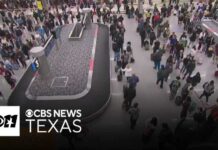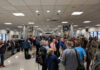

Travelers face chaos as government shutdown-driven staff shortages bring America’s busiest airports to a standstill, exposing the cost of congressional gridlock and broken promises to essential workers.
Story Highlights
- Up to 80% absenteeism among air traffic controllers and TSA staff at major airports triggers nationwide delays and cancellations.
- Essential federal workers are forced to work without pay, resulting in increased “sickouts” and operational breakdowns.
- Airlines step in with food and support, but cannot fix underlying safety and staffing risks from federal inaction.
- DOT Secretary warns of further deterioration, calls for reduced flight volumes as shutdown enters fifth week.
Government Shutdown Paralyzes U.S. Airports
Since October 1, 2025, a protracted federal government shutdown has crippled air travel nationwide, with staff shortages among air traffic controllers and TSA workers causing unprecedented delays and cancellations. Major airports like Newark, LaGuardia, Orlando, and Dallas-Fort Worth are operating at diminished capacity, with absenteeism reaching as high as eighty percent in some control centers. The lack of congressional action has left essential personnel working without pay, fueling a wave of “sickouts” and operational disruptions that jeopardize both safety and efficiency for millions of travelers.
Staff shortages from government shutdown cause delays at US airports. And it’s going to get worse,especially with thanks giving flights to see family & friends. Trump said US first, he forgot to mention inflation, no government workers & flight chaos !!! https://t.co/pyOt4we8I8
— Phil (@ppjkis) November 2, 2025
Unlike previous shutdowns, the current crisis is distinguished by its scale and severity. Federal Aviation Administration and Transportation Security Administration staff are stretched thin, forced to balance public safety with personal financial hardship. Airlines, though not responsible for staffing the nation’s airspace, have stepped up to provide meals and support to these federal workers, demonstrating a commitment to workforce stability and passenger trust. Despite these efforts, the core issue remains unresolved, as control over flight operations and security screening fundamentally rests with federal agencies and congressional funding.
Absenteeism and Operational Breakdown
Late October saw the situation escalate as missed paychecks led to a dramatic increase in staff absences. Nearly half of the nation’s busiest air traffic control centers are now severely understaffed, prompting some airports to limit arrivals to as few as twenty planes per hour. Over 2,700 flight delays and more than 200 cancellations were reported in a single day, with ripple effects disrupting business travel, supply chains, and family plans across the country. DOT Secretary Sean Duffy has publicly warned that further deterioration is imminent, recommending that airlines voluntarily reduce flight volumes to maintain safety standards, a move that underscores the gravity of the crisis.
As delays and cancellations mount, the impact on passengers grows more acute. Travelers face missed connections, extended layovers, and uncertainty about when normal operations will resume. The financial strain placed on unpaid federal workers has not only affected their morale but also raised serious questions about the sustainability of relying on essential personnel during prolonged shutdowns. The aviation sector, a cornerstone of American commerce and mobility, finds itself exposed to vulnerabilities caused by political gridlock, highlighting the urgent need for reforms that protect critical transportation services.
Economic and Political Fallout
The economic consequences of the shutdown are far-reaching. Airlines and airports report substantial financial losses, while businesses dependent on air travel and cargo struggle with delayed shipments and disrupted logistics. The traveling public, particularly those relying on timely flights for work or family commitments, bears the brunt of the chaos. Political pressure is mounting on Congress to break the deadlock and restore reliable funding for essential services. Industry experts warn that even minor reductions in air traffic control staffing can produce exponential increases in delays and safety risks, emphasizing the importance of stable, effective governance.
The current crisis serves as a stark reminder of the dangers posed by government overreach and fiscal mismanagement. Conservative Americans who value limited government, constitutional protections, and family stability see the shutdown’s fallout as evidence of the urgent need for accountability and common-sense solutions. As the shutdown continues into its fifth week, calls grow louder for reforms that ensure essential transportation infrastructure is shielded from political gamesmanship, protecting both public safety and economic prosperity.
Watch the report: American airports face travel chaos as government shutdown continues
Sources:
Flight delays continue as staffing shortages snarl air travel amid government shutdown enters its fifth week
Airlines step up support for federal workers as nearly 13,000 air traffic controllers go unpaid
Cancellations and delays at U.S. airports as government shutdown enters day 30