Iran doesn’t have to “close” the Strait of Hormuz to choke Americans with higher prices and a new round of open-ended war consequences.
Quick Take
- Six cruise ships remain stuck in Gulf ports after late-February operations halted amid mines and escalating U.S.-Iran conflict.
- Iran is using mines, fast-boat harassment, drones, and conditional “coordination” demands to gain de facto control of transit without a declared full shutdown.
- Maritime risk is spiking: the IMO has warned that roughly 2,000 vessels and about 20,000 seafarers are impacted across the region.
- Oil and insurance shocks are already part of the fallout, reinforcing conservative skepticism toward another drawn-out overseas fight.
Cruise ships become collateral in a chokepoint war
Six cruise ships operated by MSC Cruises, Celestyal Cruises, TUI Cruises, and Aroya Cruises are stranded in ports including Dubai, Doha, and Abu Dhabi after regional cruise operations halted in late February 2026. The immediate cause is straightforward: passenger ships cannot accept even small odds of striking naval mines or being caught in missile and drone spillover while transiting the Strait of Hormuz. With no alternative sea exit from the Gulf, schedules and repositioning plans have stalled.
The disruption is larger than vacation inconvenience. Cruise itineraries are built around tight seasonal repositioning—moving ships toward Europe, Africa, or the Red Sea as demand shifts. When the Hormuz door becomes unpredictable, cruise lines face cancellations and cascading port changes that ripple into tourism revenue and local services. It also indicates thousands of passengers are affected, and the wider maritime picture is worse: the IMO has warned of major disruption across commercial traffic in the region.
How Iran pressures shipping without declaring a total closure
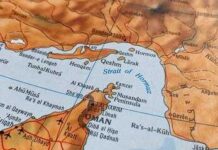
As of March 25, 2026, the strait is unstable rather than completely sealed, with traffic reduced and rerouted through conditional lanes. Iran’s strategy relies on asymmetric tools—mines, fast boats, and missile or drone threats—that raise costs and uncertainty without the political risk of announcing a formal blockade. Analysts argue that mines are especially effective because they are hard to preempt unless caught in the act, forcing navies into reactive clearance operations.
Iran’s Defence Council publicly claimed that “non-hostile” vessels can only pass by coordinating with Iran, a posture that effectively turns normal international transit into a permission-based system. Separate maritime reporting cited AIS patterns suggesting some outbound movements may have occurred after ships transited close to Iranian islands, implying verification or monitoring in Iranian-controlled waters, though definitive confirmation remains limited. The end result is leverage: fewer ships sail, insurers tighten terms, and every voyage becomes a negotiation.
U.S. and allied responses face a hard mine-and-missile tradeoff
U.S. forces have reportedly destroyed multiple Iranian mine boats, and partners have condemned attacks on vessels and infrastructure while discussing joint safe-passage efforts. Even so, it reflects a persistent operational problem: clearing mines is slow, dangerous work, and naval planners also have to prioritize active missile and drone threats tied to the broader conflict. For cruise lines, that uncertainty is decisive—cargo can tolerate higher risk with armed guards and routing changes, but passenger ships usually cannot.
Economic blowback hits energy prices and family budgets first
The Strait of Hormuz remains a central artery for global oil and gas flows, commonly estimated around one-fifth of the world’s seaborne petroleum moving through the chokepoint. When traffic drops because mines and threats raise risk, the economic hit lands quickly: higher shipping and insurance costs, tighter supply expectations, and upward pressure on energy prices. For a conservative audience already tired of inflation and policy-driven cost spikes, this is the kind of “over there” crisis that becomes “over here” at the gas pump.
The political tension is also real inside the MAGA coalition. Research framing shows the country is now in a direct conflict environment where some supporters back decisive action, while others reject another regime-change-style trajectory and question whether U.S. interests are being clearly defined. What is clear from the maritime facts is that limited conflict can still produce nationwide economic pain—without a declared blockade, without a formal closure, and without an obvious endpoint.
6 Cruise Ships Remain Trapped in the Arabian Gulf Due to Strait of Hormuz Showdown with Iranhttps://t.co/OGOa0DxMc6
— 19FortyFive (@19_forty_five) March 25, 2026
For now, the key limitation is visibility: reports disagree on whether the strait experienced a “historic closing” or a severe but partial disruption with selective transits. That distinction matters for policy, because a fully sealed strait would demand a different scale of response than a mine-threat environment that bleeds commerce over time. Either way, the cruise ships sitting idle in Gulf ports are a concrete sign that the world’s most important energy chokepoint is being contested in real time.
Sources:
6 Cruise Ships Remain Trapped in the Arabian Gulf Due to Strait of Hormuz Showdown with Iran
Iran’s remaining weapons: How Tehran can still disrupt Strait of Hormuz
Iran war leads to historic closing of the Strait of Hormuz
The Challenges Of Securing Hormuz As 6 Nations Issue Joint Statement