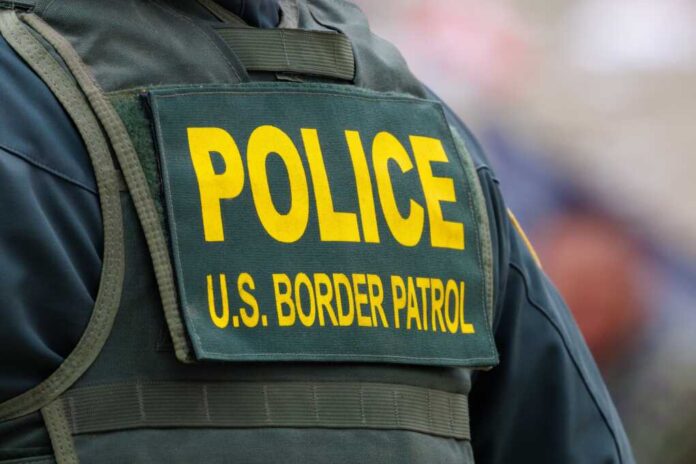
Federal law enforcement accountability is facing intense scrutiny after reports surfaced of text messages allegedly linking a Maine-based U.S. Border Patrol agent, Charles Exum, to a controversial incident involving Marimar Martinez in Chicago.
Story Highlights
- Reports of text messages from a Maine Border Patrol agent allegedly discussing a controversial Chicago incident have sparked public concern and renewed debate over law enforcement culture.
- Legal proceedings now focus on potential mishandling or destruction of evidence by federal authorities.
- The incident highlights ongoing questions about transparency, oversight, and accountability in federal agencies.
- Broader implications include erosion of public trust and calls for reforms in law enforcement conduct and evidence preservation.
Border Patrol Agent’s Conduct Raises Accountability Questions
Charles Exum, a U.S. Border Patrol agent based in Maine, is at the center of a growing controversy after court-released text messages allegedly show him bragging about his involvement in the shooting of Marimar Martinez in Chicago. The incident occurred when agents fired at Martinez, who was inside her vehicle, marking a rare deployment of Border Patrol outside their usual jurisdiction. After the shooting, both Martinez and another individual, Ruiz, left the scene but were quickly apprehended. The texts, now evidence in ongoing legal proceedings, have fueled concerns about the professional culture within federal law enforcement and the standards to which agents are held.
An immigration enforcement officer who shot a US citizen in Chicago last month bragged about the incident in texts afterwards, according to court documents filed in federal court on Wednesday. https://t.co/YGSknMYgS9
— Mother Jones (@MotherJones) November 6, 2025
Legal experts and civil rights advocates warn that private communications, such as Exum’s texts, can reveal troubling attitudes and undermine public trust in institutions responsible for upholding the law. Defense attorneys have seized on these messages to challenge the integrity of the investigation and the conduct of federal authorities, arguing that the agent’s behavior reflects a deeper issue with oversight and transparency. The Department of Justice confirmed that agents fired five shots at Martinez while she was still in her car, intensifying scrutiny over the use of force and decision-making protocols followed by Border Patrol during the event.
Federal Evidence Handling Under the Microscope
The legal proceedings have shifted focus to the federal authorities’ handling of evidence, specifically the agent’s SUV involved in the shooting. Defense attorneys allege that critical evidence was either mishandled or destroyed, prompting the court to schedule a hearing to address these claims. Such allegations raise significant questions about the accountability mechanisms within federal agencies and the ability of the justice system to deliver fair outcomes when evidence integrity is in doubt. The situation has reignited longstanding debates about the need for independent oversight and stricter protocols for preserving evidence in cases involving law enforcement misconduct.
Incidents like this one are not isolated; the U.S. Border Patrol and Customs and Border Protection (CBP) have faced repeated criticism over use-of-force incidents and a lack of transparency. The involvement of a Maine-based agent in Chicago further complicates the narrative, highlighting the complexities and potential risks of interagency operations that span multiple jurisdictions. Both Martinez and Ruiz have been released from custody pending trial, while the broader community watches closely as the case unfolds, aware that its outcome may set precedents for future law enforcement accountability measures.
Broader Implications for Law Enforcement and Conservative Values
This case extends beyond a single incident, touching on foundational concerns for conservatives: government overreach, erosion of constitutional protections, and undermining of public trust by federal agencies. Patriots who value limited government and individual liberty see the alleged boasting and possible evidence mishandling as symptomatic of a federal culture that too often escapes meaningful accountability. The case fuels calls for reform, including enhanced training, independent oversight, and enforceable standards for evidence preservation. Legal scholars note that such reforms are essential to uphold the rule of law, protect citizens’ rights, and restore faith in the institutions charged with safeguarding American values.
Looking ahead, the incident has prompted political debate over law enforcement oversight and fostered demands for transparency. Chicago’s complex relationship with federal law enforcement adds another layer to the story, as community leaders and lawmakers seek answers and accountability. The disclosure of Exum’s texts, the focus on evidence integrity, and the ongoing legal proceedings together spotlight the urgent need for principled reform—a demand that resonates strongly with Trump-supporting conservatives who expect government to serve, not subvert, the Constitution and the public trust.
Watch the report: Evidence, text messages at issue in Border Patrol shooting case in Chicago
Sources:
CBS News Chicago: Hearing scheduled in Border Patrol agent SUV evidence controversy after Marimar Martinez shooting
Portland Press Herald: Maine Border Patrol agent bragged about Chicago shooting in text messages
Border patrol agent who shot Chicago woman boasted about it in text messages | Reuters
Texts appear to show Border Patrol agent bragging about shooting a woman in Chicago
Border patrol agent who shot Chicago woman boasted about it in text messages | The Straits Times