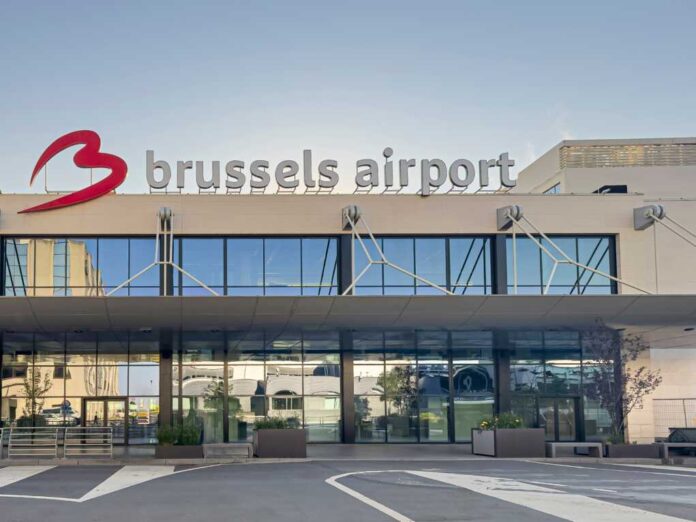
Unidentified drones expose a critical security vulnerability at the heart of Europe, forcing the shutdown of Brussels Airport for two consecutive nights—right at the doorstep of the EU and NATO headquarters. These repeated, unattributed incursions highlight a severe and broadening crisis in European airspace protection, raising urgent questions about foreign interference, aviation safety, and the continent’s preparedness for coordinated technological threats.
Story Highlights
- Drone sightings forced Brussels Airport, near EU and NATO headquarters, to halt flights for two nights in a row.
- Repeated incursions highlight a broader pattern of security lapses across European airports in 2025.
- No clear attribution or countermeasure has been announced, raising fears about foreign interference and aviation safety.
- The incidents pressure European authorities to strengthen airspace protections and reconsider security strategies.
Drone Incursions Disrupt Brussels Airport, Threatening Security
Multiple drone sightings over Brussels Airport have triggered closures for two nights, forcing air traffic control to suspend operations and stranding thousands of travelers. These incursions occurred in early November 2025, with the first sighting halting air traffic around 8:00 p.m. local time and further drones prompting renewed closures the following night. The proximity of these incidents to the European Union and NATO headquarters heightens the concern, as Brussels is not only a transport hub but also a strategic political and military nerve center.
Authorities responded by grounding flights and launching urgent investigations, but the lack of immediate identification or interception of the drones underscores a dangerous gap in airspace security. Similar drone sightings and resulting disruptions have hit other major European airports in recent months, including Oslo, Copenhagen, and Gothenburg. In each case, airport authorities cited the need to protect passenger safety, yet the inability to trace the origin or intent of these drones leaves critical infrastructure exposed and the public uneasy.
🚨🇧🇪#BREAKING | NEWS ⚠️
Brussels Airport has been shut down following three reported drone sightings multiple flights have been in holding patterns and looping. pic.twitter.com/WHo6jGb1HC— Todd Paron🇺🇸🇬🇷🎧👽 (@tparon) November 4, 2025
Pattern of Drone Threats Points to Wider Security Failures
The repeated nature of these drone incursions at Brussels and across Europe is not an isolated problem—it signals a pattern of vulnerabilities that adversaries may exploit. The Gatwick Airport incident in the UK in 2018 prompted some reforms, but recent events demonstrate that European aviation remains unprepared for coordinated drone threats. In September 2025, Oslo and Copenhagen airports faced temporary closures, and in November, Sweden’s Gothenburg Airport followed suit. The persistence of these threats, without clear attribution or effective countermeasures, has led to economic consequences, travel chaos, and growing anxiety among passengers and staff.
Belgian air traffic control (Skeyes) and airport authorities have acted by suspending operations, while police and security services continue searching for those responsible. Airlines and passengers, meanwhile, bear the immediate brunt—delayed flights, missed connections, and lost revenue. The broader European aviation sector is now under pressure to accelerate investment in drone detection and mitigation technologies, while governments face calls to enact stricter regulations and bolster cross-border cooperation to address the evolving threat landscape.
Broader Implications: Espionage, Geopolitics, and Policy Response
With Brussels serving as the headquarters for both the EU and NATO, these drone incursions take on added significance. Security analysts warn that such incidents could be probing European defenses or testing response times, raising the specter of espionage or even sabotage. While speculation about state-sponsored actors—including Russia—persists, authorities have not confirmed any direct links, and the origin of the drones remains unknown. This uncertainty erodes public trust and amplifies pressure on policymakers to defend national sovereignty and infrastructure.
The repeated failures to secure European airspace from relatively unsophisticated drone threats highlight a governing philosophy that prioritizes open borders and globalist ideals over hard security realities. For Americans who value strong national defense and constitutional protections, these events serve as a warning about the consequences of complacency and the dangers of bureaucratic overreach that fails to adapt to emerging challenges. As Europe scrambles to respond, the U.S.—under renewed conservative leadership—must remain vigilant, invest in robust countermeasures, and uphold the principles of secure borders and common-sense security policies.
Analysis and the Path Forward for Aviation Security
Industry specialists emphasize the technical difficulties in tracking and neutralizing small drones, especially near sensitive sites like major airports. The incidents at Brussels Airport, Oslo, Copenhagen, and Gothenburg all reveal gaps in detection and response protocols, pushing aviation authorities to seek coordinated European solutions. Calls for international cooperation and rapid deployment of advanced counter-drone systems are growing, but until concrete measures are in place, the risk of repeated disruptions—and potential attacks—remains. The aviation industry and governments must act decisively to restore public confidence and protect vital infrastructure from evolving technological threats.
Watch the report: Mysterious Drones Halt Operations at Brussels Airport | Vantage With Palki Sharma
Sources:
Brussels airport temporarily halted operations due to drone sighting | Reuters
Drone sightings halt flights at major European cargo airport in Belgium
Belgian drone sightings could be linked to talks on using frozen Russian assets, says German minister – as it happened | World news | The Guardian
Latest drone sightings force flight cancellations at Belgium’s main airport | Euronews