The document argues that under the current Labour government, Britain is experiencing a gradual erosion of democratic norms, leading toward a “soft police state.” Critics point to two main trends as evidence: the politically motivated postponement of key local and mayoral elections, and the incremental, unchecked expansion of live facial-recognition surveillance by police forces. The article also highlights the government’s strict internal party discipline against dissenting MPs, which is viewed as further concentrating power and shrinking the space for legitimate political opposition.
Story Snapshot
- Labour has not “suspended” national elections, but it has postponed key local and mayoral contests in ways critics say game the system.
- Selective delays in nine council areas and four major mayoralties are fuelling charges that Labour is “denying democracy.”
- At the same time, UK police are expanding live facial-recognition tools that civil-liberties groups liken to mass surveillance.
- Strict internal party discipline under Labour is raising deeper concerns about democratic backsliding and concentration of power.
Labour’s election delays and why they matter to conservatives
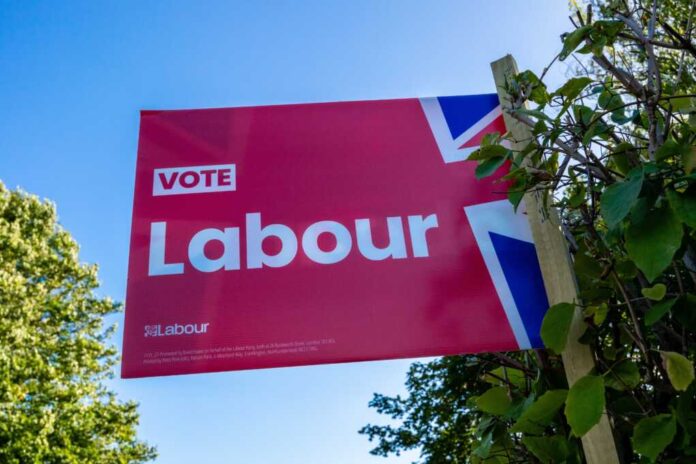
Labour’s claim that it is merely “tidying up” local government masks a pattern that should alarm anyone who cares about free and fair elections. In February 2025, ministers confirmed that the scheduled 2025 local elections in nine English areas, including Norfolk, Suffolk, Essex, Surrey, and Hampshire, would be pushed back an entire year to May 2026. The official line was administrative necessity: why elect councillors to bodies that would soon be abolished or merged under a new devolution blueprint?
Conservatives in the Lords tried and failed to block the regulations, warning that letting the governing party move election dates at will sets a dangerous precedent. To many on the right, it sounds uncomfortably familiar: a political class that lectured the world about democracy now deciding that voters can simply wait their turn. While there is precedent for some reorganisation-related delays, the geographic scale and timing under Labour make this round starkly more contentious.
'Frankly, a Very Authoritarian Government': Labour-Led Britain Suspends Elections, Announces Rollout of China-Style Facial Recognition Cameras https://t.co/vj9KulWdRF
— News Span Media (@newsspanmedia) December 5, 2025
Postponed mayoral races and accusations of “denying democracy.”
The controversy deepened when ministers signalled that the first elections for powerful new mayors in Sussex and Brighton, Hampshire and the Solent, Norfolk and Suffolk, and Greater Essex would not happen until May 2028. Local activists and would-be candidates had expected to face voters much earlier. Instead, Labour argues these posts should only be filled after full “unitarisation” of two-tier councils, again citing the need for “strong foundations” before devolving powers and money.
Opposition voices on the right see something very different: a governing party looking at polling numbers and deciding now is not the time to risk high-profile defeats. Reform UK and some Conservatives describe the move as “cancelling” elections and “denying democracy,” language that resonates with Americans who watched blue states play games with pandemic rules and ballot procedures. Even some Labour candidates have admitted disappointment, underscoring that the delays are not a mere technicality but a real democratic deficit for millions of residents.
Authoritarian drift: party purges and shrinking space for dissent
Labour’s handling of its own MPs adds another layer to the “authoritarian” charge. Within a year of taking power, the party had already suspended or expelled multiple backbenchers for defying the whip on welfare and benefit reforms, including several MPs who opposed the two-child benefit cap. Analysts tracking parliamentary numbers say Labour has suffered one of the sharpest early drops in a governing majority in modern times, driven not by voter revolt but by its own disciplinary zeal.
Democracy advocates in Britain warn that when backbench MPs fear suspension for challenging the leadership, Parliament ceases to be a real check on the executive. For American conservatives, the pattern is familiar: a left-wing party centralises power, sidelines internal critics, and treats any deviation from the approved line as heresy. Add in control over election timetables and the ability to slow-walk or fast-track contests, and you have the makings of an establishment that answers less and less to ordinary voters.
From CCTV to live facial recognition: Britain’s surveillance ratchet
Alongside the electoral manoeuvring sits a surveillance story with global implications. British police forces, especially in London and South Wales, have been testing and expanding live facial-recognition systems for years. These tools scan crowds in real time, matching faces against watchlists of suspects or persons of interest. Civil-liberties groups argue that, in practice, this amounts to warrantless, suspicionless mass surveillance, normalising a culture where the state quietly logs who shows up at protests, churches, or political meetings.
Crucially, there is no evidence of a single, centrally announced “China-style” nationwide rollout ordered by Labour. Instead, the growth has been incremental and bureaucratic, with deployments at major events, shopping districts, and transport hubs. That slow creep is exactly what worries rights advocates. When technology spreads through pilots and “trials,” often without a clear statutory framework, it becomes harder to claw back. For conservatives who value limited government, it is a warning sign: infrastructure built today can be abused by a more radical government tomorrow.
The China comparison, then, is best understood as a trajectory, not a present reality. China built a dense web of cameras, face-scanning checkpoints, and social-credit databases over the years, often justified by security and convenience. Britain is nowhere near that scale, but the principles are similar: expanding state capacity to track citizens, combined with political leaders who are increasingly intolerant of dissent. Once those tools exist, even a temporary Labour government can leave behind a powerful surveillance machine for future elites of any stripe.
Why this should concern Trump-era conservatives
For an American audience that just endured years of Biden-era overreach, Britain’s struggles are a cautionary tale. A Labour government that delays elections in target areas, disciplines MPs into submission, and tolerates or encourages the spread of facial-recognition surveillance is testing the outer limits of democratic norms without formally tearing up the rulebook. That is how constitutional erosion often works: not through a single coup, but through a series of “technical” adjustments that always seem to favour those already in charge.
From a conservative, America-first perspective, the lesson is clear. Free societies only stay free when citizens insist on firm guardrails: fixed election calendars, strong protections for dissenting lawmakers, strict limits on surveillance tools, and leaders who fear voters more than they fear losing control. Britain’s gradual slide toward managed democracy and quiet monitoring shows what happens when those guardrails are treated as optional—and why defending our own Constitution, due process, and privacy protections must remain non-negotiable.
Watch the report: LIVE: Labour’s Shocking plans to cancel Mayoral Elections.
Sources:
Why were some elections ‘cancelled’ in 2025?
‘Open prison’ fears as police plan face ID for EVERY village, town and city across Britain
Labour suspensions and democratic backsliding concerns
Mayoral elections postponed in Essex, Hampshire, Sussex, Norfolk and Suffolk
Explainer: What’s happened to the government’s majority?
Labour delays mayoral elections as Reform and Tories cry foul