Ukraine is turning America’s Iran-war fallout into leverage—shipping anti-drone know-how to Saudi Arabia while Washington’s base protection and Patriot stockpiles stay under pressure.
Story Snapshot
- Ukrainian President Volodymyr Zelensky arrived in Saudi Arabia on March 26 for an unannounced visit tied to an air-security cooperation deal.
- The agreement builds on Ukraine’s deployment of more than 200 anti-drone specialists to multiple Gulf states after the U.S.-Israel war with Iran began on Feb. 28.
- Ukraine says battlefield experience against Shahed-style drone attacks has produced scalable interception tactics and rapid interceptor-drone production capacity.
- Reports indicate Ukraine is pursuing reciprocal benefits, including Patriot PAC-2/PAC-3 interceptors, as Gulf states seek protection from Iranian drones and missiles.
Zelensky’s Surprise Saudi Stop Signals a Wider Air-Defense Scramble
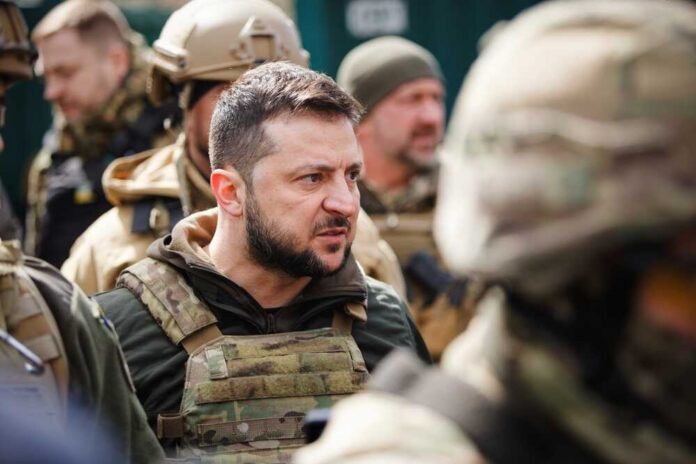
Volodymyr Zelensky’s March 26 arrival in Saudi Arabia, described as a surprise visit, is tied to a planned air-security cooperation agreement focused on defending against drones and missiles. The timing matters because Gulf states have faced heightened threats since the U.S.-Israel war against Iran began on Feb. 28, with retaliatory attacks driving urgent demand for layered air defense. Zelensky is positioning Ukraine’s hard-earned drone-defense expertise as a ready export.
Ukraine’s pitch is straightforward: Kyiv has spent years adapting under real fire against mass drone raids, including Shahed-type systems associated with Iranian design. Zelensky has publicly argued that Ukraine’s experience differs from many partners’ focus on ballistic threats, because Ukraine has had to solve the “volume problem” of large drone swarms. Reports also describe Ukraine claiming the capacity to produce large numbers of interceptor drones daily, with some output potentially offered to partners.
How the Gulf Deployments Became a New Ukrainian Export Strategy
The Saudi deal builds on earlier moves in March, when Ukraine dispatched expert teams to Qatar, the UAE, and Saudi Arabia, with additional specialists referenced across the region. Accounts differ slightly on totals—some reporting “over 200,” while other reporting cites 228 experts—but the direction is consistent: Ukraine is exporting personnel, training, and operational methods for detecting, tracking, and intercepting drones. Several deployments were described as responding to partner requests, including U.S.-linked needs.
This matters for Americans watching the Iran war because it shows how quickly air-defense capacity becomes a bottleneck once a regional conflict spreads. Base defense, civilian infrastructure protection, and maritime security in the Gulf all depend on interceptors, sensors, and trained operators—and those are finite. Ukraine’s involvement doesn’t replace U.S. systems, but it can supplement them with tactics and manpower, potentially easing pressure on Western inventories while still reshaping who supplies security in the region.
The Money-and-Interceptors Tradeoff: Patriots, Politics, and Priorities
Multiple reports describe Saudi-linked arms activity involving Ukrainian interceptor missiles and discussions of a larger prospective deal. Ukrainian interests are not just financial; reporting indicates Kyiv has sought Patriot PAC-2/PAC-3 interceptors in exchange, the kind of high-end air-defense munitions that are expensive, scarce, and strategically consequential. For a U.S. audience already frustrated by spiraling commitments, this raises hard questions about where limited interceptors go when multiple theaters compete.
None of the cited reporting, however, provides a full public readout from Saudi officials on the scope, price, or enforcement mechanisms of the cooperation. That limitation matters because “huge deal” language appears tied to anonymous sourcing and non-public negotiations. Conservatives who want fewer open-ended foreign entanglements should separate what is confirmed—deployments, talks, and the March 26 visit—from what remains unclear, including any binding quid-pro-quo on Patriots.
What This Means for MAGA Voters Split on the Iran War
The political tension at home is real: many Trump supporters back strength abroad but reject another long, undefined conflict that drains budgets, drives energy costs higher, and pulls America into security guarantees that never seem to end. Zelensky’s Gulf diplomacy highlights the same dilemma in a different form—security dependencies expand fast during war, and allies look for immediate protection. The constitutional concern isn’t about Ukraine talking to Saudi Arabia; it’s about whether U.S. commitments continue to grow without clear limits, timelines, and accountability.
For now, the confirmed facts show a war-driven realignment: Gulf states are urgently hardening air defenses against Iranian drones and missiles, while Ukraine is leveraging its wartime know-how to deepen ties and seek advanced interceptors. Americans watching inflation, energy volatility, and overseas escalation should track one metric above the headlines—whether U.S. air-defense stocks and congressional war powers oversight keep pace with expanding demands created by the Iran conflict and its ripple effects across the region.
Sources:
https://www.arabnews.com/node/2636746/%7B%7B
https://kyivindependent.com/ukraine-war-latest-2026-03-10/
https://www.iranintl.com/en/202603104299
https://newsukraine.rbc.ua/news/ukraine-in-talks-with-middle-east-countries-1774024515.html
https://kyivindependent.com/ukraine-sends-drone-experts-to-qatar-saudi-arabia-uae/