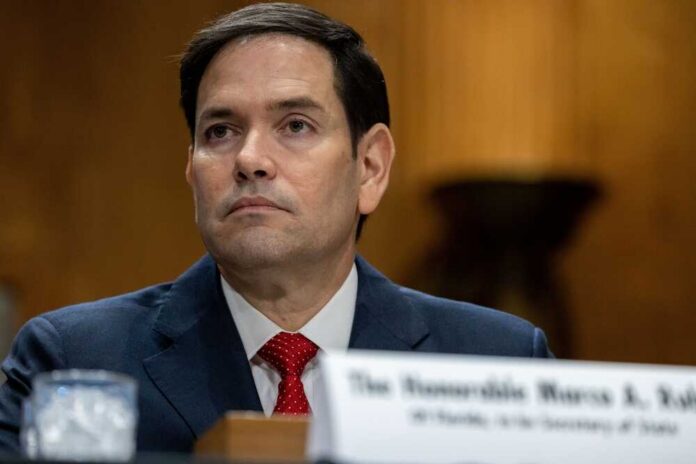
Secretary of State Marco Rubio delivered a scathing rebuke to NATO allies who denied America access to military bases during the Iran conflict, warning the alliance faces a fundamental reckoning once the war concludes.
Story Snapshot
- Rubio blasted NATO allies, especially Spain, for blocking US access to bases and airspace during Iran operations while expecting American defense guarantees for Europe
- Spain denied US forces access to critical bases at Rota and Morón, with Rubio noting the country “brags” about obstructing American military operations
- Secretary vowed a post-war “re-examination” of NATO commitments, echoing Trump’s longstanding criticism of the one-sided alliance
- The rebuke comes as Iran threatens the Strait of Hormuz, disrupting global energy markets while European allies refuse to assist in reopening vital shipping lanes
NATO’s One-Sided Bargain Exposed
Rubio unleashed his criticism during a March 31 interview with Al Jazeera, calling NATO’s refusal to support American operations against Iran “deeply disappointing.” The Secretary of State specifically targeted Spain for denying US aircraft access to joint bases at Rota and Morón in Andalusia, as well as blocking American use of Spanish airspace. Rubio emphasized the hypocrisy of allies expecting Article 5 protection from the United States while simultaneously obstructing American military flexibility during a crisis that threatens global energy security and freedom of navigation.
The frustration stems from a broader pattern where European NATO members benefit from American military umbrella protection yet refuse reciprocal support when US interests are at stake outside the European theater. Rubio’s pointed remarks represent a significant shift for the former Senator, who historically championed the transatlantic alliance. His alignment with President Trump’s skepticism signals growing impatience within the administration toward allies who treat NATO as a one-way security guarantee rather than a mutual defense pact requiring shared sacrifice and strategic cooperation.
Alliance Review Coming After Iran Conflict
Rubio made clear the administration’s intentions during follow-up comments on Fox News, stating bluntly that America would need to “reexamine” its NATO relationship once the Iran war concludes. He framed the issue in stark terms: if NATO reduces to defending Europe while denying America access to bases and support, continued US participation becomes impossible to justify. The Secretary noted that without American involvement, NATO effectively ceases to exist as a credible military alliance, underscoring the leverage Washington holds over European security arrangements.
President Trump amplified the criticism by calling NATO partners “cowards” and dismissing the alliance as a “paper tiger” for refusing to help restore shipping through the Strait of Hormuz after Iranian threats disrupted global oil flows. The harsh rhetoric reflects genuine anger within the administration that allies expect American blood and treasure for European defense but shrink from supporting US operations addressing threats with worldwide economic consequences. This dynamic feeds directly into the frustrations of Trump’s base, who voted for America First policies and an end to asymmetric alliances that drain resources while delivering minimal returns.
Strategic Implications for Conservative Americans
For Americans already fed up with endless foreign entanglements, the NATO dispute crystallizes a fundamental question: why should US taxpayers subsidize European defense when those same allies undermine American operations and contribute to prolonged conflicts that drive up energy costs? Rubio emphasized the US-Iran war should conclude within weeks, but logistical constraints created by allied obstruction complicate operations and potentially extend the timeline. The Strait of Hormuz blockage directly impacts American consumers through elevated oil prices, making allied non-cooperation a pocketbook issue for families struggling with inflation.
The situation exposes the fundamental flaw in globalist security arrangements that prioritize multilateral consensus over American interests. Spain’s denial of base access at facilities jointly operated with the United States represents a breathtaking display of ingratitude from a country that relies entirely on American military power for its security against potential threats. Rubio’s warning about re-examining NATO commitments resonates with conservatives who question why America continues bearing disproportionate alliance costs while allies lecture Washington about military restraint yet demand protection when their own security is threatened. This debate will intensify as the administration conducts its promised post-war review.
Sources:
NATO allies’ refusal to support the U.S. in Iran is ‘very disappointing,’ says Rubio – UA News
Rubio: US may reconsider NATO due to limited support – Gazeta Express
US Sec. of State Rubio: Will have to reexamine NATO alliance – FXStreet