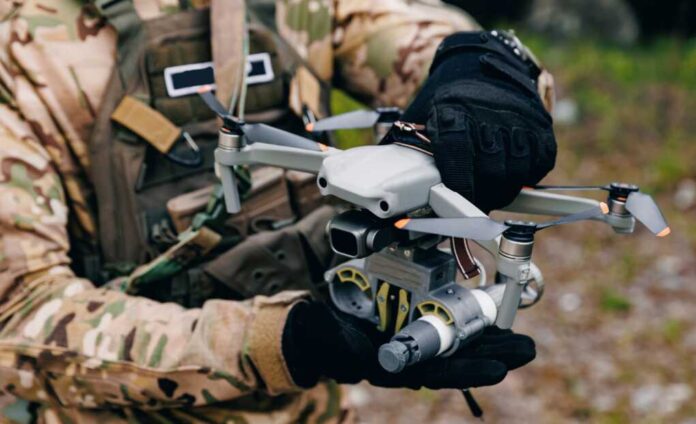
A U.S. Army field exercise in Germany exposed major flaws in the service’s drone modernization push, with soldiers reporting frequent malfunctions, broken equipment, and disrupted signals during missions.
At a Glance
- Army tested new soldier-built drones in field conditions
- Units reported GPS disruptions and broken components
- Troops improvised with 3D-printed parts to keep drones flying
- Failures raise questions about $36 billion drone modernization plan
Broken Gear in the Field
The Army’s vision of deploying thousands of small drones across its brigades and divisions ran into real-world obstacles during a major field exercise this month in Germany. Soldiers tasked with operating reconnaissance and strike drones encountered repeated failures that disrupted missions and exposed the fragility of current platforms.
Among the issues were GPS outages that left drones unable to navigate properly, video feeds that cut out mid-flight, and hardware components that snapped under stress or became entangled in forest terrain. Troops resorted to using improvised fixes—including 3D printing spare parts and swapping components between systems—to keep missions going. While some drones successfully carried out surveillance and simulated attack runs, the overall reliability of the systems fell short of expectations.
Watch now: BREAKTHROUGH: American Drone Drops Live Grenades in Germany · YouTube
The exercise highlighted the gap between concept and execution, with drones often proving difficult to sustain under the conditions soldiers are most likely to face in combat. Commanders acknowledged the problems but framed them as part of the learning process in scaling up drone warfare.
$36 Billion Ambition
The Army is investing $36 billion over five years in its drone strategy, aiming to give every division up to 1,000 small drones and counter-drone systems. Officials argue the approach will help match the rapid pace of innovation seen on the battlefields of Ukraine and the Middle East, where cheap, expendable drones have reshaped tactics.
But scaling such a program poses logistical and technical challenges. Unlike specialized platforms operated by trained pilots, these systems are designed for use by regular infantry, meaning they must be rugged, intuitive, and repairable in the field. The failures seen in Germany suggest that current models fall short of those standards, raising doubts about whether the Army can deliver reliable systems on schedule.
Lessons and Adjustments
Despite the frustrations, leaders maintain that the exercise provided crucial lessons for future design and procurement. Developers and commanders noted that testing in difficult environments is the only way to uncover weak points before mass deployment. Soldier feedback from the event will feed into adjustments for future drone models, including stronger frames, more resilient communications, and modular designs that allow faster repair.
Some analysts argue that the Army should temper expectations about scaling up too quickly. Others suggest pairing soldier-built drones with more robust commercial systems to ensure reliability. What is clear is that the Army cannot afford to ignore the fragility of its current platforms, especially as adversaries deploy increasingly sophisticated drones on contested battlefields.
For now, the drone modernization plan continues, but the Germany trials underscore that the road to reliable unmanned systems is far from smooth. Whether the Army can fix the problems without delaying its ambitious timeline remains a central question for U.S. military planners.
Sources