A well-intentioned Manhattan traffic toll scheme meant to clean up the air has instead pushed pollution into one of America’s poorest neighborhoods, exposing how government policies can burden vulnerable communities while benefiting the wealthy.
Story Snapshot
- Columbia University study finds air pollution increased in South Bronx after NYC’s January 2025 congestion pricing launch
- Fine particulate matter rose 0.22 μg/m³ on average, with spikes up to 1.29 μg/m³ near major highways as traffic rerouted to avoid Manhattan tolls
- Community-operated sensors reveal environmental burden shifted to low-income, minority residents in “Asthma Alley”
- Manhattan saw 22% pollution drop while South Bronx—already suffering highest U.S. childhood asthma rates—pays the health price
Traffic Diverted From Wealthy Manhattan to Working-Class Bronx
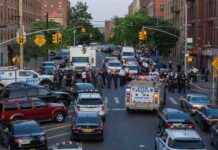
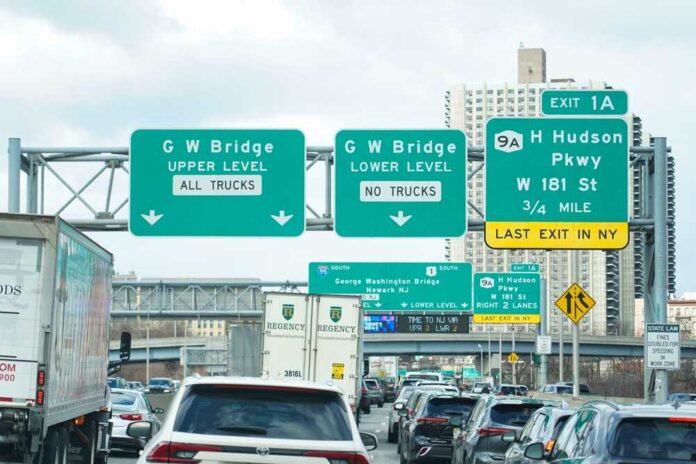
New York City’s congestion pricing program launched January 5, 2025, charging drivers $9 to enter Manhattan below 60th Street during peak hours. The Metropolitan Transportation Authority promoted the initiative as a way to reduce gridlock and fund subway improvements while cleaning Manhattan’s air. Columbia University researchers analyzed data from 19 community-managed air quality sensors across the South Bronx from January 2024 through December 2025. Their findings revealed a statistically significant increase in fine particulate matter pollution, with 13 of 19 sensors showing worsening air quality after the toll took effect. Trucks and vehicles avoiding the Manhattan charge shifted to outer borough routes like the Cross Bronx Expressway and Major Deegan.
Environmental Injustice in America’s Asthma Capital
The South Bronx neighborhood known as “Asthma Alley” already suffers the nation’s highest childhood asthma rates, exceeding 25% in some areas. Residents are predominantly people of color with median incomes around $40,000, living near highways built in the 1950s and 60s that displaced communities and created lasting pollution corridors. MTA environmental reviews from 2021 predicted traffic diversions could worsen air quality outside Manhattan, yet the agency proceeded without meaningful mitigation for affected neighborhoods. While Manhattan residents breathe easier and the MTA collects over $1 billion annually in toll revenue, working families in the Bronx face compounded health risks and increased emergency room visits for respiratory problems.
Sensors Near Highways Show Alarming Pollution Spikes
South Bronx Unite, a community advocacy organization, deployed the sensor network that captured the pollution increases. Monitoring stations positioned near the Cross Bronx Expressway recorded PM2.5 increases of 1.29 μg/m³—nearly six times the neighborhood average increase. Dr. Markus Hilpert from Columbia University’s Mailman School of Public Health noted the findings confirm predictions that cumulative impacts would compound preexisting environmental burdens in vulnerable areas. The study, currently under peer review, represents the first use of community-owned sensor data to evaluate congestion pricing consequences. This grassroots approach stands in stark contrast to government monitoring, which focuses primarily on the toll zone benefiting from reduced traffic.
Government Response Falls Short of Addressing Root Problem
Following release of the Columbia study and South Bronx Unite’s May 5, 2026 report “South Bronx Pays the Toll,” New York City announced a $20 million fund for Bronx asthma programs. Community activists dismissed this as insufficient, arguing mitigation funding does not justify imposing health burdens on neighborhoods that lack political power to resist. The MTA countered that Cross Bronx Expressway traffic decreased by 10,000 vehicles daily, though this conflicts with sensor data showing pollution increases—suggesting factors like vehicle speed or emissions concentrations changed. No policy reversals are planned despite calls from residents for truck electrification requirements and incentives to use alternate bypass routes away from residential areas.
This case illustrates a troubling pattern where government solutions to urban problems benefit affluent areas while shifting costs to working-class communities. The promise of cleaner air and better transit became reality for Manhattan, yet families struggling with poverty in the South Bronx now face worsening pollution their children breathe daily. When bureaucrats design policies from offices far removed from affected neighborhoods, the people paying the price rarely have seats at the decision-making table. As cities nationwide consider similar congestion pricing schemes in Los Angeles and Boston, the South Bronx experience serves as a cautionary tale about who truly benefits when elites engineer solutions to problems experienced differently across economic divides.
Sources:
South Bronx Unite – Congestion Pricing Impact Report
BX Times – Pollution from Congestion Tolls, City to Study Asthma Rates
South Bronx Unite – South Bronx Pays The Toll Report (PDF)