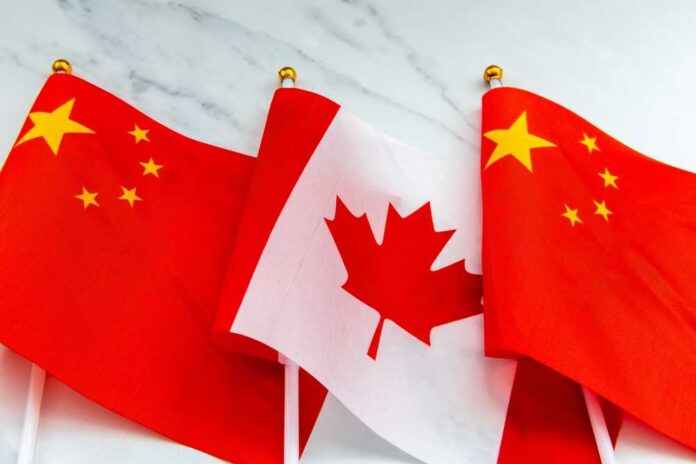
Canada’s pivot toward China under Prime Minister Mark Carney raises troubling questions about whether Ottawa is trading away sovereignty to escape American economic pressure, as Beijing positions itself to exploit Canada’s vulnerability in the growing rift between North American allies.
Story Snapshot
- Prime Minister Mark Carney forged a “strategic partnership” with China slashing tariffs on canola and electric vehicles while the U.S. threatened severe economic consequences.
- The deal allows up to 49,000 Chinese EVs into Canada at reduced tariffs and drops canola tariffs from 85% to 15%, potentially creating a backdoor for Beijing into the North American market.
- President Trump’s administration warned of 100% tariffs if Canada pursued a full free trade agreement with China, viewing the partnership as undermining the USMCA alliance.
- Carney downplays dominance concerns while critics argue the deal makes Canada economically dependent on an authoritarian regime that previously detained Canadians and banned agricultural imports as political leverage.
Carney’s Beijing Gambit Strains Continental Unity
Prime Minister Mark Carney traveled to Beijing to announce a new strategic partnership with China that includes substantial tariff reductions and joint investment in clean energy. The deal came as Carney sought to diversify Canada’s trade relationships away from dependence on the United States, which accounts for 75% of Canadian trade. China agreed to reduce tariffs on Canadian canola from 85% to 15% by March 2026, potentially unlocking a $4 billion market for Canadian farmers. In exchange, Canada agreed to allow up to 49,000 Chinese electric vehicles into the country at a 6.1% tariff rate, rolling back the 100%-plus tariffs imposed in 2024.
Economic Opportunism or Strategic Surrender
The partnership targets 50% growth in Canadian exports to China by 2030, with memorandums of understanding covering energy, clean technology, and tourism. Canadian officials emphasize this is not a formal free trade agreement, which would trigger veto provisions under USMCA Article 32.10 requiring notification when negotiating with “non-market economies.” Yet the substance of the deal—significant tariff cuts, joint ventures in strategic sectors, and increased market access—raises concerns about whether Canada is creating a workaround that achieves similar economic integration without the legal formalities. This matters because it potentially allows Chinese goods easier access to North American supply chains while bypassing the scrutiny a formal FTA would require.
Historical Pattern of Chinese Leverage
Canada’s willingness to deepen economic ties with Beijing ignores recent history showing how China uses trade as a political weapon. Between 2019 and 2021, China banned Canadian canola imports and detained two Canadian citizens—Michael Kovrig and Michael Spavor—in apparent retaliation for Canada’s arrest of Huawei executive Meng Wanzhou at U.S. request. Those bans cost Canadian producers hundreds of millions in lost revenue and demonstrated Beijing’s readiness to inflict economic pain to achieve political objectives. Conservative critics argue that rushing back into China’s economic embrace after such treatment shows dangerous naiveté about the regime’s character and makes Canada vulnerable to future coercion when political disagreements inevitably arise.
American Pushback Intensifies
President Trump’s administration responded forcefully to Carney’s China outreach, with Treasury Secretary Scott Bessent warning of 100% tariffs on Canadian goods if Ottawa pursued a full free trade agreement with China. Trump, who had initially appeared supportive of Canadian economic independence, shifted his stance after Carney’s January 20 speech at Davos criticizing American and Chinese “hegemons.” The Trump administration views the Canada-China partnership as creating a potential backdoor for Chinese products into the United States through their integrated supply chains. Canadian Trade Minister Dominic LeBlanc held what he characterized as “friendly” talks with U.S. officials on January 25 to assure Washington that no formal FTA is planned, but tensions remain as implementation proceeds.
Sovereignty Questions Mount
The fundamental concern for everyday Canadians centers on whether their government is sacrificing long-term independence for short-term economic relief. China’s trade relationship with Canada shows massive imbalance—$88.9 billion in Canadian imports from China versus just $30 billion in exports—suggesting structural dependency rather than partnership. By allowing increased Chinese EV imports and joint ventures in strategic clean technology sectors, Canada risks becoming reliant on Beijing’s industrial capacity and supply chains. This creates leverage China can exploit whenever political disagreements emerge, whether over human rights, Taiwan, or other contentious issues. The pattern of powerful nations—whether Washington or Beijing—treating Canada as a subordinate rather than sovereign partner reflects a deeper failure of political leadership to chart an independent course that serves ordinary citizens rather than global power brokers.
Sources:
Politico – Canada-China trade developments and U.S. response
Prime Minister of Canada – Official announcement of strategic partnership with China