A blistering heat wave gripping the western United States is amplifying wildfire threats and stretching emergency resources to their limits.
At a Glance
- A heat wave spanning regions from Arizona to Oregon is driving triple-digit daytime highs and dangerously warm nights.
- Wildfires—especially the Pickett Fire in Napa County and Oregon’s Flat Fire—are growing rapidly under these hot, dry conditions.
- Emergency declarations and evacuation orders are in place as thousands of residents face disruption.
- Scientists link the intensifying heat and fire risks to climate-driven trends of prolonged drought and rising temperatures.
The Heat Fryer
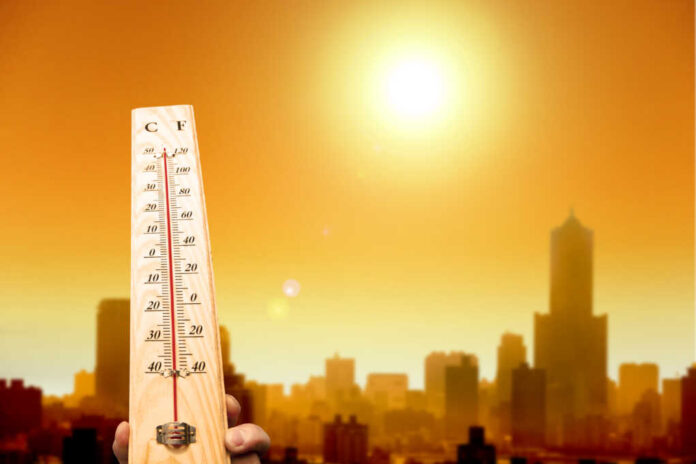
A persistent dome of intense high pressure has parked over the western United States, generating prolonged periods of extreme heat, especially in inland valleys and deserts. Both daytime peaks exceeding 100 °F and warm nighttime lows are preventing relief, particularly in southern California, Arizona, and parts of Oregon and Washington. These conditions have placed over 30 million people under heat alerts, with inland Southern California and areas around Tucson—where temperatures are forecast to reach 102–107 °F—among the hardest hit.
Watch now: Dangerous heat wave | West Coast Wrap · YouTube
Beyond personal discomfort, the health implications are stark. Hospitals in Phoenix and Los Angeles have reported increases in emergency admissions related to dehydration, heat exhaustion, and heat stroke. Local officials have opened dozens of cooling centers and extended pool hours, but outreach to elderly and unhoused populations remains a critical challenge. Prolonged nights without cooling below 80 °F mean that residents lack the natural respite needed to recover, compounding risks with each passing day.
Flames Ignited
The extreme heat is serving as tinder for wildfires now ablaze across the region. In Napa County, the Pickett Fire has scorched more than 6,800 acres—barely 12% contained—prompting local officials to declare a state of emergency. More than 1,200 firefighting personnel, supported by helicopters and bulldozers, are deployed as evacuation orders affect rural communities and vineyards.
In central Oregon, the Flat Fire has grown to nearly 30 square miles, with thousands of homes under evacuation notices. Triple-digit heat, low humidity, and rugged terrain have complicated suppression efforts. The fire’s rapid expansion has destroyed several structures and forced emergency shelters to open in nearby towns.
Across central California, the Gifford Fire—this year’s largest in the state at more than 200 square miles—has reached 95% containment. While the immediate threat has diminished, its sheer size illustrates the destructive potential when extreme heat aligns with dry vegetation and wind.
Climate’s Culpability
While attributing any single weather event to climate change is complex, experts consistently point to long-term warming as a key driver of both intensifying heat waves and prolonged droughts that fuel wildfires. The ongoing upward trend in average summer temperatures across the western U.S. has been documented for decades. Researchers highlight earlier snowmelt in the Sierra Nevada, shrinking river flows in the Colorado Basin, and soil desiccation across the interior West as compounding stressors.
Utility managers have also noted that surging electricity demand for air conditioning during extended heat waves increases the risk of rolling blackouts. At the same time, high temperatures reduce efficiency in power generation and transmission, making it harder to meet demand just as residents need cooling most. The confluence of these stress points underscores how climate shifts are cascading through natural and human systems alike.
Taken together, the searing heat and mounting wildfire risks reflect a broader pattern in which once-rare extremes are now expected summer realities. The region’s emergency infrastructure is adapting under strain, but scientists caution that without significant reductions in greenhouse gas emissions, the scale of future disruptions may dwarf those unfolding today.
Sources