Gunmen opened fire on the U.S. Consulate in downtown Toronto early Monday morning, marking yet another alarming incident where violent actors targeted American diplomatic facilities on foreign soil amid escalating global tensions and what critics describe as lax immigration enforcement policies allowing extremist elements to flourish unchecked.
Story Snapshot
- Shots fired at U.S. Consulate in Toronto at 5:29 a.m. ET on March 10, 2026, with no injuries but confirmed gunfire evidence prompting a joint Toronto Police and RCMP investigation.
- Conservative leader Pierre Poilievre condemned the attack as “unacceptable political violence,” blaming a decade of Liberal immigration and border policies for importing Middle East conflicts to Canadian streets.
- The shooting follows a recent explosion at the U.S. embassy in Oslo and a pattern of attacks on Jewish institutions in Canada, raising fears of terror threats linked to Iranian Revolutionary Guard Corps operatives.
- Streets around the consulate remain closed as authorities investigate, with no suspects identified and broader implications for U.S.-Canada diplomatic security and immigration policy debates.
Attack on American Diplomatic Soil
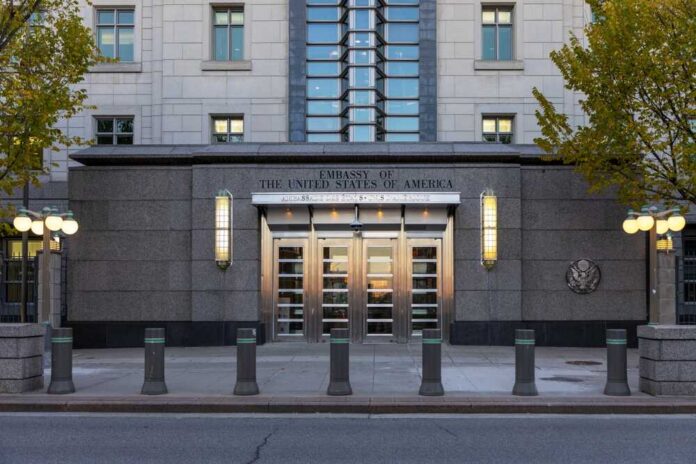
Toronto Police responded to emergency calls at 5:29 a.m. ET on March 10, 2026, reporting gunfire at the U.S. Consulate located at 360 University Ave. near Queen Street West in downtown Toronto. Officers arrived to find clear evidence of shots fired at the diplomatic facility, though thankfully no injuries were reported among consulate staff or nearby residents. The consulate serves as a critical American outpost in Canada’s largest city, and this brazen attack represents a direct assault on U.S. sovereignty and diplomatic operations. Streets surrounding the building were immediately closed as Toronto Police and the Royal Canadian Mounted Police launched a joint investigation, scheduling a press briefing for 11:30 a.m. ET to provide further details to the public.
Pattern of Imported Violence
This consulate shooting follows disturbing trends that conservatives have warned about for years. Just two days earlier on March 8, Norwegian authorities responded to an explosion at the U.S. embassy in Oslo, suggesting a coordinated pattern of attacks against American diplomatic targets abroad. Within Canada itself, recent months have witnessed synagogue shootings, firebombings of Jewish community centers, and bullets fired through school windows—all incidents that Canadian Conservative Party leader Pierre Poilievre attributes to imported Middle East conflicts and weak border enforcement. The U.S. government had previously issued warnings to American citizens abroad to exercise caution due to ongoing conflicts involving Iran and Israel, creating an environment where diplomatic facilities face heightened threat levels. This context underscores how global instability and porous immigration policies combine to create dangerous conditions even in traditionally safe allied nations like Canada.
Conservative Leader Blames Liberal Policies
Pierre Poilievre wasted no time connecting the consulate attack to what he describes as catastrophic Liberal immigration and criminal justice failures. The Conservative Party leader condemned the incident as “unacceptable political violence,” arguing that 10 years of Liberal governance have produced weak borders, catch-and-release crime policies, and immigration systems that fail to screen out extremists. Poilievre specifically referenced Iranian Revolutionary Guard Corps operatives as “terror agents” who bring hatred and violence to Canadian soil, contrasting current instability with previous decades when Middle East wars raged without spilling into Toronto streets. His remarks reflect growing conservative frustration with policies that prioritize open borders and leniency toward foreign nationals over public safety and national security. Poilievre advocated for immediate deportations of non-citizens involved in political violence and comprehensive crackdowns on terrorist organizations operating within Canadian borders, framing the consulate shooting as preventable policy failure rather than inevitable consequence of global tensions.
Investigation Ongoing Amid Security Concerns
As of Monday morning, Toronto Police and RCMP continue their investigation with no suspects identified or arrests made. Authorities confirmed finding physical evidence of gunfire at the scene but declined to speculate on motives or perpetrators pending further forensic analysis and witness interviews. The attack raises serious questions about security protocols for diplomatic facilities in major urban centers, particularly given the consulate’s location in downtown Toronto’s high-traffic University Ave. area. Short-term impacts include heightened security measures at American diplomatic sites across Canada and traffic disruptions affecting local businesses near the cordoned zone. Long-term implications could reshape immigration policy debates ahead of Canadian elections, especially if investigators establish links between the shooters and foreign terror networks like the IRGC. Jewish communities already facing elevated threats from related violence watch nervously as patterns suggest coordinated efforts to import Middle East conflicts into North American cities, undermining the safety and stability that citizens rightfully expect from their governments regardless of international turmoil.
The incident exposes vulnerabilities in current approaches to border security and counter-terrorism, validating conservative warnings that prioritizing globalist ideologies over national security creates openings for hostile actors. Americans watching from across the border should take note—the same permissive immigration policies and weak enforcement mechanisms that allowed this attack exist within their own borders as well. President Trump’s renewed focus on border security and immigration enforcement reflects lessons learned from precisely these types of failures, where good intentions about diversity and inclusion collide with hard realities about screening terrorists from genuine refugees. The Toronto consulate shooting serves as a stark reminder that diplomatic facilities require robust protection and that nations must maintain rigorous standards for who gains entry, especially during periods of heightened international conflict when extremist elements actively seek opportunities to strike Western targets.