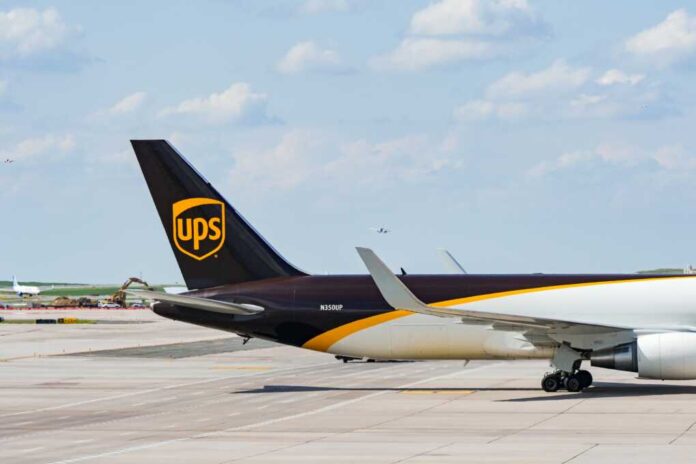
On the evening of November 4, 2025, a UPS MD-11-F cargo jet crashed shortly after takeoff from Louisville International Airport in Kentucky. The accident resulted in the confirmed deaths of at least nine people and caused widespread destruction in an adjacent industrial area. The incident has disrupted operations at UPS Worldport, the company’s global logistics hub, prompting a joint investigation by federal and local authorities.
Story Highlights
- A UPS MD-11-F cargo plane crashed on November 4, 2025, following takeoff from Louisville International Airport, resulting in at least nine fatalities.
- The crash caused extensive damage in a neighboring industrial zone, confirmed by satellite imagery showing debris and burn scars.
- Operations at UPS Worldport, the world’s largest package-handling facility, have been disrupted, leading to immediate delays in domestic and international shipping.
- Federal agencies, including the FAA and NTSB, are leading the investigation into the cause of the crash.
- The incident has raised industry discussion regarding the resilience of centralized logistics networks and the need for modernization in air cargo safety.
The Crash and Immediate Aftermath
The UPS MD-11-F jet, which was loaded with fuel for a transpacific flight to Honolulu, went down in a nearby industrial zone. The impact caused a large fire, which led to a shelter-in-place advisory for local residents due to smoke. Satellite imagery detailed a wide debris field, burned ground, and structural damage to warehouses and businesses adjacent to the airport.
Louisville International Airport, home to UPS Worldport, had a key runway closed immediately following the crash. While other airport operations resumed within 24 hours, the affected runway is expected to remain closed for at least 10 days for cleanup and recovery. UPS has expressed condolences to the victims’ families and pledged full cooperation with investigators; the disruption to its operations is already affecting the flow of goods across the country.
Shocking satellite images show trail of destruction after deadly UPS plane crash https://t.co/NcRMXQgFRy pic.twitter.com/B7XZFfBCr3
— New York Post (@nypost) November 6, 2025
Broader Implications for Supply Chains and Safety
The MD-11-F, an aircraft introduced in the early 1990s, has a documented history of safety incidents, including challenges with handling during critical phases of flight. Furthermore, reliance on centralized hubs like Louisville is cited as creating single points of failure that can affect the national economy.
In the short term, the crash has caused nationwide package delivery delays, strained local emergency services, and inflicted economic losses on businesses in the industrial area. Over the longer term, the incident is anticipated to prompt increased scrutiny of cargo aviation safety, fleet modernization, and the organization of critical logistics infrastructure. Industry analysts and transportation scholars are suggesting a reassessment of risk management protocols and greater diversification of logistics networks to enhance resilience.
Stakeholders and the Path Forward
Key parties involved in the aftermath include UPS, which faces operational and reputational challenges; the FAA and NTSB, leading the investigation; Boeing, the aircraft’s manufacturer; and local authorities tasked with ensuring public safety and economic recovery. The investigation into the crash cause is ongoing, with preliminary findings anticipated in the coming weeks. The incident has drawn attention to the role of private industry and federal oversight in maintaining critical infrastructure, emphasizing the need for modernization, decentralization, and rigorous oversight in America’s air cargo industry.
Watch the report: New Satellite Images Show Trail of Destruction After Deadly UPS Plane Crash
Source:
CIMSS Satellite Blog (GOES-19 imagery and analysis)
Analysing footage of UPS cargo plane crash in Kentucky which killed nine – BBC News
Satellite images show trail of destruction after deadly UPS plane crash