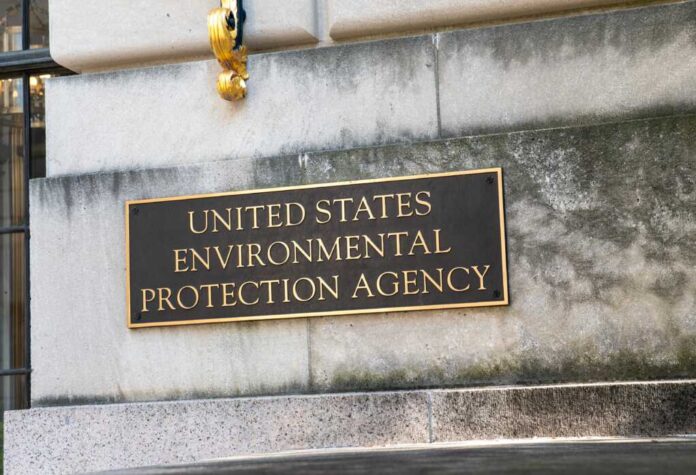
In August 2025, the Environmental Protection Agency (EPA), under the federal administration, terminated the $7 billion Solar For All grant program. This action has led to a legal challenge from a coalition of 22 states, primarily led by progressive attorneys general, who argue the cancellation was unlawful. The program, designed under the previous administration, aimed to provide subsidies for rooftop solar installations in low-income households and rural areas. The ongoing litigation highlights differing perspectives on federal authority, energy policy, and government spending.
Story Highlights
- Program Termination: The federal administration’s EPA ended the $7 billion Solar For All grant program in August 2025, citing a lack of legal authority.
- State Lawsuits: Twenty-two states have filed lawsuits challenging the EPA’s decision, seeking to reinstate the program.
- Policy Debate: The legal dispute underscores ongoing debates regarding federal spending, renewable energy initiatives, and state autonomy.
- Community Impact: Low-income and rural communities face uncertainty regarding promised solar projects as the legal process unfolds.
Federal Administration Halts Solar Grant Program
In August 2025, the Environmental Protection Agency (EPA), operating under the current federal administration, announced the termination of the $7 billion Solar For All grant program. The EPA stated that its justification for this action was a perceived lack of legal authority to administer or appropriate such substantial funds. This decision aligns with the administration’s stated objective to reduce perceived agency overreach and enhance fiscal responsibility. The program, which originated during the preceding administration, was designed to provide subsidies for rooftop solar installations for low-income households and residents in rural areas. Prior to its cancellation, the program had drawn criticism regarding its spending levels and mandates that some viewed as favoring “green” agendas.
Breaking News: The Trump administration is preparing to terminate $7 billion in federal grants intended to help low- and moderate-income families install solar panels on their homes, according to people briefed on the matter. https://t.co/Yf7yK2aYsT
— The New York Times (@nytimes) August 5, 2025
The Solar For All initiative was developed as part of efforts to accelerate the adoption of renewable energy in communities identified as disadvantaged. Under the program, states such as Oregon and Washington had received initial grants for solar projects, including those targeting multi-family buildings and low-income residences. Following the EPA’s cancellation, the future of these projects has become uncertain. The administration’s action has been presented as a direct response to ongoing discussions about the extent of federal agencies’ power to reallocate funds without explicit congressional approval.
States Challenge EPA Decision in Court
By October 2025, a coalition comprising 22 states, predominantly led by progressive attorneys general, initiated legal action to challenge the EPA’s authority to halt the solar grants. These lawsuits, spearheaded by officials including Oregon Attorney General Dan Rayfield and Washington State Attorney General Nick Brown, contend that the cancellation was unlawful and hinders efforts to provide affordable energy to disadvantaged communities. These legal proceedings represent an escalation in existing discussions between state governments and the federal administration concerning the establishment of energy policy and spending priorities. The legal process is in its initial stages, with no resolution announced, leaving affected communities awaiting a decision.
While the states advocate for the program’s reinstatement, the federal administration maintains that the EPA’s decision was necessary to uphold constitutional principles and prevent bureaucratic overreach. This action has been supported by individuals who believe that large-scale spending programs can serve as mechanisms for specific agendas, potentially bypassing legislative scrutiny and imposing costs on taxpayers. The administration’s position resonates with concerns about energy mandates and fiscal practices.
Implications for Communities and Policy Debates
The immediate consequence of the program’s termination is the cessation of funding for solar projects in low-income and rural areas. This has resulted in the halting of planned installations and has created uncertainty regarding future energy savings for vulnerable households. Proponents of Solar For All have argued that the grants would have contributed to reduced energy costs and promoted equity. Conversely, critics have suggested that federal interventions of this magnitude can impact markets, influence local decision-making, and may not consistently achieve stated outcomes. The broader discussion reflects persistent differences in perspectives on the appropriate level of power federal agencies should possess in dictating energy and economic policy, particularly when constitutional checks and balances are under consideration.
Industry and legal analysts are monitoring the case, noting that its outcome could have implications for the future of renewable energy funding, state-federal relations, and the scope of executive authority. As litigation proceeds, the situation serves as an example of the ongoing discussions between policy objectives and principles of limited government, fiscal restraint, and constitutional adherence.
Watch the report: EPA ending ‘Solar for All’ program that pays for low-income home solar projects
Sources:
Oregon, Washington among 22 states suing EPA over canceled $7B solar grant
Over 20 US states sue EPA over ‘illegal’ US$7 billion ‘Solar for All’ cancellation
Colorado joins lawsuit as federal government cancels Solar for All funding
States sue EPA over canceled $7B in low-income solar grants