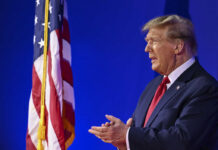
Former President Donald Trump has accused JPMorgan Chase and Bank of America of rejecting over $1 billion in deposits for political reasons, prompting the White House to prepare an executive order targeting potential ideological discrimination in banking.
At a Glance
- Trump claims two major U.S. banks declined to accept his post-presidency deposits
- JPMorgan allegedly ordered Trump to close his account within 20 days
- Executive order in development to probe “debanking” of political figures
- JPMorgan and BofA deny politically motivated closures, welcome regulatory clarity
- Regulators may gain authority to penalize discriminatory financial practices
Claims and Counterclaims
In a recent CNBC interview, former President Donald Trump asserted that both JPMorgan Chase and Bank of America refused to accept more than $1 billion in personal deposits after his presidency. Trump claimed JPMorgan provided a 20-day notice to close his existing account, while Bank of America declined his deposit outright. As a result, Trump said he had to divide the funds among several smaller banks.
These claims have added fuel to a broader conservative argument that financial institutions are “debanking” individuals based on political beliefs. The term refers to the practice of closing or refusing bank accounts without public explanation, often cited as a reputational or compliance measure by banks.
Watch now: Trump Slams JPMorgan & Bank of A | Accuses Banks of Political Bias | Executive Order on Debanking · YouTube
JPMorgan Chase and Bank of America issued denials, stating that they do not close accounts or refuse deposits on political grounds. A JPMorgan spokesperson added that the firm supports the president’s call for clearer regulatory standards. Bank of America issued a similar statement, noting its willingness to work with federal regulators to ensure fair treatment for all clients.
Regulatory Action Ahead
In response to Trump’s claims, the White House is drafting an executive order directing federal regulators to investigate potential ideological bias in the banking sector. The proposed order would instruct agencies such as the Consumer Financial Protection Bureau (CFPB) and the Federal Trade Commission (FTC) to review whether account closures or refusals violate the Equal Credit Opportunity Act or other anti-discrimination statutes.
According to administration officials, the order may also authorize enforcement actions, including fines or consent decrees, against financial institutions found to be engaging in ideologically biased practices. The White House emphasized that the goal is to ensure financial access is based on neutral criteria and not influenced by personal beliefs or political affiliations.
This marks a shift in federal policy, especially after the Federal Reserve eliminated “reputational risk” as a supervisory criterion in June 2025. Previously, reputational considerations were a key factor in banks’ decisions about whom to serve, particularly in politically sensitive cases.
Implications for Financial Oversight
If enacted, the executive order would grant regulators new authority to scrutinize and potentially penalize financial institutions for discriminatory account practices. Industry analysts note that this could pressure banks to enhance transparency in account closures and standardize compliance procedures to avoid legal scrutiny.
Republican lawmakers are already moving forward with legislation that would prohibit regulators from factoring reputational risks into oversight decisions. Such bills are expected to reinforce the executive order’s objectives and further constrain discretionary decision-making by financial institutions.
Sources