President Trump’s refusal to deploy U.S. ground forces to Ukraine while encouraging European allies to shoulder more responsibility signals a major pivot in American defense policy, raising questions about NATO’s future balance of power.
At a Glance
- Trump rules out U.S. ground troops, suggests limited air support for Ukraine
- Gen. Dan Caine hosts European military chiefs to coordinate new guarantees
- France, Germany, and the UK consider ground deployments in Ukraine
- Putin expresses openness to meeting Zelenskyy on Western proposals
- NATO virtual summit set for August 20 to decide next steps
Trump’s Policy Pivot
On August 19, 2025, General Dan Caine, Chairman of the Joint Chiefs of Staff, convened military leaders from Germany, France, the United Kingdom, Finland, and Italy in Washington. The urgent meeting came days after President Trump announced that the United States would not commit ground troops to Ukraine, though it might provide air support.
Watch now: Trump’s NATO Stunner: No More Blank Checks · YouTube
The shift followed Trump’s Alaska summit with Russian President Vladimir Putin and subsequent meetings with Ukrainian President Volodymyr Zelenskyy and European allies at the White House. Trump’s position reflects his long-standing emphasis on reducing America’s defense costs and pressing Europe to take greater responsibility within NATO. Analysts such as Max Bergmann of the Center for Strategic and International Studies note that the move is consistent with U.S. debates over alliance burden-sharing.
Europe Steps Up
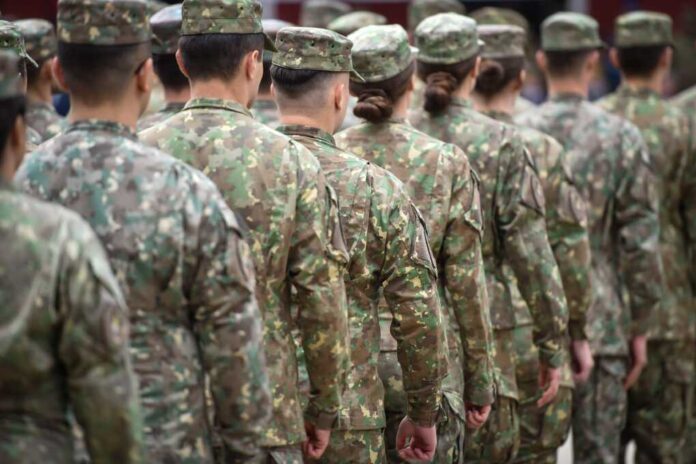
European leaders, particularly from France, Germany, and the UK, signaled willingness to consider limited ground deployments in Ukraine under a peacekeeping mandate. French officials emphasized that Europe’s increased defense budgets, documented in NATO’s 2025 spending report, have laid the groundwork for such a move. Trump himself stressed that European boots on the ground, paired with U.S. air power, would allow allies to maintain credibility against Russia without overburdening American taxpayers.
This position marks a clear shift in NATO dynamics, with Washington retreating from a leadership role it has occupied since the Cold War. While the U.S. military would remain a key player through intelligence and air capabilities, the move effectively places the primary risk of escalation on European partners.
Diplomatic Crossroads
The talks coincide with new diplomatic momentum. Kremlin spokesperson Dmitry Peskov confirmed that Putin is open to meeting Zelenskyy to discuss Western proposals, though he withheld details on possible compromises. The upcoming NATO virtual summit on August 20 is expected to explore options ranging from European-led peacekeeping missions to coordinated air cover by the U.S.
Ukraine’s leadership remains cautious, wary of vague security promises that echo the failed Minsk agreements of 2015. Past attempts collapsed partly because enforcement mechanisms were too weak, and Ukrainian officials fear history may repeat if Russia exploits loopholes.
Political and Strategic Implications
Trump’s decision resonates with conservative voters who have long opposed what they view as costly U.S. commitments abroad. By shifting financial and operational burdens onto Europe, the administration aligns policy with calls for restrained foreign engagement and national budget discipline. However, the plan carries risks: if European governments falter or Russian commitments prove insincere, Ukraine’s security could remain precarious.
Experts caution that air support alone may not create lasting stability in Ukraine. Michael Kimmage, a historian of U.S.-Russia relations at Catholic University, highlights that without binding security guarantees, peace talks risk collapsing under the same pressures that doomed previous agreements. For NATO, the outcome could define whether the alliance adapts to a new era of shared responsibilities or fractures under the weight of diverging strategies.
Sources