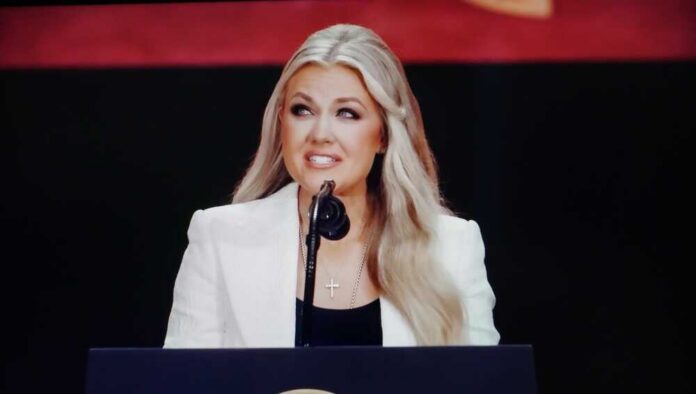
A widow’s confrontation with journalists at the nation’s premier press event descended into chaos when a gunman attempted to storm the White House Correspondents’ Dinner, forcing Americans to reckon with questions about media accountability and the erosion of civil discourse.
Quick Take
- Erika Kirk, CEO of Turning Point USA and widow of conservative founder Charlie Kirk, attended the WHCD to confront media outlets over what she describes as relentless lies about her life and role in her husband’s death.
- A shooting attempt at the event by 31-year-old Cole Tomas Allen, targeting Trump officials, created chaos that Kirk claims journalists prioritized filming over reporting responsibly.
- Kirk released a viral video accusing media figures and personalities like Candace Owens of spreading conspiracy theories that dehumanize her and contribute to political violence.
- The incident highlights a broader frustration—shared across political divides—that institutions and media have lost sight of their responsibility to serve the public interest.
A Widow Seeks Accountability in a Fractured Media Landscape
Erika Kirk traveled to Washington with a singular purpose: to confront the journalists and outlets she believes have systematically destroyed her reputation and character. Dressed in all-black to symbolize what she describes as “evil forces,” Kirk approached a Daily Mail journalist at the WHCD to demand answers about coverage she views as slanderous. Her presence at the event was deliberate and confrontational, reflecting a year of mounting frustration following her husband’s murder in Utah in 2025 and the conspiracy theories that followed.
The chaos that erupted when Cole Tomas Allen attempted to breach the event and target Trump officials transformed Kirk’s confrontation into something far more sinister. As gunshots rang out and guests fled in panic, Kirk witnessed firsthand what she now describes as the ultimate betrayal: journalists more concerned with capturing content than ensuring safety or reporting with integrity. Her observations during those moments of crisis have become central to her indictment of modern media.
Conspiracy Theories and the Dehumanization of a Grieving Widow
Since Charlie Kirk’s death, Erika Kirk has endured relentless speculation and accusation. Former ally Candace Owens promoted conspiracy theories alleging Israeli involvement in Charlie’s murder and implicating Erika herself. Comedians mocked her through skits and caricatures. Headlines questioned her fitness as TPUSA CEO while simultaneously suggesting her complicity in her husband’s death. Kirk frames this sustained attack as part of what she calls a “dehumanization epidemic”—a systematic effort to strip her of her humanity and reduce her to a caricature.
This dehumanization, Kirk argues, does not exist in isolation. She connects it to broader patterns of political violence, including repeated assassination attempts against President Trump. When institutions and media personalities treat individuals as enemies to be mocked rather than people deserving basic dignity, Kirk suggests, the line between rhetoric and violence blurs dangerously. Her message resonates with Americans across the political spectrum who sense that something fundamental has broken in how public figures and media engage with one another.
Media’s Role in a Culture of Crisis
Kirk’s most pointed criticism targets journalism itself. In her viral video released days after the WHCD shooting, she accused journalists of breaking fundamental ethical rules by inserting themselves into the story rather than reporting it. She noted that while guests ducked for cover, reporters held up phones to capture footage—prioritizing content over the safety of those present. This observation cuts to a deeper concern about whether media institutions have lost sight of their responsibility to inform rather than exploit.
The incident at the WHCD serves as a microcosm of larger institutional failures that frustrate Americans across ideological lines. Whether one leans conservative or liberal, many citizens sense that elected officials, government agencies, and now media outlets seem more invested in their own survival and profit than in serving the public good. Kirk’s critique, while rooted in her personal grievance, taps into this shared frustration—the sense that elites operate by different rules and answer to no one.
A Call for Reckoning
Kirk’s statements carry an implicit warning: when institutions fail to police themselves, when conspiracy theories go unchallenged, when dehumanization becomes normalized, the result is not abstract cultural decline but real violence. Her husband is dead. She and her two children live under scrutiny and suspicion. A shooting attempt at a major national event underscores the stakes of allowing discourse to deteriorate unchecked.
Erika Kirk: Media Lied About My Life, Then Turned Shooting Chaos Into Content https://t.co/0YFDkyjEie
— Fearless45 (@Fearless45Trump) May 1, 2026
The WHCD incident and Kirk’s response illuminate a moment when Americans—regardless of political affiliation—must confront uncomfortable truths about institutions that have lost credibility and accountability. Whether media outlets will heed Kirk’s call for reform remains uncertain, but her message has clearly resonated with those who believe the system is broken and those in power no longer serve the people.
Sources:
Erika Kirk Reveals Eyebrow-Raising Reason She Went to WHCA Dinner