Security camera clips, shaken witnesses, and missing body cameras have turned a Maine immigration raid into the latest test of whether federal agents can use deadly force with almost no public proof of what really happened.
Story Snapshot
- A 26-year-old Colombian man was shot and killed by a federal immigration agent during a deportation operation in Biddeford, Maine.
- Senator Angus King says the man was not the operation’s intended target, raising sharp questions about why force was used at all.
- Officials claim the driver “weaponized” his car, but there is no body camera footage and security video does not show the actual gunfire.
- The shooting fits a growing national pattern of immigration agents firing on vehicles, citing self-defense, and rarely facing criminal charges.
What We Know About the Shooting in Biddeford
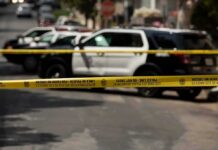
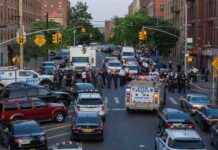
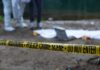
State officials say a United States Immigration and Customs Enforcement agent shot and killed a driver Monday morning in Biddeford, Maine, during a deportation operation at the corner of Pool and Hill streets. The Maine Attorney General’s Office says the man “attempted to flee in a vehicle in the direction of the officer” before he was shot, and that emergency services were called, but he died from his injuries. Officials have not yet publicly released the officer’s name or the full incident report.
Security camera footage from a nearby pawn shop shows key moments just before and after the shooting but not the instant shots were fired. In the video, a white sedan and a dark sport utility vehicle collide, and then the sedan rolls forward before coming to a stop, with bullet holes later visible in the car. News footage of the towed vehicle shows at least four bullet holes, raising questions about how many rounds were fired and from what distance. Those forensic details have not been released yet.
Conflicting Stories: Weaponized Car or Attempt to Stop?
Maine Senator Angus King says he was briefed by Department of Homeland Security Secretary Markwayne Mullin, who told him the man “pulled out in the vehicle” and “weaponized the vehicle,” using the car as a weapon against agents. That official account matches language from the Maine Attorney General’s Office, which states the driver tried to flee “in the direction of the officer.” This framing supports the government’s claim that the agent fired in self-defense to stop a deadly threat.
Local witnesses and advocates have raised a different picture of what happened in those moments. A nearby resident reported hearing an officer yell “Do not get out of the car,” then hearing gunshots, and later hearing the driver say, “I tried to stop,” which seems to clash with the claim that he was using the car as a weapon. Another witness described an officer struggling to open the car door and then pulling out the driver, whose face and head were covered in blood. Those witness accounts are powerful but remain unbacked by audio or body camera recordings.
Missing Body Cameras and a Mistaken Target
King’s office confirmed that the federal immigration agents involved were not wearing body cameras during the operation, so there is no officer-recorded video of the shooting itself. That lack of video leaves the most important questions—exact speed, distance, and timing—locked in competing stories rather than hard evidence. It also highlights a basic policy choice in Washington: the government is sending armed agents into neighborhoods without the same transparency tools many local police now use as standard gear.
King also says that Mullin told him the man who died was not the actual target of the deportation warrant the agents came to serve. Immigrant rights groups, including the Maine Immigrants’ Rights Coalition and Presente!, identified the victim as a 26-year-old Colombian national who had a valid work authorization and a Social Security number. If those details hold, they paint a troubling picture: a man who had legal permission to work in the United States ended up dead in an operation aimed at someone else, with no officer body camera footage to explain why lethal force felt necessary.
A Pattern of Vehicle Shootings and Little Accountability
This Maine case is not an isolated event but part of a wider pattern in federal immigration enforcement. Investigative counts show that between 2015 and 2021, Immigration and Customs Enforcement officers shot 59 people across 26 states and two territories, killing 23 and injuring 24, with no criminal indictments for any of those shootings. Many of these cases share a similar story line: an agent fires on a moving vehicle, officials say the car was used as a weapon, and the case then fades without charges.
Protestors swarmed outside the office of Maine Senator Susan Collins on Monday, July 13, following a fatal ICE-involved shooting in Biddeford.
Footage captured by Taylor Treece shows demonstrators gathered outside the senator’s office, chanting ‘Vote Her Out’ and ‘ICE out of… pic.twitter.com/cqzo2dJAjJ
— Storyful (@Storyful) July 14, 2026
Since Donald Trump’s second term began, news outlets and nonprofit trackers report that immigration officers have shot at least 10 to 14 people, with around 10 deaths, as deportation operations have become more aggressive across the country. Several of the most recent fatal incidents, including ones in Houston and Minneapolis, also involved vehicles and agents who were not wearing body cameras. For Americans on both the right and the left who already believe Washington protects its own and hides the truth, this pattern makes the Maine shooting look less like a tragic one-off and more like business as usual.
Why This Case Hits Nerves Across the Political Spectrum
For many conservatives, the Maine shooting raises questions about basic government competence and mission creep. A federal agency meant to enforce immigration law killed a man who was not its target, during a vehicle stop with no body camera record, and then seized all the key evidence through the Federal Bureau of Investigation, limiting outside review. That kind of opaque, unchecked federal power clashes with small-government values and long-standing worries about a permanent security bureaucracy.
For many liberals, the same event underscores long-running fears about civil rights and unequal treatment. A Latino immigrant, reportedly with legal work papers, died in a hail of bullets after an encounter he may not have even been meant to have, and officials immediately framed his compact car as a “weaponized” threat. Advocacy groups say this fits a pattern where federal immigration officers use deadly force in public spaces, especially against minorities, with little transparency and even less accountability.
What to Watch Next: Evidence, Policy, and Trust
The Maine Office of the Chief Medical Examiner is conducting an autopsy that should confirm the man’s identity, number and path of bullets, and cause of death. The Federal Bureau of Investigation and state investigators hold the car and other physical evidence, which could include engine data on speed and independent forensic mapping of bullet paths. So far, none of that has been released to the public, and there is no timeline for when, or how much, will be shared.
Going forward, several questions will show whether this is a turning point or just another entry on a growing list. Will the Department of Homeland Security and Immigration and Customs Enforcement adopt mandatory body cameras and strict rules for shooting at vehicles, as some policing experts suggest? Will Congress, which just backed tens of billions of dollars in immigration enforcement funding, demand real transparency when lethal force is used, or accept another closed-door briefing and move on? How those questions are answered will signal whether the system serves citizens—or mainly protects itself.
Sources:
youtube.com, bostonglobe.com, cnn.com, fox9.com, news.sky.com, cbsnews.com, thetrace.org