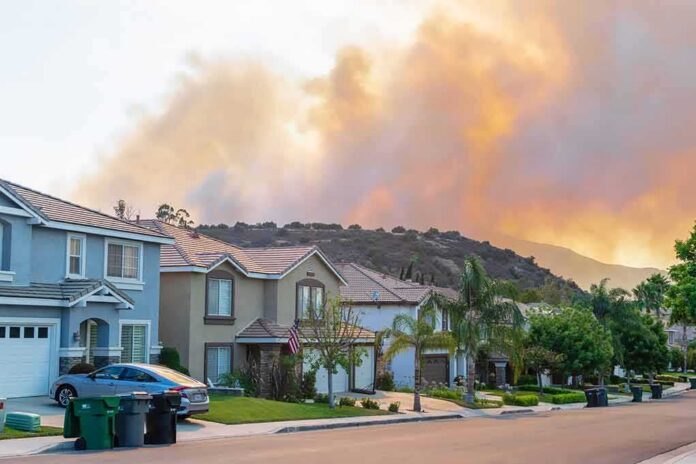
A fast-moving Northern California wildfire exploded from a small blaze into an 800‑plus‑acre threat in hours, forcing families near Hopland to drop everything and get out now.
Story Snapshot
- CAL FIRE called the Feliz Fire an “immediate threat to life” as it raced through Mendocino County.
- The blaze jumped from about 40 acres to more than 500 acres in a few hours, then reached 841 acres with only 5% containment.
- Officials issued urgent evacuation orders and warnings for multiple zones and shut down part of Highway 101.
- The rapid fire spread and blunt “LEAVE NOW” orders highlight growing worries that ordinary people are on the front line of disasters while government struggles to keep up.
Feliz Fire erupts and triggers urgent evacuation orders
The Feliz Fire started Saturday afternoon near Feliz Creek Road in the Hopland area of Mendocino County, a rural community along Highway 101. CAL FIRE reported the fire around 3:39–3:40 p.m. at roughly 40 acres and said it was “spreading at a dangerous rate” through local vegetation. Within hours, official updates showed the blaze had surged past 500 acres, driven by hot, dry, and windy conditions that made the flames hard to control.
As the fire grew, CAL FIRE took the unusual step of stating in plain language that the Feliz Fire was an “Immediate threat to life” and warning residents that “This is a lawful order to LEAVE NOW.” The Mendocino County Sheriff’s Office followed with evacuation orders and warnings for several zones around Hopland, including MEN‑2HOP04 and MEN‑2UKV29, and told people in nearby areas to be ready to flee at any moment. State emergency officials also urged residents not to delay if told to evacuate.
Highway 101 closure and expanding danger zone
While firefighters attacked the blaze from the air and ground, the growing fire forced a major traffic shutdown on one of Northern California’s key routes. A stretch of U.S. Highway 101 near Hopland was closed in both directions for hours, between Highway 175 and points north, so crews could work and drivers would not be trapped by smoke or flames. Local reports described the fire burning west of Hopland and threatening structures and power lines, heightening fears that the damage could spread beyond open hillsides.
By about 9 to 10 p.m., CAL FIRE incident updates and local outlets reported the Feliz Fire at roughly 841 acres with only 5% containment. Evacuation warnings covered a wide area from County Road 110 to Duncan Springs, as well as parts of downtown Hopland and nearby vineyards. Deputies told residents along these roads and in designated zones to be prepared to leave at a moment’s notice, showing how quickly a local blaze can turn into a regional emergency that affects homes, jobs, and travel.
What this wildfire shows about risk, trust, and the “system”
For many Americans, this kind of fire feels like the latest proof that regular people face growing threats while the larger system seems stuck in place. The Feliz Fire hit a small farming town, but its smoke advisory reached into neighboring Sonoma County and warnings extended far beyond the ignition point. Residents had to trust short, blunt alerts from CAL FIRE and the sheriff’s office, even as acreage estimates jumped from 40 to 200 to over 500 and then 841 acres in a single day.
The Feliz Fire has grown to 841 acres in Mendocino County, triggering evacuations, a smoke advisory for parts of Sonoma County, and a large-scale firefighting response as crews work to contain the blaze.
Video Courtesy of Norm Green.#FelizFire #CaliforniaWildfire pic.twitter.com/e7lcQWfRr1
— The Mendocino Voice (@TheMendoVoice) August 2, 2026
Some see these fast-changing numbers and bare‑bones messages as another sign that government often reacts late and explains less, leaving families to sort out the danger on their own. Others worry that without clear, detailed reasoning for each order, people will start to tune out warnings, even when the threat is real. In this case, the record shows no solid evidence that officials overreacted; instead, it shows a wildfire racing across dry land while agencies scrambled to stay ahead of it.
Balancing freedom, safety, and accountability
The Feliz Fire also raises bigger questions that cut across party lines. Many conservatives already fear that state power keeps growing while basic services, like fire prevention and forest management, lag behind. Many liberals fear that climate‑driven disasters hit working families hardest while wealthy interests stay protected. Watching a rural community get evacuation orders and road closures with little time to prepare feeds both views, and deepens the sense that elites will be fine while ordinary people absorb the shock.
At the same time, this incident shows why some emergency powers exist. When winds push a fire from 40 acres to over 500 in a few hours, officials cannot wait for perfect data or a full explanation before acting. They have to issue clear orders that people will follow, even if those orders feel harsh. The hard work comes later, when citizens demand to see the full incident record, understand why each zone was told to leave, and make sure these decisions respect both safety and the freedoms the country was built on.
Sources:
nypost.com, sfchronicle.com, fire.ca.gov, mendovoice.com, x.com, facebook.com