President Trump announced an immediate U.S. Navy blockade of the Strait of Hormuz following collapsed peace talks with Iran, threatening to seize control of the vital oil chokepoint using the same aggressive tactics that delivered 100 million barrels of Venezuelan crude to American refineries.
Story Snapshot
- Trump ordered U.S. Navy to blockade Strait of Hormuz after failed Pakistan negotiations over Iran’s nuclear program and maritime toll demands
- Administration directly compared strategy to Venezuela oil seizure, signaling potential confiscation of Iranian petroleum assets
- President declared U.S. military “fully locked and loaded” to destroy Iranian mines and interdict vessels paying Tehran’s extortion fees
- Trump urged oil-dependent nations to secure their own passage through the strait, claiming prior U.S. strikes decimated Iran’s defensive capabilities
Trump Issues Blockade Order After Diplomatic Failure
President Trump posted on Truth Social that U.S. naval forces would immediately begin blockading the Strait of Hormuz after weekend peace talks in Pakistan ended without agreement. The president stated Iran would “never have a nuclear weapon” and warned the Islamic Republic that U.S. forces stood ready to interdict any vessel paying Iranian tolls to transit the critical waterway. Trump declared the blockade would commence “shortly” with allied participation, marking an unprecedented escalation in the ongoing conflict that has already devastated Iran’s navy, air force, and leadership through previous American strikes.
Venezuela Strategy Applied to Iranian Oil Assets
The president explicitly invoked America’s Venezuelan oil operation as the template for handling Iran’s petroleum resources. Trump noted that U.S. seizure of Venezuelan crude “worked out incredibly” with 100 million barrels now stored in Houston, producing what he called “fantastic” bilateral relations. The comparison suggests the administration may pursue outright confiscation of Iranian oil assets rather than merely disrupting exports. Trump stated that if the decision were his alone, he would “keep the oil,” echoing longstanding rhetoric about seizing resources from hostile regimes to offset military costs and eliminate revenue streams funding terrorism and nuclear development.
Reassigning Global Oil Security Responsibilities
Trump told oil-importing nations dependent on Strait of Hormuz shipments to “go to the Strait and just take it” themselves, arguing that U.S. military operations have already completed the difficult work by decimating Iranian defenses. The president emphasized America’s energy independence through “drill-baby-drill” policies that made the United States the world’s top oil producer, insulating domestic consumers from Hormuz disruptions. Trump acknowledged Iranian attacks on tankers previously spiked U.S. gas prices temporarily but assured Americans the nation possesses “plenty of gas” and negligible dependence on Middle Eastern imports, framing the blockade as protecting international commerce rather than vital American interests.
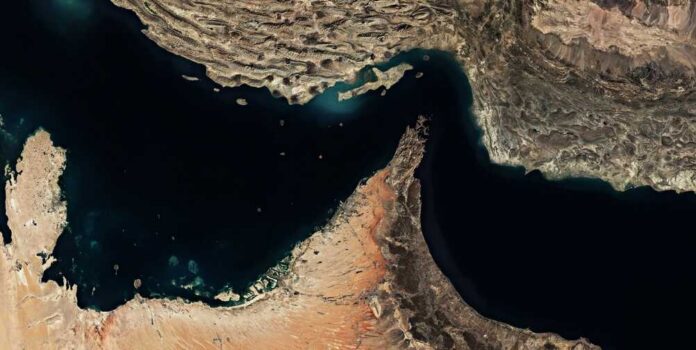
The Strait of Hormuz handles approximately twenty percent of global oil transit through a twenty-one-mile chokepoint that Iran has threatened to close during past conflicts, including the 1980s Tanker War and 2019 maritime confrontations. Trump’s directive to destroy Iranian mines and retaliate against any hostile fire represents the most aggressive U.S. posture toward the waterway since Operation Earnest Will, when American warships escorted reflagged Kuwaiti tankers through Persian Gulf waters. The president warned that any Iranian response would be “blown to hell,” declaring U.S. forces “fully locked and loaded” for comprehensive military action against remaining regime assets and nuclear facilities.
Economic and Strategic Implications
The blockade threatens immediate disruption to global oil markets, potentially spiking prices worldwide even as American consumers remain partially insulated by domestic production. Trump’s strategy positions the United States as kingmaker for international energy flows, forcing traditional allies to either negotiate passage independently with a weakened Iran or rely on American military protection under new terms. The approach signals a fundamental shift from guaranteeing freedom of navigation as a public good toward transactional security arrangements that advance Trump’s “America First” doctrine. Critics across the political spectrum may question whether unilateral blockade authority and potential oil seizures align with international law, though Trump’s supporters see decisive action preventing nuclear proliferation and ending what they view as Iranian extortion.