
Marco Rubio’s visa crackdown has now reached a scale that will anger anyone who wants a secure border and a serious immigration system.
Quick Take
- The State Department says it has revoked more than 175,000 visas under President Trump.
- Officials say the cuts targeted crimes, fraud, violence, visa violations, and national-security threats.
- Earlier this year, Rubio said the total was already in the thousands and kept rising.
- Some revocations drew attention because they involved student activism and foreign-policy speech.
What Rubio Said About the Visa Push
Secretary of State Marco Rubio told lawmakers in May that the number of visas he had canceled was probably in the thousands and that more work remained. Reuters reported that Rubio said he personally signed off on each of the more than 300 revocations he had described earlier in the spring. That put the scale of the campaign in plain view long before the latest figure landed.
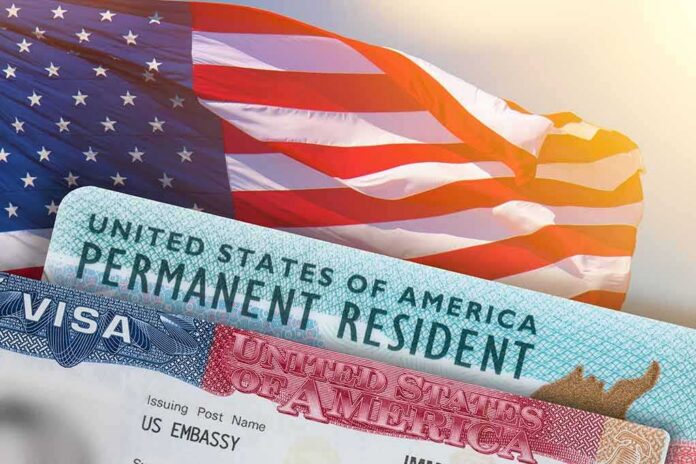
The State Department later released a fact sheet saying it had revoked more than 175,000 visas from foreign nationals under President Trump. The department said the people affected violated visa terms, committed crimes, called for violence against United States citizens, defrauded Americans, abused the immigration system, or endangered national security. It also said the majority were revoked after law-enforcement encounters.
Why the Number Is So Large
The department’s own examples show that the revocations were not limited to one narrow category. The public record points to crimes such as assault, driving under the influence, theft, drug offenses, sexual assault, child abuse, fraud, and embezzlement. Fox News reported that the State Department said roughly 6,000 student visas were pulled in 2025 for overstays and law violations, with assault, driving under the influence, burglary, and support for terrorism among the reasons listed.
That scale matters because visas are a privilege, not a right. Rubio has said the government can revoke them when it learns information that would have blocked the visa in the first place. For readers frustrated by years of weak enforcement, the message is simple: if a foreign national breaks the rules, threatens Americans, or abuses the system, the government is finally acting like it means business.
Where the Fight Gets Political
Not every revocation has looked like a clean-cut criminal case. BBC, NPR, and The New York Times reported that Rubio also tied some cancellations to pro-Palestinian campus protests and foreign-policy views. Those reports fueled criticism that the administration used broad discretion in cases touching speech and activism. That concern is real, even if it does not erase the State Department’s larger claim that most revocations were tied to law enforcement and security.
NEW: The @StateDept says it has revoked more than 175,000 visas under President Trump, targeting foreign nationals accused of crimes, violating visa terms, calling for violence against Americans, defrauding Americans, abusing the immigration system or posing national security… pic.twitter.com/CXwoYXBEjO
— Ali Bradley (@AliBradleyTV) August 10, 2026
The deeper issue is trust. Supporters see a long-overdue cleanup of a broken visa system. Critics see a power that can reach into speech, politics, and campus activism. Both sides know the same truth: visa decisions carry huge consequences, and the government controls nearly all the information. The more transparent the administration is about the grounds for each revocation, the harder it becomes for opponents to paint every case as pure politics.
What the Public Record Actually Shows
The strongest fact in the record is the total itself: more than 175,000 visas revoked in roughly twenty months. The second strongest fact is the stated reason for most of them: crimes, fraud, violence, and security concerns. The third fact is that a smaller, highly visible set of cases involved student activism and foreign-policy speech. Put together, the record shows a hard-line enforcement campaign with both clear public-safety cases and more controversial discretionary calls.
For Trump voters, that mix will probably feel familiar. The administration is using the powers of office to restore order and reassert control over who gets to stay in the country. At the same time, the activism cases are a reminder that broad government power needs sharp limits, clear rules, and constant oversight. That tension is exactly why Rubio’s visa war is drawing so much attention.
Sources:
pjmedia.com, reuters.com, bbc.com, nytimes.com, npr.org, youtube.com, state.gov, moneycontrol.com, washingtonexaminer.com, axios.com, theguardian.com, politicalhub.co.in, theblaze.com, ndtv.com, aau.edu, yahoo.com, rollingstonephilippines.com, foxnews.com, instagram.com, cbsnews.com