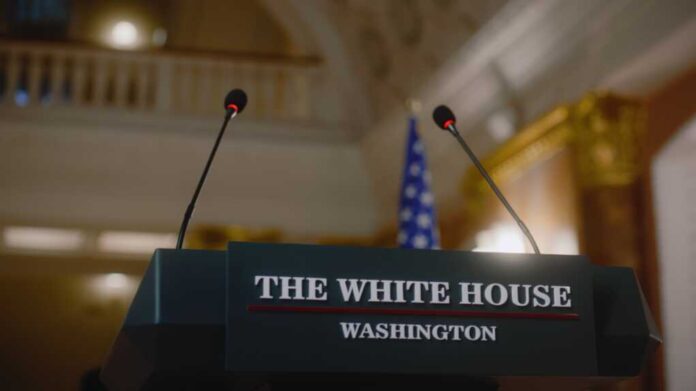
The White House recently sparked controversy by posting a digitally altered, likely AI-generated, photo of civil rights attorney Nekima Levy Armstrong following her arrest at a protest. The original image showed a neutral expression, but the manipulated version depicted her crying, raising immediate concerns about the ethical use of technology in political messaging and the potential for a severe erosion of public trust in official government communications.
Story Highlights
- The White House posted an AI-altered photo of a protester’s arrest.
- The original image showed a neutral expression; the altered one showed tears.
- This incident raises concerns over AI use in political messaging.
- Specialists highlight the potential erosion of public trust.
White House’s Use of AI-Manipulated Imagery
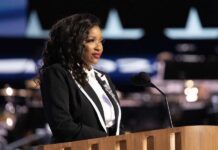
The White House recently posted a digitally altered image of civil rights attorney Nekima Levy Armstrong on social media. The original photo, taken during Armstrong’s arrest at a Minnesota protest against ICE, showed her with a neutral expression. However, the altered version depicted her crying, suggesting distress. The manipulation, likely AI-generated, was disseminated shortly after Homeland Security Secretary Kristi Noem posted the unaltered version. This raises immediate concerns about the ethical use of technology in political messaging.
This digital alteration is not just a case of minor editing but a deliberate attempt to change a person’s facial expression. The White House has dismissed the altered image as a “meme,” avoiding accountability for the manipulation. Professionals, like UC Berkeley’s Hany Farid, emphasize that such trends could undermine public trust in official communications, especially when AI tools are used to alter real-time events. The implications of this practice extend beyond political rhetoric to challenge the integrity of government communications.
The White House has confirmed its official X account posted a fake image of a woman arrested in Minnesota after interrupting a service at a church where an ICE official appears to be a pastor. The White House image altered the actual photo to wrongly make it seem like the… pic.twitter.com/8sloiPu2Q9
— Daniel Dale (@ddale8) January 22, 2026
Background of the Protests
The protests in the Twin Cities were sparked by the fatal shooting of Renee Good by an ICE officer earlier this month. This incident has fueled anti-ICE demonstrations, with Armstrong at the forefront. These demonstrations focus on figures linked to ICE, including a pastor at Cities Church in St. Paul who is also an ICE officer. The Trump administration’s aggressive immigration enforcement policies have intensified these protests, making the church a focal point for activists. Given the charged atmosphere, the alteration of Armstrong’s image further complicates an already tense situation.
Armstrong, who has a history in civil rights activism, was arrested under charges related to intimidation of constitutional rights exercisers. Despite the charges, a judge rejected her detention, allowing her release. Other arrestees, including Chauntyll Louisa Allen and William Kelly, were also charged. Meanwhile, an independent journalist, Don Lemon, had a complaint rejected as it was deemed a protected activity. The administration’s portrayal of protesters as agitators is part of a broader strategy to justify enforcement actions.
Impact and Implications
In the short term, the use of AI-manipulated images by the White House erodes public trust and fuels partisan divides. Long-term implications include the normalization of AI deception in politics, complicating the verification of government communications. Protesters like Armstrong face reputational harm due to altered portrayals. The situation also affects activists in the Twin Cities amid ongoing ICE tensions. Socially, this incident heightens distrust in institutions, while politically, it supports the administration’s narrative but invites backlash.
The broader industry faces challenges in detecting manipulations, as highlighted by the AI forensics field. This situation sets a precedent for the political use of AI visuals, raising ethical questions about their application. As the White House continues to use such images, professionals warn of the difficulty in verifying the authenticity of government communications. This trend could have significant implications for public perception and political discourse.
Watch the report: White House defends AI image showing arrested MN protester
Sources:
- White House Posts Altered Photo of Minnesota Protester’s Arrest
- White House shares an altered photo of arrested Minnesota protester Nekima Levy Armstrong
- White House posts digitally altered image of woman arrested after ICE protest | Trump administration | The Guardian