China’s aggressive patrols in the South China Sea accuse U.S. allies of provocation, signaling Beijing’s defiance that could drag America into costly foreign entanglements under President Trump’s America First doctrine.
Story Snapshot
- PLA Navy patrolled South China Sea February 23-26, 2026, coinciding with Philippines-US-Japan drills.
- China labels joint exercises disruptive, vows to safeguard sovereignty while rejecting 2016 arbitral ruling.
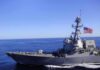
- U.S. destroyer USS Dewey and other assets joined Philippine frigate Antonio Luna for replenishment and air patrols.
- Escalation risks invoke 1951 U.S.-Philippines treaty, threatening American resources amid Indo-Pacific tensions.
PLA Patrol Details
China’s People’s Liberation Army Southern Theater Command Navy executed a routine patrol across key South China Sea waters from February 23 to 26, 2026. Senior Captain Zhai Shichen, the command’s spokesperson, accused the Philippines of co-opting external forces like the United States and Japan to disturb regional peace. This patrol directly overlapped with the second Philippines-US-Japan Multilateral Maritime Cooperative Activity of 2026. The exercises featured the Philippine frigate Antonio Luna, U.S. destroyer USS Dewey, a U.S. Poseidon plane, Japanese P-3 Orion aircraft, helicopters, and fighter jets conducting replenishment-at-sea, air patrols, and communications checks. Chinese state media framed these allied drills as provocative foreign interference destabilizing the region.
Overlapping Disputes and Claims
South China Sea tensions arise from overlapping territorial claims involving China, the Philippines, Vietnam, Malaysia, Brunei, and Taiwan over resource-rich islands, reefs, and waters. China asserts historic rights under its nine-dash line, invalidated by the 2016 Permanent Court of Arbitration ruling that upheld the Philippines’ exclusive economic zone. Disputes focus on the Spratly Islands, including Second Thomas Shoal where the grounded Philippine outpost BRP Sierra Madre receives resupplies, and Scarborough Shoal, known as Huangyan Dao to China. President Ferdinand Marcos Jr. has escalated these missions since 2022, shifting from prior conciliatory policies. Chinese Coast Guard responses include water cannons, lasers, and collisions since 2023, alongside reef expansions for surveillance radars and antennas.
U.S. and Allied Involvement
The United States reaffirmed its 1951 Mutual Defense Treaty covers South China Sea operations for Philippine forces in March 2024. Japan has sold military equipment to the Philippines and Vietnam for deterrence. The recent multilateral activity on February 26 emphasized replenishment, landings, communications, and exchanges in Subic Bay. U.S. Indo-Pacific Command deployed assets like the USS Dewey and Poseidon plane to enhance interoperability. On February 28, PLA naval and air units patrolled near Scarborough Shoal. Philippines reports detected 18 Chinese vessels near disputed areas, alleging spying and signal interference. These actions heighten clash risks through collisions or flares at key shoals.
Escalation Risks and Impacts
Short-term effects disrupt Philippine fishing and resupplies, straining diplomacy with rhetoric complaints lodged by Manila. Long-term, escalation could trigger the U.S.-Philippines treaty, drawing American forces into superpower confrontation amid vital $5 trillion annual trade routes. Untapped gas deposits remain inaccessible due to militarization, including U.S. missile plans and Chinese reef bases. Analysts describe China’s gray-zone tactics—surveillance upgrades and interference—as assertions of control without full conflict. Philippines pursues dialogue on a Code of Conduct while building alliances. Chinese sources portray patrols as defensive routine; Western views see aggression eroding stability. President Trump’s administration prioritizes avoiding such overreach, focusing resources on domestic security.
China Conducts Patrol In South China Sea, Accuses Philippines Of Disturbing Regional Peace https://t.co/rgd93dwI6Z
— zerohedge (@zerohedge) March 3, 2026
Sources:
China holds own South China Sea patrol, criticises Philippines drills
PLA navy conducts routine patrol in South China Sea
Global Times report on PLA patrols near Huangyan Dao
Territorial Disputes in the South China Sea – CFR
Japan, Philippine, and US Forces Conduct Multilateral Maritime Cooperative Activity