Sixteen years after the Fort Hood massacre, most national war-casualty rolls still leave the dead off their lists—even though the Army awarded Purple Hearts to many victims in 2015.
Story Highlights
- Congress enabled Purple Hearts for Fort Hood victims, and the Army awarded them in 2015.
- Major post‑9/11 casualty databases still do not list the Fort Hood dead, according to reporting.
- Lawmakers sought equal honors and benefits through the Honoring the Fort Hood Heroes Act.
- Awards and casualty classifications remain misaligned across federal and memorial systems.
What changed in 2015 and what did not
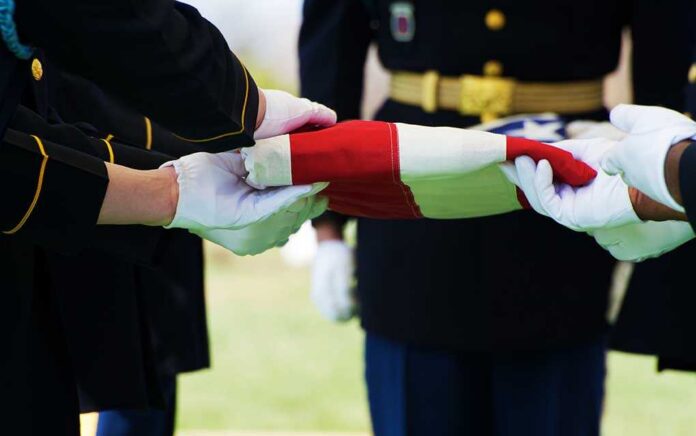
Congress changed Purple Heart eligibility in the 2015 defense bill so Fort Hood victims could qualify. The Army said Secretary John McHugh approved Purple Hearts for Soldiers and Defense of Freedom Medals for eligible civilians under the new standard tied to foreign terrorist organization inspiration or support. A Congressional Research Service summary records the April 2015 ceremony giving Purple Hearts to families of 10 Soldiers killed and to 26 wounded service members. These awards recognized sacrifice but did not rewrite every other classification rule.
Military Times reports that several major systems still do not include Fort Hood among post‑9/11 war dead. Those include the Global War on Terrorism Memorial at the National Infantry Museum and the Defense Casualty Analysis System, which lists the fallen by conflict. The museum said it relies on names from the Department of Defense. That pipeline has not produced Fort Hood entries. The gap shows how one policy change can honor victims while other records stand still.
How Congress framed the issue and why it matters
Lawmakers moved early to treat the attack as terrorism for honors and benefits. The Honoring the Fort Hood Heroes Act, introduced in 2013, aimed to declare the November 5, 2009 shooting a terrorist attack and to extend equal status for medals and benefits, including Purple Hearts for those killed or wounded. That push helped drive the later eligibility fix. It also set a clear intent: do not let red tape deny recognition. The law’s narrow path, however, focused on awards, not every database rule.
The Army’s 2015 statement described the legal change as the trigger for the awards. It also documented the case facts that made national news: thirteen people killed and more than thirty wounded at Fort Hood, and Major Nidal Hasan’s 2013 conviction on 13 counts of premeditated murder and 32 counts of attempted murder. Those facts are not in dispute. Still, awards flowed through a specific eligibility test. That left broader casualty classification decisions to separate policies that may not align.
Why this discrepancy persists across systems
Congress, the Army, and memorial administrators operate different rulebooks. Awards like the Purple Heart follow statute and service policy. Casualty databases follow their own inclusion criteria tied to conflicts and duty status. A congressional research report notes that Fort Hood awards followed a legislative wording change, not a general reclassification for all records. Military Times reports that the memorial and federal casualty systems still exclude the Fort Hood dead, reflecting those separate rules and lines of authority.
Confusion deepens because totals and categories vary across records. The Army has cited 13 killed and more than 30 wounded, while the research summary lists 10 Soldiers killed and 26 Soldiers wounded receiving Purple Hearts, with separate civilian awards. Military Times cites 12 Soldiers and one civilian killed and 32 injured. These differences reflect military versus civilian status and award eligibility, not doubt about the tragedy. But they make database corrections harder to execute cleanly.
What both sides of the aisle see in this fight
Families and many veterans see a system that honors service with medals but erases names from the nation’s shared roll of loss. They argue that if Congress and the Army could grant Purple Hearts, the names should also appear on post‑9/11 memorial lists. They view the split as a failure of basic respect. Military Times reports that advocates say the incident remains treated as “workplace violence,” which blocks inclusion in those rosters despite the 2015 awards.
Officials face guardrails they did not write. The Army’s own materials describe Fort Hood as a shooting and anchor Purple Heart eligibility to a standard about foreign terrorist organization links, not to a broad domestic terrorism label. Memorial stewards say they depend on Defense Department feeds. The result is a bureaucratic loop: each office points to another office’s rule. That loop may be lawful, but it clashes with the public’s common‑sense test of fairness.
What would fix the record
Leaders could take three steps that respect process and people. First, publish clear inclusion criteria for the Defense casualty systems and the Global War on Terrorism Memorial database. Second, state whether Fort Hood fits those criteria today, and if not, what lawful change would be needed. Third, reconcile the official roster that separates Soldiers and civilians so any listing is accurate and consistent with award records. That would end the guessing and meet families where they live—in truth and daylight.
Sources:
militarytimes.com, congress.gov, war.gov