

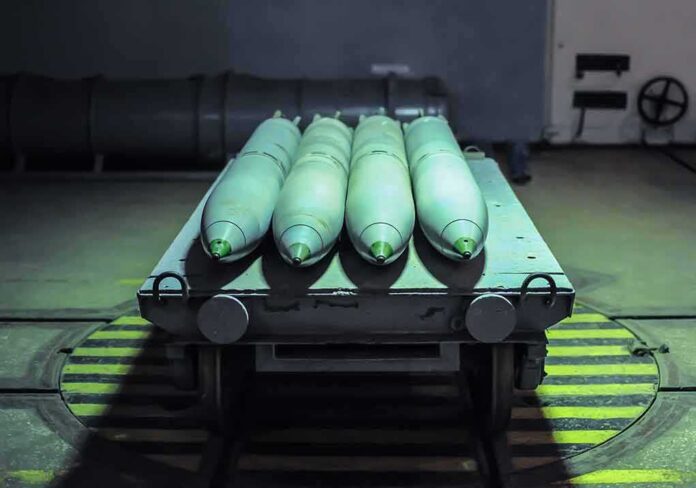
With a federal permit on hold, the U.S. Army told a court it may still blow up nearly 5 tons of unstable lead azide in Iowa by invoking a separate emergency power—pitting safety fears against trust in government process.
Story Snapshot
- A federal appeals court paused the Environmental Protection Agency emergency permit for the blast.
- The Department of Justice said the Army can proceed under a different emergency authority despite the pause.
- An Army assessment says 68 barrels of crystallized lead azide pose a risk of uncontrolled explosion.
- Environmental groups warn a detonation could spread toxic lead dust over parts of Iowa and Illinois.
What officials say the emergency is
U.S. Department of Justice filings describe 68 barrels holding about 9,700 pounds of degraded lead azide at the Iowa Army Ammunition Plant. The filing says falling temperatures could trigger an uncontrolled blast and that a controlled detonation is “necessary now” to remove the danger. An Army Environmental Assessment labels the material as degraded and crystallized lead azide, a very sensitive explosive used to start other blasts. The assessment documents a plan to destroy the drums in phases on site.
The Environmental Protection Agency issued an emergency permit on November 13 to treat the waste by intentional detonation, with required air testing and cleanup after the blast. After environmental groups sued, the U.S. Court of Appeals for the Eighth Circuit issued an administrative stay, putting the permit on hold while it reviews the challenge. The Justice Department then told the court the Army could still proceed under a separate emergency exclusion in waste law, even with the permit paused.
Why the plan is so contested
Environmental groups, including the Iowa Environmental Council and Sierra Club, argue an onsite blast could send toxic lead dust into nearby communities and farmland across the Mississippi River in western Illinois. Their filings and public statements say dust could settle in yards, gardens, and play areas and linger in soil and water runoff for years. They also say the permit record does not show that safer methods, like chemical neutralization or other containment, were fully explored or explained to the public.
Reporters and advocates highlight that Army dispersion maps and modeling include parts of western Illinois within possible exposure ranges, making this a cross-border concern. Local officials in both states criticized short notice and raised health questions about airborne lead and surface contamination after the blast. The court’s stay adds pressure by signaling that the legal and technical review is not yet settled, even as the Army describes the situation as an immediate hazard that cannot wait.
What the Army’s analysis covers—and what it does not show publicly
The Army’s Environmental Assessment says it reviewed options—keep storing the material, move it, chemically treat it, or detonate it in place—and chose detonation to limit handling of fragile, crystallized explosives. The assessment and the permit reference monitoring and cleanup steps after the blast, which implies some expected contamination to track and remove. But the public record available so far does not include full technical appendices with risk calculations that compare each option in detail.
Justice Department filings stress that the immediate danger outweighs delays, yet they do not attach independent expert declarations in the material we can access. The record cites urgent temperature risks and instability, but lacks public test data or named outside experts to verify thresholds for uncontrolled detonation. That evidence gap fuels public distrust on both the left and the right, who see agencies moving fast with high stakes and changing legal justifications while asking communities to accept the risks.
What this fight says about governance and trust
Explosives safety often forces a hard trade: the option that removes the hazard can also create visible pollution. Here, the Army says detonation is the safest overall choice because it minimizes handling a touchy explosive. Opponents say the government did not prove that claim or earn trust through notice and transparency. The appeals court pause means judges will weigh those claims quickly. Meanwhile, families want one thing: clear facts, verified by independent experts, before anyone lights the fuse.
Sources:
zerohedge.com, chicago.suntimes.com, nbcchicago.com, nbcdfw.com, desmoinesregister.com