
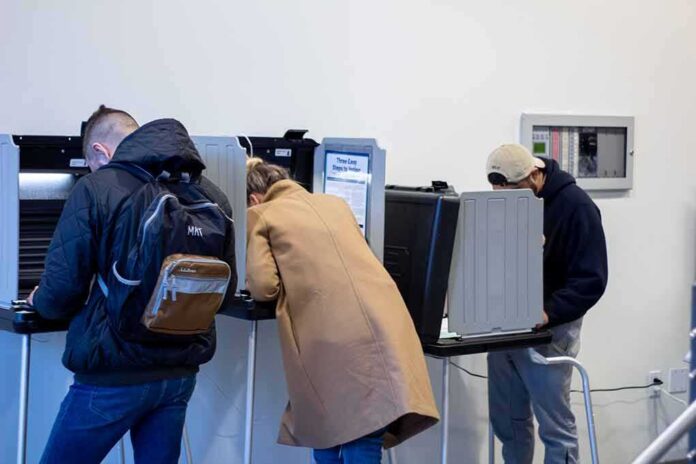
A federal complaint and a six-hour hearing now put Illinois voter record changes under a legal microscope, reigniting trust questions neither party should ignore.
Story Snapshot
- Unite4Freedom seeks court-ordered access to Illinois voter records and audit logs.
- A state hearing logged evidence of a county-versus-state record discrepancy.
- Illinois officials say frequent updates are routine and locally driven.
- No court has ruled that the changes were fraudulent or changed results.
What Sparked The Fight Over Illinois Voter Records
Unite4Freedom filed a federal complaint on November 17, 2026. The filing asks a court to order access to election records and allow an independent review of voter-registration and voting-history data. The group says Illinois did not fully produce records they requested under the National Voter Registration Act. They also filed an earlier administrative complaint on July 23, 2026. That filing asked officials to preserve data while the review was pending.
Joe Hoft’s report summarized the suit and cited a large number of changes to participation records across 2025 and 2026. The report also noted the plaintiffs do not claim every flagged item is fraud or proof of a wrong outcome. Unite4Freedom’s litigation page frames the case as about access and transparency, not a final judgment on fraud. There is no ruling that voter-record changes altered results at this time.
Illinois Officials Say Updates Are Normal And Local
The Illinois State Board of Elections says the voter list is updated at least weekly as new eligibility data comes in. The board says it reviews claims of irregularity and refers apparent violations for possible investigation. Illinois is a bottom-up system. Local election authorities, not the state board, input, maintain, and cancel voter registrations. The state board maintains the technology and shares cross-checks. Local officials confirm matches and make any needed updates.
State law requires frequent sync between local and statewide data. The law also requires monthly updates to the statewide list. Officials describe routine maintenance that includes address changes, inactive status when mail is returned, and removals after set timelines. These rules give legal reasons for post-election changes that some may see as alarming without context.
Evidence Entered, But Key Questions Remain Open
An Illinois Help America Vote Act hearing ran about six hours and entered evidence into the record. That evidence included a discrepancy between a person’s county-level voter record and data kept by the state. The hearing created an official record that can be checked and reviewed in court if needed. The group says its analysis used official state and county records from the record custodians, which could allow an audit trail.
A separate case in Pulaski County produced a conviction for illegal record alteration. A former chief deputy clerk pleaded no contest and received a suspended sentence and a fine. That case shows that voter-record tampering can happen. It does not, by itself, link to the Illinois statewide changes in the current lawsuit, or show similar methods or dates.
Why This Matters To Voters Across The Aisle
Trust falls when large systems change records without clear, public logs. People on the right see risk of manipulation. People on the left see risk of wrongful removals. Both want clean rolls and counted votes. The path forward is simple, but hard: release complete change logs with timestamps, user identifiers, prior and new values, and reasons. Independent reviewers can then match changes to canvass totals and eligibility decisions.
Illinois officials say updates are normal, frequent, and done by local authorities under law. Unite4Freedom says the scale and timing of changes deserve an outside review. Both claims can be tested. If the court orders full production, auditors can check if changes were lawful maintenance or something else. Clear answers would cool tempers, support fair elections, and rebuild trust that our systems serve the people, not the insiders.
What To Watch Next
Watch for a court order on records access and data preservation. Look for a public release of the HAVA hearing transcript and exhibits. Track whether Illinois produces complete logs across the lifecycle of each disputed record. A transparent, auditable process can confirm normal maintenance or flag real problems. Either result helps voters. Sunlight is the only fix for a system many Americans now fear is too complex, too opaque, and too easy to excuse.
Sources:
storage.courtlistener.com, docs.house.gov, joehoft.com, unite4freedom.com, nwaonline.com, democracydocket.com, ilga.gov, elections.il.gov, capitolnewsillinois.com