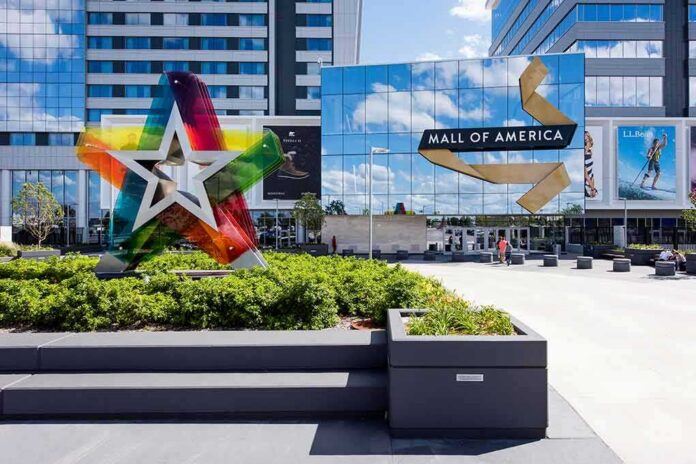
Federal agents say they stopped an 18-year-old who planned to gun down dozens at the Mall of America in support of the Islamic State group.
Story Snapshot
- Justice Department charged an 18-year-old with receiving a gun to commit terrorism.
- FBI undercover operation ended with an arrest after a rifle and 200 rounds changed hands.
- Court filings say the suspect discussed killing 30 to 60 people and targeting non-Muslims.
- Case reflects years of informant-driven counterterrorism stings that courts often uphold.
What Prosecutors Say Happened in Minnesota
United States Justice Department officials charged Sheikhdoon Abdullahi Mohamud, 18, with one count of knowingly receiving a firearm and ammunition to commit a federal crime of terrorism. The charge came after an FBI investigation into his alleged plan to carry out a mass shooting at the Mall of America in support of the Islamic State group, according to a federal news release. Prosecutors say agents disrupted the plan before any attack took place and arrested Mohamud on Tuesday in Minnesota.
The criminal complaint describes a focused target and timing. Prosecutors say Mohamud told a source he wanted to strike the Mall of America and cause mass casualties. News accounts that cite the filing state he aimed to buy an AK-47 style rifle and a large supply of ammunition to carry out the attack. Authorities say the plot involved a public event window that could draw large crowds and raise the risk to families and workers at the mall.
How the Undercover Sting Unfolded
FBI agents used a confidential informant and an undercover employee during the probe. According to a local report based on the affidavit, Mohamud paid $600 for an AK-47 style rifle and 200 rounds of ammunition from an undercover FBI employee posing as a member of the Islamic State group. Agents arrested him at a public park in Richfield, a short drive from the mall, after the exchange. The arrest capped a longer investigation that tracked his alleged intent and steps toward action.
Prosecutors say the suspect spoke about killing dozens of people and said he wanted to target non-Muslims. That alleged intent, combined with the weapons handoff, formed the basis for the terrorism charge. The complaint frames the operation as prevention: officials argue they stopped a mass shooting plan before it moved into a crowded shopping center. As with all cases at this stage, the charge is an allegation, and the defendant is presumed innocent until proven guilty in court.
Why This Case Hits Public Nerves
This case touches fears on both sides of politics. Shoppers expect basic safety while running errands. Workers want to finish a shift and get home. A planned attack at a major mall threatens that shared trust in public spaces. Many Americans already feel that national leaders argue more than they solve problems. When threat warnings come from federal agencies, people want proof that the system can prevent violence before it starts—and that it does so fairly and lawfully.
Feds foil ISIS plot for mass shooting at Mall of America @WashTimes @tonykatz https://t.co/lw4Z6xRG2w
— Karl Showbiz (@KarlShowbiz) October 8, 2026
The case also raises old questions about sting operations. Since the September 11 attacks, federal terrorism cases have often relied on informants and undercover agents. Scholars say courts have largely rejected entrapment defenses in these cases. At the same time, debates continue about how to judge predisposition versus government influence. Those debates matter because they test how the country balances safety, civil liberties, and trust in institutions that many believe answer more to elites than to citizens.
What to Watch Next
Next steps include a detention hearing, possible indictment by a grand jury, and any motions from the defense. Prosecutors will need to show evidence of intent and material steps toward the crime, including the alleged weapons purchase tied to a terrorism purpose. The defense may challenge the role of informants or the length of the operation. The court will weigh the evidence against the standard for the charged offense, which carries serious penalties if there is a conviction.
For residents and mall patrons, security will stay top of mind. Local and federal officials often increase patrols and coordinate with private security after a high-profile arrest. Families and small businesses in the area bear the cost when fear keeps people away. Clear communication about safety measures and the legal process can help rebuild trust. That trust depends on two things happening at once: stopping real threats and guarding the rights that define American justice.
Bottom Line for Readers
Prosecutors say the FBI broke up a plan to murder dozens of people at one of the nation’s busiest shopping centers. The case shows how prevention often depends on patient, undercover work—and why that method sparks debate. Most people, right and left, want a government that protects them without cutting corners. This case will test whether the system can deliver both safety and fairness, and do it in full view of the public record and the courts.
Sources:
pjmedia.com, justice.gov, cnn.com, cbsnews.com