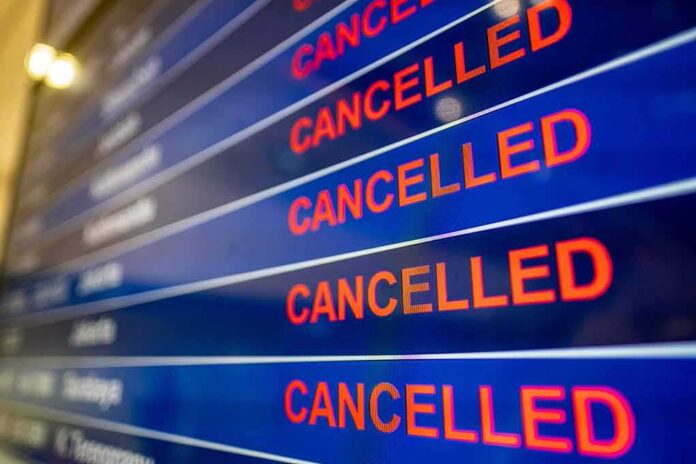
A four-hour nationwide ground stop exposed cracks in the nation’s air-traffic backbone that both parties have warned about for years — and now the blame game is on.
Story Highlights
- Federal Aviation Administration halted more than 3,500 flights after key communications and radar systems faltered.
- Transportation Secretary Sean Duffy said old, overloaded network gear triggered the failure and urged fast modernization.
- Government Accountability Office had warned days earlier that systems were outdated and at risk.
- New York’s governor called for Duffy’s removal; a U.S. senator demanded a full investigation.
What Triggered The Ground Stop
On November 13, 2026, the Federal Aviation Administration ordered a nationwide halt to departures after “telecommunications issues” hit communications and radar used by air traffic control. The stop began at 3:54 p.m. Eastern and lasted more than four hours, affecting more than 3,500 flights before service was restored the same evening, according to the U.S. Department of Transportation. Officials said they acted out of caution to protect safety while systems stabilized.
Transportation Secretary Sean Duffy later said legacy network equipment became overloaded with data and failed, which caused inconsistent information to flow to controllers. He described old switches, routers, and even copper lines that could not handle the load. Duffy said the breakdown was not believed to be a cyberattack and called for billions in new funding to replace aging equipment across the air-traffic network, framing the issue as overdue infrastructure repair.
How Prior Warnings Set The Stage
Days before the outage, the Government Accountability Office warned that the Federal Aviation Administration was “not moving fast enough” to modernize. The watchdog cited outdated radars, radio systems, software, hardware, and telecommunications lines. It flagged risks in planning, cost, and schedule controls that could slow upgrades. The report underscored a long-running pattern: complex systems aging in place while replacement drags and costs rise, leaving limited margin when stress hits.
Another Government Accountability Office assessment said the modernization push aims to speed replacement of old air-traffic systems but needs tighter cost and schedule management to succeed. The materials also noted progress in swapping fragile copper lines for fiber optic cables, while stressing that much work remains. Put simply, the government knew the house was old, had started to fix parts of it, and still faced major rooms with failing wiring.
Political Firestorm And Accountability Questions
After the shutdown snarled travel nationwide, New York Governor Kathy Hochul urged the White House to remove Secretary Duffy, arguing leadership failed the traveling public. The call landed before a root-cause report was released, and without a technical assessment tying decisions by Duffy or the Federal Aviation Administration administrator to the outage sequence. Senator Tammy Duckworth separately pressed for a “thorough and complete” investigation to map what failed and why.
The administration countered that the event laid bare inherited technical debt, not a single leader’s blunder. That framing rests on documented history: watchdogs have flagged vulnerable systems for decades, and Congress only partially funded fixes while programs missed cost and time marks. Critics on the right see bureaucratic drift and waste. Critics on the left see underinvestment and fragile service. Both sides see a federal system that again failed people who paid for tickets and trusted the network.
What We Know, What We Do Not
Officials confirmed that communications and radar stability faltered and that safety drove the halt. They lifted the stop the same evening once systems recovered. They said there was no sign of a cyberattack. What remains unclear is the precise chain of failures inside the network: which switches or routers failed first, whether redundancy worked, and why instability spread nationwide. A full, public root-cause report will be needed to answer those questions.
FAA Launches A.I. Air Traffic Tool Amid Nationwide Ground Stop Controversy https://t.co/Ob67Nh5QhN
— Policy Wire (@policy_wire) November 14, 2026
Until that report arrives, the debate will hinge on records already on the table. The Department of Transportation’s timeline anchors the scope and impact. Sean Duffy’s account names overloaded, outdated gear. The Government Accountability Office’s findings show the risks were known. The common thread is bigger than one official: a sprawling, aging safety system that moves millions daily but keeps running close to the edge — and then shocks the country when the edge gives way.
Sources:
redstate.com, transportation.gov, abc13.com, goodmorningamerica.com, gao.gov