America now claims to “guard” the world’s oil chokepoint while blockading Iran and warning of its “total destruction” — even as law, allies, and ordinary citizens are left wondering who this showdown really serves.
Story Snapshot
- Trump has reinstated a naval blockade on ships going to and from Iranian ports, while insisting the Strait of Hormuz is “open to all” except Iran.
- U.S. Central Command says it will protect other shipping in the strait, but critics argue Washington is stretching international law by mixing blockade powers with toll-style control.
- Iran has disrupted traffic and claimed special rights over the strait, but many legal experts say both sides are undermining basic freedom of navigation.
- Oil prices and war costs are rising, deepening public anger at a federal government that seems better at threats than at solving problems at home.
Trump’s “open to all” claim and the new blockade
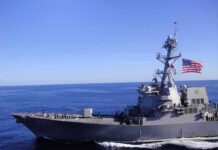
President Donald Trump has again ordered the U.S. military to blockade ships that are entering or leaving Iranian ports, while telling the public that the Strait of Hormuz is “open to ALL Ship traffic except for Iran.” U.S. Central Command, the regional military headquarters, says its forces will stop vessels tied to Iranian ports but will not block ships that simply pass through the strait on their way to other countries. On paper, that means global trade can still move, but Iran’s economy is squeezed hard.
The latest order revives an earlier blockade first imposed in April and paused during a short ceasefire. Officials say the goal is to cut Iran off from oil money and force leaders back to the table over nuclear and missile issues. At the same time, Trump has warned that Iran’s “lying, violent, malicious leadership” is taking the country toward “TOTAL DESTRUCTION,” language that alarms many Americans who are tired of endless wars and fear another open-ended conflict. This mix of tough talk and shifting plans fuels distrust on both the right and the left.
Iran’s moves and the fight over who controls Hormuz
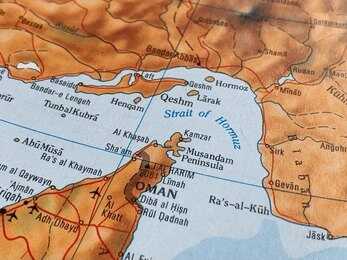
Iran has taken its own steps to tighten control of the Strait of Hormuz, a narrow waterway that carries about one fifth of the world’s traded oil. Its forces have attacked or threatened ships and claimed they are the true “guardian” of the strait, arguing they can deny passage to vessels linked to countries they call aggressors. Some legal scholars say Iran can restrict enemy warships in wartime but must still respect neutral commercial traffic, while others argue Tehran’s broader claims clearly violate the rules that keep sea lanes open.
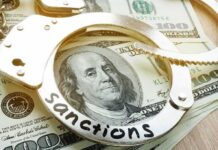
The United States has hit back not only with bombs and ships but also with financial pressure. Washington recently sanctioned Iran’s new Persian Gulf Strait Authority, an agency set up to approve vessels and collect tolls, saying Iran is trying to turn a shared waterway into its own toll road. Trump himself floated a U.S. “20% reimbursement fee” on all cargo going through Hormuz, before later backing off under criticism that such a toll has no clear legal basis and would look like profiteering off a global chokepoint. For many citizens, both governments now look more focused on leverage and money than on stability.
International law, elite games, and ordinary people’s pain
International law around straits like Hormuz is complex, but the basic idea is simple: these narrow passages are supposed to stay open for peaceful shipping, even when nearby countries are at odds. When the United States declares a blockade that only hits traffic to and from Iran, it argues this is a targeted war measure, not a closure of the strait itself. Iran, in turn, claims a right to punish “aggressor” states and to charge for protecting ships, while denying it has fully closed Hormuz. Caught in the middle are shipping firms, workers, and consumers worldwide.
Oil prices have already jumped sharply during the crisis, with one recent spike near 10 percent in a single day. Higher crude prices usually mean more expensive gasoline, diesel, and goods back home, where families are already struggling with inflation and stagnant wages. Many conservatives see another example of global entanglements and energy games hurting American workers, while many liberals see a war-first policy that ignores health care, schools, and the growing gap between rich and poor. Both sides increasingly suspect that foreign policy is driven less by constitutional principles than by elite interests in defense, energy, and finance.
Mounting strikes, political backlash, and a drifting strategy
As legal arguments fly, the shooting continues. U.S. forces say they have struck scores of targets across Iran since the war began, including oil facilities, naval bases, and missile sites. Iran has answered with missiles and drones aimed at shipping and at U.S. partners in the Gulf, putting countries like Kuwait and Jordan under direct threat. Each new round of violence raises the risk of mistakes, civilian casualties, and a wider regional war that could be even harder to end than it was to start.
At home, Trump’s foreign policy approval numbers have dropped, and even some supporters worry there is “no real plan to end the war.” Critics say the White House has bounced from threats of “civilization will die” to promises that “no one will control” Hormuz, then back to talk of tolls and blockades. To many Americans, especially those who already feel betrayed by a distant and self-protecting federal government, this crisis looks like one more example of powerful players using fear and force while everyday people pay the price in higher costs, deeper division, and less trust in the system itself.
Sources:
mediaite.com, wsj.com, bbc.com, dw.com, nbcnews.com, foxnews.com, youtube.com, apnews.com, facebook.com, independent.co.uk, cnbc.com, lawfaremedia.org, theweek.in, internationallaw.blog, voelkerrechtsblog.org, brookings.edu