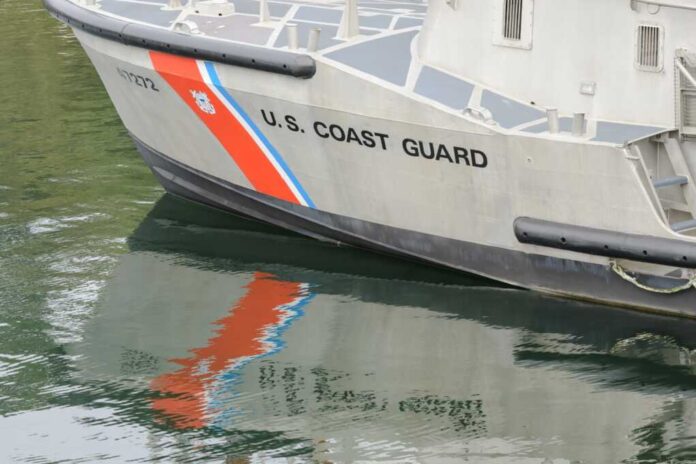
An alleged “ominous fleet” of Iran-linked tankers off the US coast turns out to be a single seized vessel, highlighting the media’s role in spreading misinformation. This article details the US Coast Guard’s seizure of the Skipper, a lone tanker involved in transporting illicit Iranian and Venezuelan oil near Venezuela, and explores how initial reports exaggerated the incident into a non-existent threat near US shores. The operation underscores US sanctions enforcement against the “shadow fleet” and the ongoing challenges of accurately reporting complex international maritime affairs.
Story Highlights
- Reports of a fleet of Iran-linked tankers off the US coast are unfounded.
- The US Coast Guard seized a single tanker, the *Skipper*, off Venezuela.
- This action underscores US sanctions enforcement against Iranian and Venezuelan oil.
- The media exaggeration of a “fleet” reflects misinformation challenges.
Single Tanker Seizure, Not a Fleet
The narrative of an “ominous fleet” of Iran-linked tankers approaching the US coast is misleading. Evidence indicates the seizure of a lone vessel, the *Skipper*, by US authorities in international waters off Venezuela. The *Skipper*, previously known as *Adisa*, was involved in transporting illicit Iranian and Venezuelan oil, violating US sanctions. This operation was part of the US’s ongoing efforts to combat illegal oil trades that finance regimes and terrorist groups like Hezbollah.
This seizure took place far from US territory, about 1,500 miles away, in the Caribbean waters near Venezuela. The tanker was carrying approximately 1.85 million barrels of crude oil valued over $90 million. This action demonstrates the US’s commitment to sanction enforcement, yet it was misrepresented as a multi-tanker threat near US shores, showcasing the ease with which misinformation can spread.
US Coast Guard & Marines fast-roped from Black Hawks at dawn, seized the sanctioned tanker Skipper 70mi off Venezuela. 1.6M barrels of Maduro/Iran oil now headed to US port. Caracas screams “piracy.” We call it Tuesday. #SkipperDown #MaximumPressure pic.twitter.com/ld2XioM3ws
— Julie godfrey (@godfrey_469gigi) December 12, 2025
The Shadow Fleet and Its Operators
The “shadow fleet” comprises aging vessels engaged in the clandestine transport of sanctioned Iranian and Venezuelan oil. These ships often deactivate their Automatic Identification System (AIS) to evade detection, making them elusive targets for international enforcement. The *Skipper* was part of this network, linked to Viktor Artemov and Petro Naviero, entities sanctioned by the US Treasury in 2022 for their involvement in funding Hezbollah and the IRGC-QF.
Despite the seizure of the *Skipper*, the shadow fleet remains a significant concern, with an estimated 396 vessels linked to Venezuela. This seizure is a rare but crucial measure, indicating the potential for future interdictions. The US’s military presence in the Caribbean aims to curb the influence of Nicolas Maduro’s regime, which has been accused of supporting narco-terrorism and allowing Iranian influence to proliferate.
Implications and Reactions
The immediate impact of the *Skipper*’s seizure is significant; it disrupts over $90 million in illegal oil trade and sends a strong message regarding US enforcement capabilities. In the long term, it could deter other shadow fleet operators, though the scale of the problem suggests that a single seizure is only the beginning. The US allies benefit from these actions as they weaken financial flows to hostile entities.
Reactions to the seizure have been positive among US policy advocates like the United Against Nuclear Iran (UANI), who see it as a vital step in curbing terror funding. However, figures like Nicolas Maduro reject the actions as imperial overreach, while the Iranian regime continues to deny any wrongdoing. The misinformation surrounding the “fleet” reflects the challenges faced in accurately reporting complex international developments.
Watch the report: America Seizes Iranian-Linked Tanker called Skipper Near Venezuela
Sources:
- Seized Shadow Fleet Tanker Gets Under Way in U.S. Coast Guard Custody
- US says tanker it seized had shipped oil from Venezuela and Iran
- What we know about the oil tanker seized by the US off the Venezuela coast | Trump administration | The Guardian
- Oil Tanker U.S. Seized Off Venezuela Has Faked Its Location Before, Data Shows