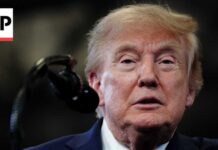
President Trump said the United States secured majority control of 65 billion barrels of Venezuelan oil, calling it the biggest oil deal ever and a win for American energy security.
Story Highlights
- Trump announced a U.S.–Venezuela oil pact tied to 65 billion reserve barrels.
- Talks focused on U.S. access and American firms developing multiple Venezuelan oil fields.
- Venezuela cited 17 fields and long-term development rights in its statement.
- Trump linked the deal to lower gas prices and no taxpayer cost.
What The Announcement Says Happened
President Trump said the United States reached an agreement with Venezuela to secure majority U.S. control of more than 65 billion barrels of proven oil reserves. He credited Secretary of State Marco Rubio and Secretary of War Pete Hegseth, and cited work with Venezuela’s interim leadership and private business partners. Trump said the move would more than double U.S. oil reserves and lower gasoline prices nationwide. He also said the deal would not cost American taxpayers.
Associated Press reporting said Venezuela’s government described a plan to develop 17 oil fields with proven potential of 65 billion barrels. The statement projected about 100 billion dollars of private investment and more than 209 billion dollars in future tax revenue for Caracas. A United States official told the outlet the structure involves a new private company, partnered with an American operator, with 100-year rights to develop the fields granted by Venezuelan authorities.
How The Deal Structure Is Described
Reuters reported ahead of the announcement that United States officials were working on a long-term arrangement that would “lock in” a set of Venezuelan oil fields for development by American companies. Production from those fields would be guaranteed for the United States under the contemplated framework, according to sources familiar with the talks. Reporting pointed to more than a dozen productive fields as part of the negotiations prior to Trump’s public statement.
Trump framed the outcome as delivering energy security without taxpayer spending. The available reporting attributes the development and capital costs to private firms rather than direct federal outlays. However, public releases do not include the full financing terms, licensing details, or any sanctions-related permissions that may be needed to operate in Venezuela’s oil sector, which has been under varying United States restrictions in recent years.
Why It Matters For Americans
Energy supply affects family budgets, trucking costs, and the price of goods. A large new source of crude pledged to the United States could ease price spikes and reduce dependence on rivals. Trump argued this deal would boost reserve access and lower pump prices over time. For many readers who feel Washington caters to elites, the promise of more supply without new taxes sounds like government finally delivering a concrete benefit to working households.
Trump Announces Sweeping US Grab For Control Of Venezuela Oil Reserves — President Donald Trump said the United States will seek majority control of Venezuela’s proven oil reserves totaling more than 65 billion barrels. The deal is framed as a way to stabilize global crude flows…
— BizToc (@biztoc) August 29, 2026
The Venezuela angle carries policy weight. Past United States sanctions and permissions have shaped who can produce, sell, and ship Venezuelan oil. Congress and federal agencies have managed licenses and enforcement that control trade flows. If this agreement relies on American private operators, future steps will likely include licensing and compliance reviews so companies can invest and move oil legally. Those choices can affect timelines for new barrels reaching United States refineries.
What We Know And What Comes Next
Here is what the record shows today. Trump publicly claimed majority control of 65 billion reserve barrels through a partnership model. Venezuelan officials described 17 fields and long-term development rights. Reuters detailed talks to secure field access for American firms with supply directed to the United States. The Administration linked the plan to lower gasoline prices. Officials have not released the signed contract or a full term sheet in public reporting cited here.
Sources:
reuters.com, venezuelanalysis.com