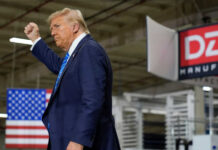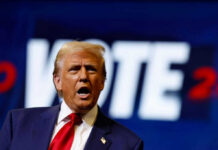
The U.S. takeover of Venezuela’s oil sector, following the capture of Nicolás Maduro, is poised to bring both significant economic gains and dramatic geopolitical shifts, igniting intense debate among global energy players. President Donald Trump has announced a monumental $100 billion investment by U.S. oil companies to rebuild Venezuela’s oil infrastructure and secure U.S. control over a massive portion of its crude oil sales. While this move promises consumer benefits like sub-$2/gallon gas in the U.S., it faces heavy skepticism from industry leaders, including ExxonMobil’s CEO, who cites the volatile environment and a lack of legal reforms as major investment risks.
Story Highlights
- U.S. oil firms to invest $100 billion in Venezuela following Maduro’s capture.
- Trump administration aims for U.S. control over Venezuelan oil sales.
- Potential for sub-$2/gallon gas in the U.S., but investment risks remain.
- ExxonMobil CEO calls Venezuela “uninvestable,” causing tension.
Trump’s Bold Oil Strategy in Venezuela
On January 9, 2026, President Donald Trump announced a monumental $100 billion investment by U.S. oil companies to rebuild Venezuela’s oil infrastructure. This decision follows the U.S. military’s capture of Nicolás Maduro, marking a significant geopolitical shift. Trump has assured that the U.S. will manage the sale of 30-50 million barrels of Venezuelan crude oil, with proceeds benefiting both nations. This move aims to reduce U.S. energy prices and enhance production capabilities.
In line with Trump’s aggressive energy strategy, the U.S. seeks to dominate the global oil market. The plan is expected to yield consumer benefits such as sub-$2/gallon gas. However, the approach has faced skepticism. ExxonMobil’s CEO, Darren Woods, labeled Venezuela “uninvestable” without legal reforms, highlighting the challenges of investing in a region fraught with political instability and previous expropriations.
Trump, Vance and Rubio meeting with Exxon, Chevron, Shell CEOs at White House
Goal: $100 billion to re🅱️uild Venezuela's oil infrastructure
US gets 50 million barrels immediately, shipments continue indefinitely
Oil companies want security guarantees before committing billions pic.twitter.com/GXHWnX2bke
— Boi Agent One (@boiagentone) January 9, 2026
Challenges and Skepticism from Oil Executives
The announcement has elicited mixed reactions from the oil industry. While companies like Chevron are positioned to expand operations quickly, others, including ExxonMobil, express concerns over the volatile business environment in Venezuela. The past expropriation of assets and the need for robust legal frameworks drive their caution. Trump, however, remains confident, even considering barring ExxonMobil from participating due to their skepticism.
Energy Secretary Chris Wright has been tasked with overseeing the oil handover and ensuring that the transition benefits both U.S. and Venezuelan interests. Despite the ambitious investment plan, no firm commitments have been secured from the companies, which seek assurances of stability and clarity on sanctions and tax policies.
Potential Economic and Political Impacts
The potential economic impact of this strategy could be substantial. Immediate oil revenues and lower gas prices in the U.S. are anticipated, providing relief to American consumers. For Venezuela, the investment could initiate the rebuilding of its crumbling oil sector, offering hope for economic recovery and poverty reduction. However, long-term success hinges on political stability and the ability to navigate complex international relations.
Analysts caution that while the U.S. seeks to establish energy dominance, the plan’s success depends on creating a stable environment in Venezuela. The move also sidelines major geopolitical players like China and Russia, aligning with U.S. interests to counter their influence in the region.
Watch the report: Can US Achieve $100 Billion Oil Investment in Venezuela?
Sources:
- Trump announces $100B oil investment plan for Venezuela following Maduro’s capture
- Trump promises oil companies ‘total safety’ in Venezuela as he urges them to invest billions
- Trump Pushes Venezuela Oil Investment as Political Risks Loom
- Trading houses beat US majors to first deals for Venezuelan oil | Reuters