Republican governors are preparing for legal battles against President Trump’s attempt to federalize state election systems, marking an unprecedented constitutional showdown between a Republican president and his own party’s state leaders over the foundational principle of states’ rights.
Story Snapshot
- Utah Governor Spencer Cox and Oklahoma Governor Kevin Stitt publicly oppose Trump’s push to centralize control over state elections, with Cox vowing court action
- Trump attempted to exclude Democratic governors from White House dinner, prompting up to 18 governors to threaten boycott in bipartisan solidarity
- Legal experts confirm any executive action to nationalize elections would be “flatly illegal” without congressional approval, violating the 10th Amendment
- The clash fractures Republican unity as GOP governors prioritize constitutional federalism over party loyalty
GOP Governors Draw Constitutional Line Against Federal Overreach
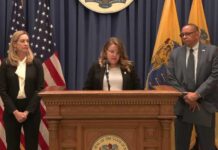
Utah Governor Spencer Cox issued a stark warning to the Trump administration on February 18, 2026, declaring governors must “push back on the federal government” and emphasizing readiness for litigation. Speaking at a Pew Research “Disagree Better” event alongside Oklahoma Governor Kevin Stitt and Maryland Governor Wes Moore, Cox stated federal power “was never meant to be that way,” invoking the Founders’ vision of checks and balances. This confrontation emerged from Trump’s social media campaign to “nationalize” elections through executive action and create a federal voter database, moves legal analysts confirm would violate statutory limits on presidential authority without congressional action.
White House Invitation Controversy Exposes Deeper Divisions
The conflict escalated when Trump initially excluded Democratic Governors Wes Moore and Jared Polis from a White House dinner during the National Governors Association’s February 2026 meeting, breaking decades of bipartisan tradition. The NGA canceled its business meeting on February 11 after incomplete invitations arrived, with Trump later extending invites to “ALL governors” except Moore and Polis. Governor Stitt, serving as NGA chair, refused to facilitate exclusionary events despite facing Trump’s public criticism online. Up to 18 governors threatened boycott in solidarity, demonstrating cross-party unity that weakens Trump’s leverage and illustrates how constitutional principles transcend partisan politics when foundational rights face erosion.
States’ Rights Clash With Centralization Push
Trump’s election intervention proposal echoes 2020 disputes but escalates through demands for state voter data access and federal database creation, which states can voluntarily refuse. The Constitution’s 10th Amendment reserves election management to states, with federal involvement strictly limited by statute. Cox articulated this principle clearly, noting “Oklahoma doesn’t want to be California,” defending each state’s autonomy to manage elections according to local preferences. The FBI’s raid on Fulton County, Georgia voter rolls exemplifies federal probes that states are resisting, setting the stage for inevitable court battles if Trump issues executive orders compelling compliance.
Constitutional Federalism Tested Across Policy Fronts
This confrontation reflects broader tensions as some GOP-led states simultaneously embrace Trump’s deregulation agenda on environmental policy while rejecting federal election control, creating an inconsistent states’ rights posture. Legal experts confirm the president lacks compulsion power over state election systems, making any executive action vulnerable to lawsuits and potential criminal charges for overreach. State attorneys general would likely lead litigation defending the constitutional framework that protects against centralized power accumulation. The dispute reveals how federal overreach threatens the very safeguards our Founders established to prevent tyranny, regardless of which party holds the White House. Moore invoked this principle at the Pew event, emphasizing the Founding Fathers designed government structures specifically to prevent king-like concentration of authority.
As governors proceed with Washington collaboration despite White House tensions, the standoff demonstrates that preserving constitutional limits on federal power remains a bipartisan imperative. Cox, Stitt, and Moore’s February 18 united front signals that when core principles face erosion, state leaders will defend the federalist system that has protected American liberty for over two centuries, even against a president from their own party.
Sources:
Republican Gov Hits Back At Trump Official Trying to Limit States’ Rights: I’ll ‘Beat You In Court’
Following Trump’s lead, some GOP states seek to limit environmental regulations