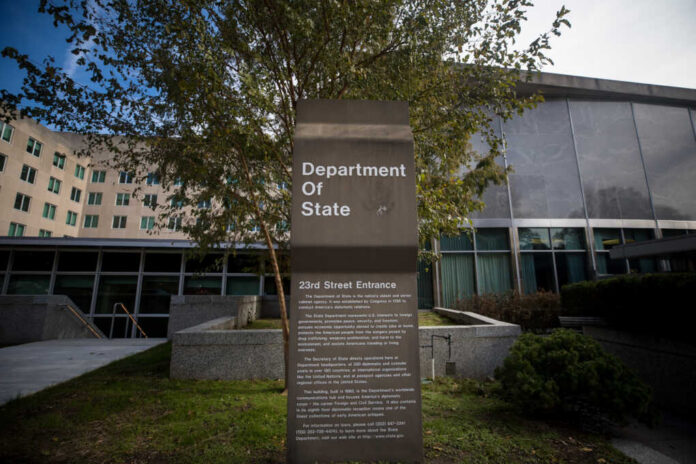
The Trump administration has taken its first formal steps toward potentially reopening the U.S. Embassy in Caracas, which has been closed since 2019. This preparatory move follows the recent ouster and capture of former president Nicolás Maduro. While officials stress the process is phased and conditional, the reestablishment of a physical diplomatic presence is intended to advance U.S. priorities, including monitoring Venezuelan oil revenue and strengthening regional anti-narcotics efforts.
Story Highlights
- The State Department has notified Congress it is taking preparatory steps toward a phased reopening of the U.S. Embassy in Caracas.
- Officials emphasize the move is still “assessment” and “preparatory,” with no final reopening date announced.
- The effort follows Maduro’s capture and transfer to New York, where he has pleaded not guilty to U.S. gun and drug trafficking charges.
- Washington is opening channels with Venezuela’s acting president Delcy Rodríguez, while weighing risks tied to legitimacy and past regime links.
- Parallel talks involving Venezuela’s state oil company could affect crude flows, sanctions policy, and U.S. energy strategy.
Congress notified as State Department lays groundwork for Caracas return
The Trump administration has formally told Congress it is taking first steps that could lead to reopening the U.S. Embassy in Caracas, closed since 2019. The plan described publicly is phased and limited at the outset: temporary staff would be deployed for security and basic management functions, then expanded to additional diplomatic work if conditions allow. Officials have been careful to describe the effort as preparatory, not a guaranteed full reopening.
U.S. operations have been run largely from Colombia since the embassy shut down after Washington recognized opposition leader Juan Guaidó as Venezuela’s legitimate leader. Restoring a physical presence in Caracas would represent the first formal move toward reestablishing normal diplomatic operations in years. That matters operationally because on-the-ground staffing can improve information gathering, consular planning, and coordination with partners—functions that are harder to execute from outside the country.
Report: U.S. Taking First Steps to Possibly Reopen Embassy in Venezuela pic.twitter.com/OL8tRRfdhp
— Savaged (@MichaelGar63457) January 28, 2026
Why this is happening now: Maduro’s ouster changed the leverage
Timing is everything. The reopening discussion follows a U.S. military operation in early January 2026 that removed Maduro and resulted in his capture, along with his wife Cilia Flores, according to multiple reports. Maduro was taken to New York and entered a not-guilty plea on U.S. gun and drug trafficking charges. That rapid change in Caracas created an opening for Washington to test whether a limited diplomatic footprint can advance U.S. priorities without overcommitting.
President Trump has publicly signaled openness to the idea, telling reporters the administration is considering it. At the same time, the State Department has stressed that any return would be conditional and staged. For Americans who remember years of chaotic foreign policy “reset” experiments, that distinction matters: officials are describing a controlled sequencing—surveying facilities, assigning leadership, and staffing incrementally—rather than announcing a sweeping normalization with no guardrails or accountability.
Delcy Rodríguez becomes the focal point—and the complications
Venezuela’s acting president Delcy Rodríguez, previously Maduro’s vice president, has become the point of contact as Washington weighs next steps. Reports indicate communication channels were established shortly after Maduro’s capture, and Rodríguez has said “respectful” channels are open while a “working agenda” is being set with U.S. leaders. From a practical standpoint, that may speed coordination on security and consular issues; politically, it raises questions about continuity with the prior regime.
The administration’s approach, based on the reporting available, looks pragmatic: deal with the authority controlling the state, but keep the engagement tied to concrete outcomes. The research also indicates U.S. leverage remains significant, including the ability to calibrate diplomatic recognition and conditions connected to Venezuelan political institutions. Congress has been looped in through notifications, which is important because embassy staffing, security posture, and broader normalization can carry long-term consequences that merit oversight.
Oil, sanctions pressure, and the practical case for an embassy footprint
Energy is a major subtext. Venezuela’s state oil company PDVSA has reportedly initiated crude oil discussions with the U.S. after Maduro’s removal. A U.S. presence in Caracas could help Washington monitor how any oil revenue is handled and push for transparency and outcomes that benefit ordinary Venezuelans rather than corrupt networks. State Department messaging highlighted the idea that oil proceeds should aid the Venezuelan people—an aim that becomes harder to verify without eyes on the ground.
For U.S. voters burned by years of inflation and energy-price whiplash, the policy significance is straightforward: if oil negotiations move forward, Washington will have to balance market realities with enforcement priorities tied to crime and corruption. The current reporting does not establish whether sanctions will be lifted broadly, or on what timetable. What it does show is the administration building an operational platform—staff, security assessments, and a command structure—to manage those decisions with more direct leverage.
Anti-drug strategy and constitutional guardrails: what’s known and what isn’t
Another clear thread is narcotics enforcement and regional security. The embassy previously hosted multiple agencies, including the DEA, and restoring even a limited footprint could strengthen intelligence coordination against trafficking networks. Separate reporting framed the reopening discussion alongside broader cooperation with Mexico in the drug fight. What remains unknown is the final scope of U.S. activity inside Venezuela, because officials continue to describe the current posture as preliminary, with no firm reopening date.
The key limitation in the available research is that it focuses on intent and preparation rather than finalized policy. No source cited here provides a definitive timeline, staffing numbers, or publicly released conditions for full diplomatic normalization. That uncertainty is why congressional oversight and clear metrics matter. If Washington is going to expand operations, Americans deserve transparency on mission boundaries, costs, and the legal basis for any continuing security action—especially after years when “global” priorities too often outran constitutional restraint.
Sources:
- US takes first steps to possibly reopen embassy in Venezuela after Maduro’s ouster
- US making preparations to reopen embassy in Venezuela: official
- US pushes ahead with plans to reopen embassy in Venezuela
- US considers reopening embassy in Caracas, boosts Mexico ties in drug fight: State Department interview