Federal prosecutors say a Honduran lawful permanent resident signed a California voter registration and claimed to be a U.S. citizen, triggering felony charges and a broader debate over election integrity.
Story Snapshot
- Prosecutors charged Darwin Jonathan Rivera Flores with false citizenship claim and fraudulent voter registration.
- Court papers tie the alleged false claim to a November 4, 2025 California registration application.
- Homeland Security Investigations agents arrested Rivera Flores in Southern California.
- Researchers say noncitizen voting is rare nationwide, though even single cases can shake trust.
What Prosecutors Allege Happened in California
The U.S. Attorney’s Office for the Central District of California said Darwin Jonathan Rivera Flores, 30, of Winnetka, faces two felony counts: a false claim to United States citizenship and fraudulent voter registration. A federal criminal complaint says the alleged conduct is linked to a California voter registration application dated November 4, 2025. Prosecutors said Homeland Security Investigations agents arrested Rivera Flores in the region as part of an ongoing federal probe into illegal registrations. He remains presumed innocent unless proven guilty in court.
Court filings list the charges under Title 18, Section 1015(e), and Title 52, Section 20511(2)(A). These laws make it a crime to falsely claim citizenship and to submit fraudulent voter registration information. Officials say Rivera Flores is a Honduran national who holds a green card, which allows legal residence but not voting in federal elections. Prosecutors did not allege that he cast a ballot. The case centers on the registration and the citizenship attestation tied to that form.
Why This Case Sparks Strong Reactions
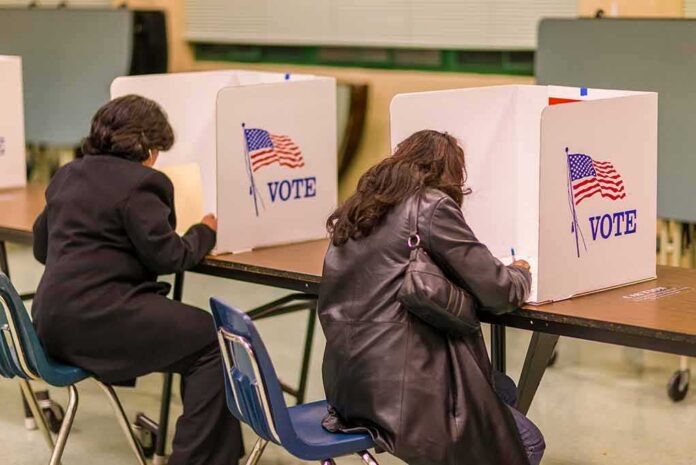
Election rules are clear: only U.S. citizens can vote in federal races, and signing a form under penalty of perjury carries legal risk. Many Americans across the spectrum worry that leaders fail to enforce basic rules. When the system flags one illegal registration, it fuels concerns on the right about lax safeguards and on the left about unequal enforcement or targeting. The government’s job is to apply the law fairly, keep rolls clean, and protect every legal vote without sweeping up eligible voters.
People who have watched Washington for years also see another pattern. Some officials and activists use single cases to claim a crisis. Yet nonpartisan research has long found that noncitizen voting is extremely rare and often caught by routine checks. A Reuters review found only 129 federal charges under the “voting by aliens” statute since 1996, a tiny number in a nation of hundreds of millions. Those data points help frame this case as serious but limited in scope.
How Rare Events Still Test Election Systems
Even rare violations can strain public trust because elections run on confidence. Administrators must verify citizenship claims, remove ineligible registrations, and refer clear violations for prosecution. Researchers say these systems usually work, and they recommend careful list maintenance that follows federal law and avoids mass purges that can knock off eligible voters. The goal is simple: stop illegal registrations without blocking citizens who have the right to vote.
This case also touches wider worries about immigration enforcement and political fairness. Voters who feel shut out by elites want equal rules for all and clear answers when lines are crossed. Prosecutors will now present evidence, and a court will decide the facts. The outcome will not settle the national fight over elections, but it can show whether guardrails held. Transparent steps and steady enforcement, not spin, are what rebuild trust over time.
Sources:
thegatewaypundit.com, justice.gov, civicintelligence.news, foxnews.com, youtube.com, wcbm.com