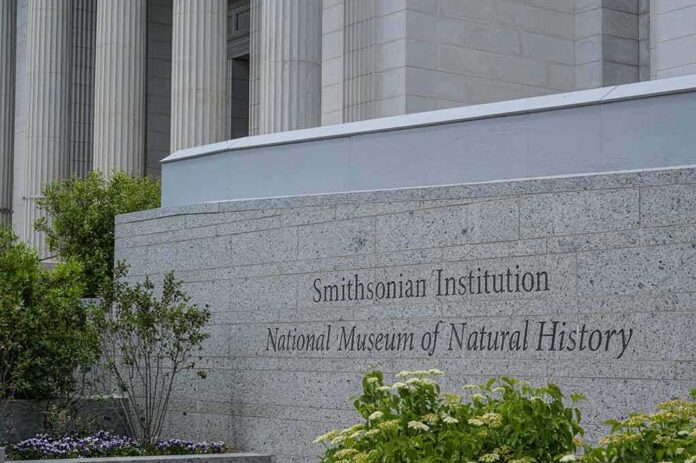
The White House warned the Smithsonian that federal agencies could halt support unless it fixes alleged civil-rights breaches tied to its leadership and ideology.
Story Snapshot
- Administration letter threatens to pause loans, procurement help, and grants to the Smithsonian.
- Officials cite “recently discovered evidence” of significant antidiscrimination law breaches but name no specific cases.
- The warning follows a yearlong federal review launched after a 2025 executive order on museum content.
- Smithsonian leaders dispute the White House’s characterization and point to internal equal-opportunity rules.
What the Administration Said and What Could Stop
Administration officials sent a joint letter on August 28, 2026. They said they could not “in good conscience” keep supporting the Smithsonian and may stop loaning artifacts, helping with procurement, and issuing discretionary grants. The letter also said the museum system must address “executive leadership and institutional ideology.” That phrasing shows the fix they want. The message signals pressure beyond money alone. It aims at how the institution is run and how it sets themes.
The same letter claimed officials “recently discovered evidence” that the Smithsonian’s culture led to major breaches of federal antidiscrimination law. The letter, as described in media reports, did not list specific exhibits, employees, or actions. That lack of detail leaves open questions about who was harmed and how. The government’s leverage is real because many exhibits and operations depend on agency cooperation, not just direct appropriations.
The Policy Path That Led to This Point
This warning did not come out of nowhere. In March 2025, President Trump signed an executive order directing action against museum programming that officials said degraded shared American values or divided people by race. In August 2025, the White House sought broad Smithsonian materials on exhibits, social media, grants, and visitor feedback and set a review timeline. That record shows a formal review track. It also shows the fight blends legal and content concerns.
News reports say the administration’s public case mixes claims of discrimination with complaints about “woke” or “anti-American” exhibits. That framing makes the dispute bigger than civil-rights compliance alone. It turns it into a debate over viewpoint and history. That risks drawing fire from both sides about censorship or bias. It also risks burying the legal core in a culture-war cloud, which can harden distrust of federal institutions across the spectrum.
How the Smithsonian Responded and What We Do Not Know
Smithsonian Secretary Lonnie Bunch III told staff that a White House report on the National Museum of American History was not a fair picture of its work. The Smithsonian has said it will keep working with the White House and Congress to provide information on its mission, exhibits, and programs. Public notices state the Smithsonian bans discrimination and directs employees to report issues to its Office of Equal Opportunity within 45 days. Those points reflect existing internal rules, not a rebuttal of specific claims.
Key gaps remain. The administration has not publicly released named cases, complaint files, or findings by the Equal Employment Opportunity Commission or the Department of Justice to back “significant breaches”. Without that, the charge is hard to test. On the other hand, the Smithsonian has not released data that would settle the matter either. The stakes are high because agency loans, federal services, and grants help keep national collections open and secure for the public.
Why This Fight Matters Beyond One Museum
The Smithsonian is a federal trust instrumentality that relies heavily on federal support along with private funds. Past reviews show federal dollars cover a large share of operations, facilities, and security. That mixed status makes a threat to agency cooperation especially potent. It also spotlights a broader trend. Leaders now use funding and oversight to push cultural institutions on speech, governance, and civil-rights compliance. Voters who feel the system serves elites will see another power play.
The core test is simple but hard. If the government has evidence of illegal discrimination, it should present it and pursue lawful remedies. If the push is mainly about ideology, then sweeping penalties will look like viewpoint control. Both conservatives and liberals are tired of games that dodge real problems. Transparency from the White House and the Smithsonian would help the public judge the claim, protect civil rights, and keep national history on view for everyone.
Sources:
facebook.com, cnn.com, foxnews.com, pressley.house.gov, theartnewspaper.com, npr.org, bbc.com, losangelesblade.com, thehill.com