Los Angeles prosecutors say a wrong-way, red-light crash that killed two bus riders now merits second-degree murder charges, underscoring how deadly driving decisions can carry the harshest penalties.
Story Highlights
- Los Angeles County prosecutors charged Bailee Lynn Rios with two counts of second-degree murder.
- Police booked Rios after identifying her as the Ford Expedition driver; bail was set at $4 million.
- Officials say she sped, drove the wrong way, and ran a red light before striking traffic and a Metro bus.
- The case tests California’s long-used “implied malice” theory in fatal impaired-driving crashes.
Prosecutors Detail Alleged Deadly Driving
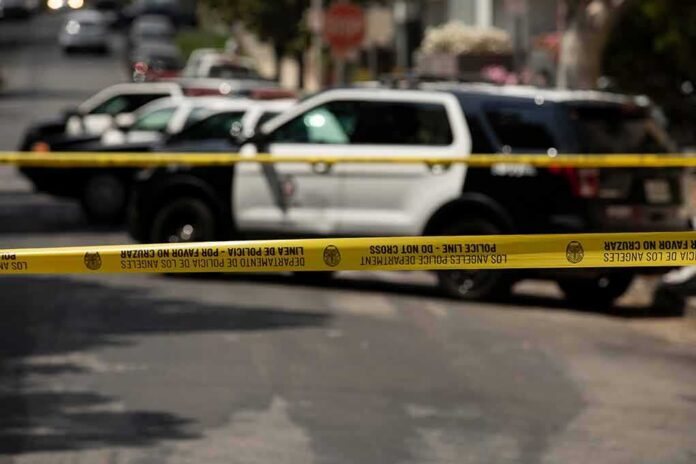
Los Angeles County prosecutors charged Bailee Lynn Rios, 36, with two counts of second-degree murder for the deaths of two people who were riding a city bus in Chatsworth. Prosecutors say she was impaired, sped the wrong way down a busy street, ran a red light, struck another vehicle, and then slammed into the Metro bus on Tuesday. The District Attorney’s office said her choices showed a clear disregard for life. Two riders died, and several others were hurt, according to officials.
The Los Angeles Police Department identified Rios as the driver of a 2004 Ford Expedition and booked her on suspicion of murder. Police set bail at $4,000,000 under California Penal Code 187(a). Officers released her name, date of birth, booking number, and the charge in a news update. The department said investigators forwarded the case to county prosecutors, who then filed the murder counts and related charges tied to the crash.
What Second-Degree “Watson Murder” Means in California
California courts allow second-degree murder charges in fatal impaired-driving cases when conduct shows “implied malice.” That means a person knew the danger to human life and acted anyway. The rule comes from the 1981 case People v. Watson, which prosecutors often cite in similar cases. Recent opinions have kept that framework in place and stress the need for a high degree of risk, not vague danger, to support murder rather than manslaughter.
Courts have said intoxication does not bar a malice finding if the deadly risk was clear and chosen. Later rulings explain that extreme speeding, wrong-way driving, and other reckless acts can show awareness of deadly risk. Prosecutors across the state use that line when facts point to more than simple negligence. They argue it speaks to a state of mind that turns a traffic crime into a murder case when death follows.
The Human Toll and a Second Tragedy Nearby
Authorities identified the two people who died on the bus as Daniel Castillo, 46, and Gage Weida, 31. Officials said more riders suffered injuries in the violent collision. The crash site then drew news crews, and a television helicopter later went down nearby in a separate incident, killing those on board. That second crash did not change the charges from the bus collision, but it added to the grief for families and the city.
Families and neighbors have asked how a wrong-way, high-speed run could unfold on a busy Los Angeles avenue without any stop before the impact. Police say their work now turns to evidence that shows the route, speed, and any signs of drugs. Prosecutors say those details matter for the implied malice theory. Defense lawyers in similar cases often challenge whether the driver actually knew the grave risk at the time.
Why This Case Resonates Beyond Los Angeles
Victims’ families want strong accountability when reckless choices take lives, and many Americans agree. Others worry that the system often fails to prevent obvious dangers on the road. This case highlights a pattern: when officials enforce the law well after a tragedy, it can feel like the government is reacting rather than protecting. People across the political spectrum see that gap and fear that daily safety depends on luck more than planning.
Los Angeles leaders have long promised safer streets, better transit, and faster emergency response. Yet riders died on a city bus after a wrong-way, red-light run. The legal path is clear under California law if facts show implied malice. But the public also wants earlier action—sober driving, working signals, traffic design that slows cars, and visible patrols that deter risk. Justice after the fact matters; prevention matters more.
What Comes Next in Court
Prosecutors will present evidence on impairment, speed, direction of travel, and the red light. The defense can test each claim and contest the implied malice standard. A judge will review probable cause and set the schedule. If the case goes to trial, jurors must weigh whether Rios knew the deadly risk and chose it anyway. For now, officials have charged second-degree murder, and the court process will decide the final outcome.
This case will likely shape how Los Angeles handles deadly driving going forward. Clear, consistent enforcement builds trust that the law treats lethal road behavior as more than a mistake. Fair trials and strong proof protect everyone’s rights. Both goals matter if the city hopes to honor the victims and prevent the next tragedy.
Sources:
washingtontimes.com, nypost.com, geo.tv, laist.com