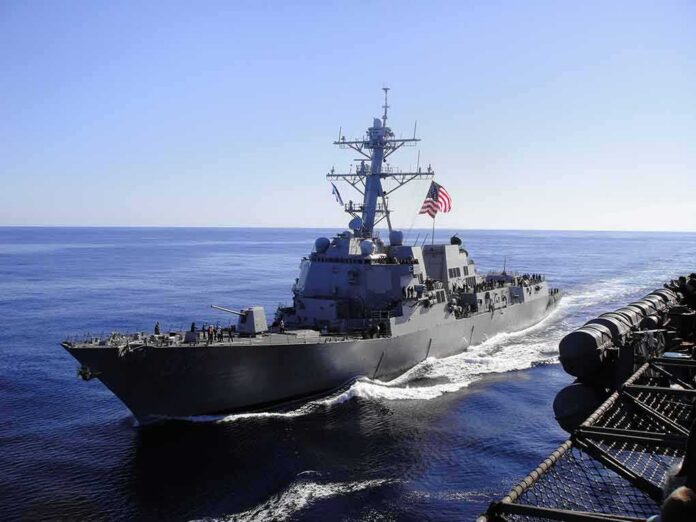
Relentless Houthi attacks on Red Sea shipping have turned a vital trade lane into a pressure point that now forces hard choices for President Trump and U.S. allies.
Story Snapshot
- Houthi strikes have disrupted a key global shipping route and forced costly detours.
- U.S. and U.K. airstrikes have targeted Houthi weapons sites in Yemen to protect navigation.
- Analysts warn prolonged strikes may not stop attacks and could widen the conflict.
- Both parties worry Washington is overextended while trade, energy, and prices take a hit.
What triggered the current squeeze in the Red Sea
Since late 2023, Yemen’s Houthi movement has attacked ships moving through the Red Sea and Gulf of Aden. These attacks fit a known pattern of low-cost, high-impact strikes that stress global trade. The International Transport Forum counted dozens of targeted incidents by March 2024, showing a sharp rise from earlier years. Shipping firms have rerouted vessels around Africa to avoid danger. These longer routes add time and fuel costs, which ripple into higher prices for goods worldwide.
The United States and the United Kingdom launched airstrikes to stop the threat and to keep sea lanes open. Officials said the strikes hit missile, drone, and storage sites used to attack commercial and naval ships. The message was clear: freedom of navigation is a core interest, and armed attacks on civilian ships will draw a response. Supporters say these operations protect trade, deter further strikes, and uphold international norms in a critical waterway.
Why this corner of the map puts Washington on the spot
The Red Sea is a choke point for energy and consumer goods. When ships detour, delivery times stretch and insurance costs jump. Families feel it in higher prices on store shelves and at the pump. Businesses face thinner margins, delayed parts, and unstable contracts. The World Bank has warned that the crisis remains fluid, with outcomes tied to how long the threat lasts and how far it spreads into other routes or regions. These pressures raise the stakes for any U.S. response.
Military action carries its own risks. Critics argue that steady airstrikes may not change Houthi behavior and could draw the region into a wider fight. The Cato Institute calls the campaign open-ended and ineffective, warning it risks more instability and higher costs without clear gains. Others fear a cycle of strike and counterstrike that undercuts diplomacy and hardens positions on all sides. These warnings reflect broad unease about mission creep and unclear end states.
Competing claims and what we can verify
U.S. and allied officials say strikes are tailored to reduce the Houthis’ ability to launch missiles and drones at ships. They cite underground depots, launch systems, and surveillance gear as lawful military targets tied to attacks at sea. This supports a narrow goal: safeguard ships and crews and reinforce rules of the sea. The stated aim is to defend commerce, not to expand the war or control territory in Yemen, which remains fractured and fragile.
Independent analysts confirm the maritime fallout. Researchers document rerouting around the Cape of Good Hope, with longer voyages, higher fuel burn, and added costs moving through the supply chain. That evidence supports what consumers and shippers feel already: when a major artery clogs, prices can rise and delivery times slip. The unresolved question is whether current strikes will lower risks at sea fast enough to ease those pressures without pulling the United States deeper into conflict.
How this hits home for both right and left
Conservatives see a test of strength and clarity. They want secure borders, steady energy, and affordable goods. They question spending on far-off fights while costs climb at home. Liberals see risk of escalation, fewer diplomatic options, and more strain on working families. Both sides share a core worry: powerful actors make choices that raise prices and risks while ordinary people pay. The Red Sea crisis brings that fear into focus on the world’s trade map.
What to watch next
Watch if ship traffic through the Suez route rebounds, which would show lower risk. Track insurance rates and detour levels to see if costs ease. Look for targeted strikes paired with a concrete plan to reduce attacks at sea and avoid a wider war. Finally, follow any push for a monitored maritime security framework that brings regional players together to share the load and set clear red lines. Durable security at sea will likely need both force protection and diplomacy.
Sources:
aljazeera.com, cnn.com, arabcenterdc.org, congress.gov, itf-oecd.org