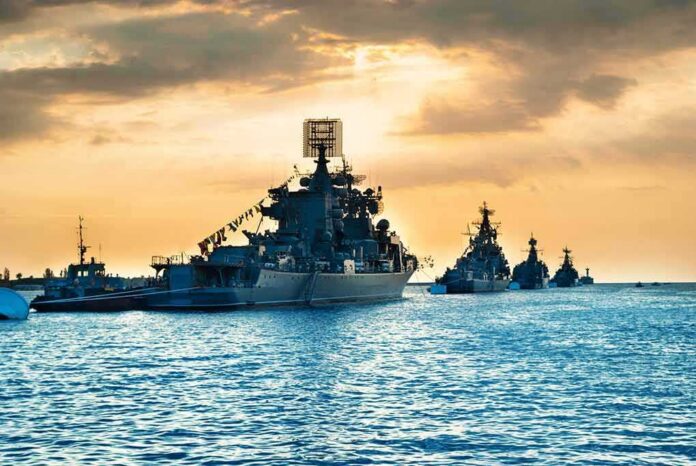
U.S. forces have now sunk at least five boats in the Eastern Pacific in under two weeks, killing crew members on vessels the military says refueled drug-smuggling boats for an Ecuadorian gang.
Quick Take
- U.S. Southern Command destroyed another vessel on September 8, 2026, calling it a “floating refueling station” for drug traffickers.
- The military says intelligence tied the boat to Los Choneros, a violent Ecuadorian crime group.
- This marks roughly the fifth such strike in the Eastern Pacific since late August, part of a pattern stretching back further.
- Ecuador’s government has publicly backed the operations as joint anti-drug work with Washington.
- Legal experts outside the administration have questioned whether military strikes on suspected traffickers follow international law.
Another Boat Sunk in the Pacific
On September 8, 2026, forces under U.S. Southern Command struck a vessel in the Eastern Pacific Ocean. The command said the boat worked as a floating refueling station, helping smaller boats carry drugs toward the United States. Officials said intelligence confirmed the vessel’s ties to Los Choneros, an Ecuadorian crime network. It was the latest in a fast-moving string of similar operations.
General Francis L. Donovan, who leads U.S. Southern Command, has directed several of these missions personally. The command says each strike happens “in coordination and collaboration with the Government of Ecuador,” a phrase repeated in nearly identical press releases dated September 2, September 3, September 5, and September 7. The military calls this campaign part of Joint Task Force Western Hemisphere, or JTF-WHEM.
A Pattern That Started Weeks Earlier
The September 8 strike was not an isolated event. Southern Command reported a nearly identical operation on August 28, then again on September 2 and September 3. By September 5, the command said it had hit a “multi-vessel” refueling operation, destroying several boats at once and describing it as the fourth interdiction of its kind in the region. Ecuador’s government confirmed three of its vessels were sunk that week alone.
News outlets covering the strikes, including the New York Times, have noted the pace of these operations has picked up sharply. The Times reported the U.S. military has carried out 68 attacks on suspected drug boats in the wider region since this campaign began, with 227 people killed, based on its own tracking. Southern Command has not disputed those figures publicly.
Ecuador Backs the Joint Operation
Ecuador’s government said Friday, September 5, that it supports the strikes as part of a joint investigation with Washington targeting drug trafficking networks operating off its coast. That public backing matters because several of the destroyed boats flew Ecuadorian registration, and cooperation from Quito gives the U.S. military a legal foothold it would otherwise need to establish through other means.
Los Choneros, the gang named in the strikes, is one of Ecuador’s most violent criminal organizations. The group has been linked to prison riots, assassinations, and control over cocaine shipment routes leaving the country’s Pacific ports. U.S. officials have treated the group as a priority target, with one social media report noting the U.S. classified Los Choneros as a terrorist organization just days before one of the sinkings.
Questions Remain Over Legal Limits
Not every legal expert agrees these strikes fit within established rules. Writing in the American Journal of International Law, legal scholars not connected to the Trump administration concluded the United States is not in an armed conflict with cartels, and argued there is no clear legal basis for killing everyone aboard targeted boats. That view sits alongside a decades-old maritime interdiction system built mainly on boarding, searching, and arresting suspects rather than destroying vessels outright.
The debate echoes a broader tension many Americans feel about how far executive power should reach without more public accounting. Supporters of the strikes say they stop drugs before they reach U.S. shores. Critics, including some legal scholars, say the public still has no way to independently check the intelligence behind each targeting decision before the evidence goes down with the boat.
Sources:
abcnews.com, southcom.mil, breitbart.com, aljazeera.com, nytimes.com