
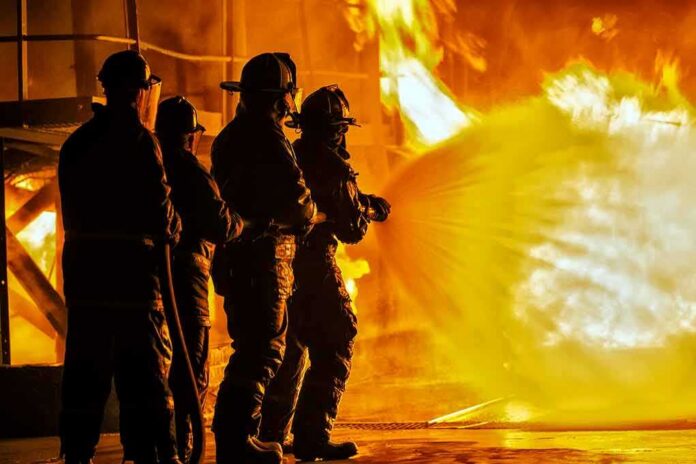
Television footage showed tall flames and black smoke rising near MetLife Stadium as police and firefighters rushed in during the Jets-Bills game day.
Story Snapshot
- Local news video showed a large fire outside MetLife Stadium with active emergency response.
- Independent coverage also reported a game-day blaze near the venue.
- The Jets hosted the Bills at MetLife Stadium on November 15, 2026.
- The exact cause, precise location, and impact on fans have not been stated.
What Happened Outside the Stadium
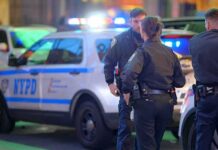
Local television reports showed a large fire burning outside MetLife Stadium in East Rutherford, New Jersey, with visible flames and thick black smoke. Cameras captured emergency crews moving toward the scene near parking areas as sirens sounded. The reports described an active police and fire response, but did not give names of responding agencies. The video was recorded on the same day the New York Jets played the Buffalo Bills, linking the timing to the Week 10 home game window.
MetLife Stadium’s events listing confirms the Jets-Bills matchup on November 15, 2026, at the venue’s address in East Rutherford. That schedule verifies the game-day setting that framed the fire coverage, which unfolded around the stadium complex after the game window. The stadium pages do not include an incident write-up or official summary about the fire itself. The event listing supports the date and place but stops short of confirming any operational impact.
What We Know and What Is Still Unclear
The available reports state that the fire was outside or near the stadium and show smoke close to parking zones. They do not identify a specific parking lot, street, vehicle, tent, or structure where the fire started. The footage does not establish whether smoke entered the seating bowl or caused delays. The news segments also do not report injuries, evacuations, arrests, or measured damage. Officials did not offer an on-camera cause during the early coverage.
The New York Jets’ parking guidance highlights safety rules that often apply to game days with tailgating. The policy discusses hot-coal disposal, restrictions on open flames, and past car and trash fires. That context shows why stadium operators plan for small but risky incidents in large lots. It does not prove this fire involved grills, coals, or a vehicle, and it should not be read as a finding on cause or fault in this case.
Why Large-Venue Parking Fires Are Hard to Handle
Fire-service training warns that a parking-lot fire at a major venue is never routine when tens of thousands of people are nearby. Crews must locate the exact spot fast while navigating crowds, barricades, and closed lanes. Best practice calls for pre-event surveys, clear wayfinding, and close coordination with stadium staff to keep access routes open. Those steps help responders reach the fire quickly and reduce panic or bottlenecks around the scene.
MetLife Stadium fire: What happened after Bills-Jets game? https://t.co/uWHaQn4B99
📸 Kirby Lee, IMAGN IMAGES via Reuters Connect pic.twitter.com/tvg3PGl4U3
— For The Win (@ForTheWin) November 16, 2026
Emergency planning guides urge clear, simple directions to dispatchers and repeated, plain-language alerts if needed. At large events, staff and vendors need backup communication tools in case one channel fails. These measures help responders and venue teams act in sync when smoke is visible and crowds react. The guidance is basic, yet it often decides whether a “routine” incident stays small or spreads into a safety risk for many people.
Sources:
nypost.com, newyorkjets.com, metlifestadium.com, uh.edu, pmc.ncbi.nlm.nih.gov