
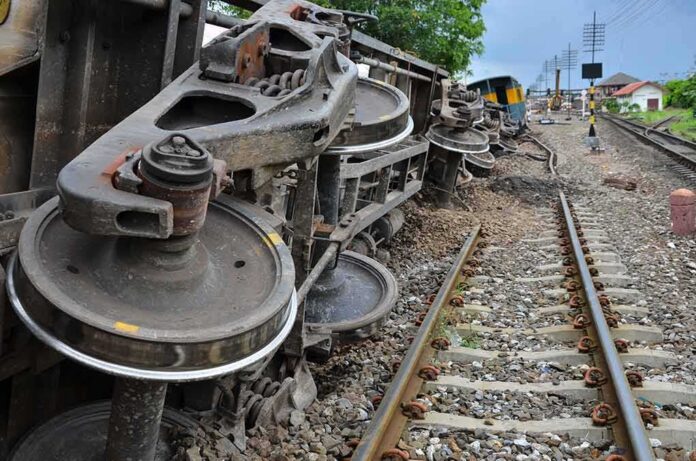
Seven people were killed and more than 100 were hurt when one Egyptian passenger train slammed into the back of another south of Cairo, renewing fears about basic rail safety in a country where deadly crashes keep happening.
Story Highlights
- Officials reported seven deaths and over 100 injuries after a rear-end train collision near Cairo.
- Prosecutors opened an investigation; emergency crews cleared wreckage to restore service.
- The crash happened in Giza’s al-Ayyat district, a corridor with a grim rail history.
- Early injury counts varied slightly as agencies updated figures.
What Happened in Giza’s al-Ayyat District
Egyptian authorities said a train traveling from Giza to Fayoum struck the rear carriage of a Cairo-to-Aswan passenger train that had stopped on the same track in the al-Ayyat district of Giza province, about 52 kilometers south of Cairo. The impact killed seven people and injured more than 100, according to official tallies reported by multiple outlets. The conductor of the Giza-to-Fayoum train was among the dead, underscoring the force of the collision and the danger to both riders and crew on that line.
The Health Ministry and the Chief Prosecutor’s office gave slightly different injury totals in early updates, with counts clustering a little above one hundred, which is common in the first hours after a mass-casualty event. Independent reports by major international outlets also cited seven deaths and more than 100 injuries, showing broad agreement on the scale of harm. Officials did not name a cause. Reported details focus on the rear-end impact and the fact that the struck train had stopped on the track.
Emergency Response and the Official Probe
Prosecutors announced an investigation and sent investigators to the crash site to inspect the trains and interview witnesses. Railway officials deployed emergency teams and heavy cranes to move damaged carriages and reopen the line for service as soon as conditions allowed. Hospitals in the region received the injured as crews worked along the right-of-way. Such steps are standard in Egypt after major rail incidents, when authorities must both treat victims and stabilize a vital transport route for commuters and long-distance travelers.
The investigation will likely examine signaling records, dispatch orders, train speeds, braking data, crew duty logs, and radio calls to confirm why the Cairo-to-Aswan service was stopped and how the following train entered the same block. Officials have not released those technical records. Until investigators finish, agencies are describing the sequence but not assigning fault. That restraint is normal in rail crashes, where small errors in timing or equipment can have outsized effects.
Why This Corridor Keeps Drawing Attention
Al-Ayyat stands out because Egypt has suffered repeated, deadly rail disasters in this area over the past two decades. International coverage referenced those past events to frame the current tragedy and highlight long-running safety concerns across the rail network. The pattern fuels public worry that basic safeguards—signaling integrity, communication discipline, maintenance, and training—are not keeping pace with the pressure on national rail service to move people affordably and on time across long distances.
Egypt’s railways carry millions who depend on low-cost travel to reach work, family, and medical care. When crashes occur, the human toll is immediate, and the economic hit spreads as lines close and freight or workers are delayed. That is why people across political lines see transport safety as a test of whether leaders can deliver on simple, core functions of government. Keeping trains spaced, signals working, and operators informed should not be out of reach in any nation in 2026.
What This Means Beyond Egypt
For Americans watching from afar, the story is a reminder that basic infrastructure decisions matter. Clear rules, steady maintenance, and modern systems prevent the kind of rear-end crash seen here. In the United States, debates over spending often pit flashy projects against routine safety upgrades. The lesson from Egypt’s tragedy is plain: small failures in signals, staffing, or oversight can add up to mass injury in seconds. Voters everywhere expect better than preventable disasters.
Seven Killed in Egypt Train Collision as Prosecutors Investigatehttps://t.co/k8ORFolRAo pic.twitter.com/jIGVKLNBMR
— Fish 4 News (@Fish4NewsUK) November 8, 2026
Officials in Egypt must now answer the hardest questions: why two passenger trains ended up in the same space, why the following train did not stop in time, and what fixes will ensure this does not happen again. Families who lost loved ones, and more than a hundred people now facing recovery, deserve a full, public accounting. The facts reported so far are clear on the human cost. The next step is whether the system changes before the next rush-hour crowd lines up at the platform.
Sources:
youtube.com, abcnews.com, bbc.com, thefacts.com, cbsnews.com, nvdaily.com