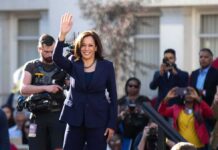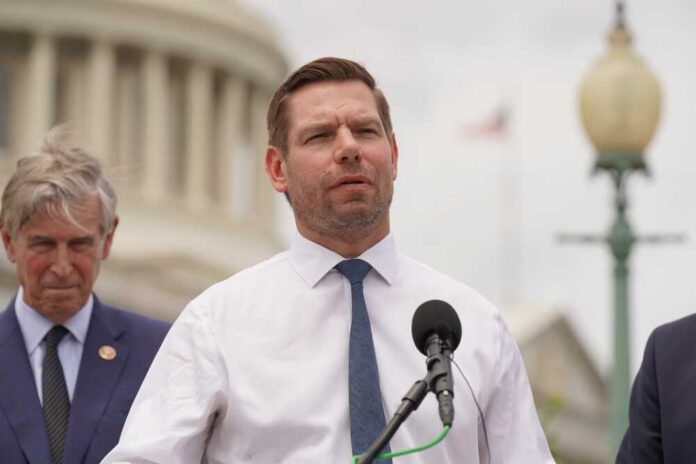
A leading Democrat’s California governor bid unraveled in hours after sexual-assault allegations triggered a rapid, party-wide stampede for the exits.
Story Snapshot
- Rep. Eric Swalwell denied sexual-assault allegations reported by the San Francisco Chronicle, but key Democratic backers began withdrawing support almost immediately.
- U.S. Sen. Adam Schiff, major labor groups, and Swalwell’s campaign chair publicly distanced themselves as pressure mounted for him to leave the race.
- ActBlue froze donations to Swalwell’s campaign, a significant blow to any modern Democratic statewide run in California.
- California’s “top-two” primary system raises the stakes: a chaotic Democratic field can open a lane for a Republican to reach the general election.
Allegations land, and Democratic support collapses fast
Rep. Eric Swalwell’s run to succeed outgoing Gov. Gavin Newsom hit a wall on Friday, April 11, after reporting described two alleged sexual assaults—one said to have occurred in 2019 when the accuser worked for Swalwell, and another alleged incident in 2024 after a charity gala. Swalwell flatly denied the claims and said he would fight them. Within hours, endorsements and institutional support began falling away, weakening the campaign’s basic operating structure.
The speed of the collapse matters as much as the allegations themselves. Supporters didn’t simply “pause” and wait for a slow-moving investigation cycle; prominent Democrats publicly called for Swalwell to step aside and argued that accountability required removing the campaign from the center of the story. That rapid retreat suggests party leaders believed the political cost of standing by was higher than the cost of cutting ties—even before any formal legal finding was reported.
Key Democratic figures break ranks and demand an exit
U.S. Sen. Adam Schiff, once a prominent endorser, withdrew his backing and signaled that Swalwell should leave the race. Gov. Newsom called the allegations “deeply troubling” and said they must be taken seriously, while former Speaker Nancy Pelosi suggested any investigation should happen “outside of a gubernatorial campaign.” Swalwell’s campaign chair, Rep. Jimmy Gomez, ended his role and urged withdrawal, framing continued candidacy as a barrier to “full accountability.”
Those reactions also reveal a familiar pattern in modern politics: party gatekeepers move quickly when a scandal threatens brand damage, coalition relationships, and turnout. For voters already cynical about “the system,” the episode can read two ways at once—either as overdue seriousness about misconduct claims or as a hard-nosed, self-protective machine response.
ActBlue freeze and labor pullback hit the campaign’s lifeblood
Beyond public statements, the more consequential step was operational: ActBlue froze donations to Swalwell’s campaign, cutting off a central pipeline for small-dollar fundraising in Democratic politics. Major labor organizations also suspended support, including groups representing public-sector and education workers. An independent expenditure group reportedly halted campaign activity as well. Taken together, those decisions create a practical problem: even if a candidate refuses to quit, a campaign can be functionally immobilized by money and manpower constraints.
For conservatives who have watched political institutions enforce rules selectively, the institutional nature of this response will stand out. ActBlue’s action in particular shows how modern campaigns rely on centralized infrastructure that can quickly switch from accelerator to brake. For liberals, the episode tests the promise of post-#MeToo accountability. Either way, the hard fact remains: when funding channels freeze and core endorsers step away, a statewide campaign’s viability shrinks dramatically.
Why California’s top-two primary makes the fallout bigger than one candidate
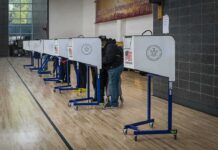
California’s top-two primary system sends the two highest vote-getters to the general election regardless of party. That design can punish a party that spreads votes across too many candidates, especially when one contender implodes late and reshuffles loyalties. Reporting described Democratic leaders as worried about a crowded, “messy” primary and the risk that internal fragmentation could change who advances. Mail ballots are scheduled to go out next month ahead of the June 2 election, limiting time for a clean reset.
DEMOCRAT DISASTER! Eric Swalwell Abandoned by Every Endorser — Could California Flip for the First Time in Decades? https://t.co/4CvKJa33nF #gatewaypundit via @gatewaypundit
— Don Hum (@DonHum3) April 12, 2026
The question of whether California could “flip” cannot be answered from the provided reporting because it does not assess the strength of Republican contenders or the likely top-two math after Swalwell’s collapse. What can be said, based on the documented mechanics and timing, is that sudden candidate failure in a crowded field increases uncertainty—exactly when voters are about to start receiving ballots. Swalwell posted his update today and as of the latest reports, he had withdrawn.