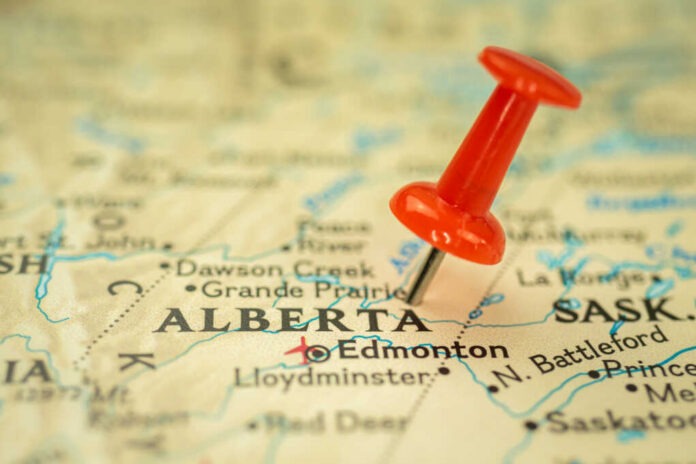
As oil-rich Alberta barrels toward an October vote on whether to start a legal path to leaving Canada, many see a familiar warning for Americans: when distant elites ignore economic pain, regions start looking for the exit.
Story Snapshot
- Alberta will hold an October 19, 2026 referendum asking whether to begin the legal process toward a binding vote on separating from Canada.
- Separatists claim over 300,000 petition signatures, but courts, treaty rights, and rival petitions challenge any claim of a clear mandate.
- Canadian law makes unilateral independence effectively impossible, turning the vote into a pressure tactic rather than a guaranteed path to nationhood.
- Economic grievances, energy policy fights, and deep distrust of federal elites mirror frustrations many Americans feel with Washington.
What Albertans Will Actually Vote On This Fall
Elections Alberta, the independent provincial elections agency, has formally scheduled a referendum for October 19, 2026, alongside provincial voting. The independence item on that ballot does not directly ask whether Alberta should leave Canada; instead, it asks if the province should commence the legal process, under the Canadian Constitution, to hold a future binding referendum on separation.[2] That structure turns the vote into a political signal about dissatisfaction rather than an immediate green light for breaking up the country.
Premier Danielle Smith has publicly framed the referendum as a way to “give Albertans a say” and to guide her government’s strategy, not as a direct declaration of independence.[3] Global and Canadian outlets report that provincial officials present the question as step one in a long legal and political journey, while Prime Minister Mark Carney has responded by insisting Alberta is “essential” to Canada and warning against using secession threats as bargaining leverage.[3] The wording reflects that both sides know the vote itself has symbolic power but limited legal force.
Why Separation Is Legally So Hard Under Canadian Law
Canadian constitutional experts stress that Alberta cannot lawfully declare independence on its own, even with a strong “yes” vote.[1] The Supreme Court of Canada’s 1998 Reference re Secession of Quebec, later codified in the federal Clarity Act, says a clear majority on a clear question would only obligate Ottawa and the provinces to negotiate in good faith; it would not make Alberta independent by itself.[1][2] Any actual breakaway would require constitutional amendment, meaning every province and the federal government would get a say.
International law also cuts against a clean separation. Legal analysis notes that secession is normally allowed only for colonized peoples or communities under foreign domination or denied basic self-determination, categories Alberta clearly does not meet.[1] Policy Options and academic commentary emphasize that Albertans enjoy full political rights and representation, so international law offers no automatic “right to leave.”[1][2] That leaves independence proponents facing a long, uncertain negotiation process where Ottawa holds many of the legal cards and can insist on protecting minority and Indigenous rights.
Petitions, Courts, and the Fight Over Democratic Legitimacy
The group Stay Free Alberta says it gathered roughly 301,620 signatures to force an independence question and argues that this shows broad public backing for a referendum.[1][3] However, news reports indicate that Elections Alberta has not fully verified those signatures, in part because a court challenge halted certification.[1][3] A rival “Alberta Forever Canada” petition reportedly surpassed 400,000 verified signatures in favor of staying in Canada, undercutting separatist claims of a one-sided grassroots uprising.[1] Polling cited by Politico shows about two-thirds of Albertans oppose even holding a separatist referendum.[3]
An Alberta court ruling has already complicated the process by finding that the earlier petition framework violated constitutional obligations to consult First Nations whose treaty rights could be affected by any separation.[4] Indigenous leaders argue that breaking up Canada without their consent would breach historic treaties, and constitutional scholars note the Supreme Court has said Indigenous peoples must be part of any secession negotiations.[1][4] This means even a strong “yes” result in October would collide with unresolved legal duties toward Treaty 6, Treaty 7, and Treaty 8 communities, giving opponents powerful tools to slow or reshape the process.
Economic Grievances, Energy Politics, and Why Americans Should Care
The Alberta movement draws much of its energy from familiar complaints: anger at federal energy regulations, resentment over fiscal transfers to poorer provinces, and a belief that urban, Eastern elites are getting rich while oil workers and rural families pay the price.[1][3] Commentators link the push partly to the influence of former President Donald Trump’s “drain the swamp” rhetoric, which resonated with Albertans who see Ottawa as hostile to their industry and culture.[1] Many supporters argue that an independent Alberta could cut red tape, expand pipelines, and keep more resource wealth at home.
In October, Albertans will be asked whether they want to remain in Canada or have the Alberta government commence the legal process required to hold a binding secession referendum.
The Sunday Strategy Session with Tom Mulcair, Jason Hatcher and Scott Reid weigh in. pic.twitter.com/vJJsXT80pp
— CTV Question Period (@ctvqp) May 24, 2026
Opponents warn that separation would trigger massive uncertainty over trade, currency, borders, and investment, potentially hitting the same working families already squeezed by inflation and high energy costs.[1][2] Policy analysts underscore that energy companies and capital markets usually shy away from constitutional chaos, not toward it.[1][2] For Americans, Alberta’s story functions as a case study in what happens when citizens feel federal systems are rigged: rather than fixing broken policies, political classes on all sides gamble with the basic stability of the country.
Deeper Lessons About Elites, Referendums, and Distrust
Canada’s rules make one thing clear: a referendum is a loud political message, not a magic key to independence.[1][2] Yet the very fact that Alberta’s government is putting a separation-related question on the ballot shows how far distrust of federal institutions has spread in a prosperous, energy-rich province. The fight now is less about immediate borders and more about who gets heard—central governments, courts, Indigenous nations, or frustrated taxpayers—when economic and cultural grievances go unanswered for too long.
Sources:
[1] Web – Alberta pushes for independence: Separatists hope to hold a …
[3] Web – Alberta separatist group says it has enough signatures to … – …
[4] YouTube – Alberta failed to set up referendum process “correctly,” expert says