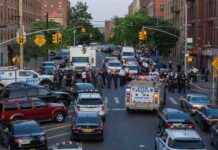
Gunfire-like bursts sent reporters scrambling outside the White House, reviving security fears and media confusion as investigators worked to separate fact from panic.
Story Snapshot
- Reporters captured “apparent gunshots” near the White House during a live broadcast, triggering a rapid security response [2].
- The United States Secret Service said it was investigating a shooting incident near a screening area and that all protectees were safe.
- Confusion grew as early reports risked mixing details from a prior April security incident with the latest event [2].
- Authorities had not publicly confirmed forensic proof of gunfire, underscoring the gap between live impressions and verified facts [2].
Live Broadcast Captures Sudden Chaos Outside White House
ABC News’ on-scene reporting described “apparent gunshots” during a live standup near the White House, prompting immediate movement and cover-seeking by media and staff as security locked down the area [2]. Reporters were told to run as the bursts echoed, and the scene shifted quickly from routine coverage to an unfolding security scare [2]. Initial descriptions emphasized what witnesses believed they heard, not laboratory-confirmed gunfire, setting the tone for a tense but information-thin first hour [2].
The moment resonated because similar sounds during past Washington incidents have proven real, including an April shooting near the main screening area connected to the White House Correspondents’ Dinner, when law enforcement raced toward a suspect and an officer’s bullet-resistant gear absorbed a shot [3]. That precedent raised public sensitivity and made rapid interpretation more likely when loud reports were heard again near the White House grounds.
Secret Service Confirms Investigation, Says Protectees Safe
The United States Secret Service stated it was investigating a shooting incident near a primary magnetometer screening area and affirmed that the president, the first lady, and all protectees were safe. The language confirmed a real security response without declaring the sounds to be definitively gunfire in the forensic sense, a common pattern in early public safety briefings. Coordination with the Metropolitan Police Department followed normal protective protocols while investigators sought hard evidence to validate or correct initial impressions.
For conservative readers, the clarity matters: investigators acknowledged an incident worth probing, while declining to certify what the public heard as confirmed gunshots. That distinction is not wordplay; it is how responsible security agencies manage uncertain, high-stakes moments. The Trump administration’s protectees remained secure, the perimeter was controlled, and the investigation continued while the media cycle accelerated far faster than the lab work that ultimately settles questions of ammunition, shell casings, and trajectories [2].
Media Amplification, Event Conflation, and Public Understanding
Newsrooms and social platforms amplified the “gunshots near the White House” framing within minutes, even as officials offered only investigatory statements [2]. That speed created a risk of conflating the day’s events with the April security breach tied to the White House Correspondents’ Dinner, a separate episode already documented as gunfire near screening lanes [1]. When two similar stories sit close together on the calendar, audiences can absorb a blended narrative that blurs crucial distinctions in time, location, and confirmation level [2].
🚨 BREAKING: Multiple gunshots fired near the White House North Lawn
Reporters on scene report hearing around 30 shots. Secret Service immediately rushed press into the briefing room, locked down the complex, and deployed countersnipers on the roof.
In this video, ABC News…
— Natural Sense I Am (@NaturalSenseIAm) May 24, 2026
Responsible coverage demands keeping two truths in view: first, live witnesses genuinely heard alarming sounds and reacted prudently; second, the label “gunshots” remains provisional until evidence confirms it. Conservative readers expect competence, transparency, and order from federal security services. That means safeguarding protectees, releasing verifiable findings when ready, and resisting a media reflex that locks in the scariest headline before ballistics teams finish their work [2][3].
What Comes Next: Evidence, Transparency, and Accountability
Next steps should prioritize public confidence without compromising security. Investigators can release incident logs, dispatch timings, and non-sensitive findings once reviewed, clarifying whether shell casings, projectiles, or impact marks were recovered near the screening area [2]. If evidence substantiates gunfire, charges and motive become the public’s business; if not, authorities should explain the cause of the sounds. Either way, precision beats speculation, and timely disclosures prevent rumor mills from filling the vacuum [2].
For families and taxpayers who want safer streets and competent governance, these standards matter. The Trump administration’s security apparatus has the duty to defend the White House complex and communicate cleanly. Citizens deserve facts over spin, calm over chaos, and policies that deter violence instead of normalizing it. Protecting constitutional order includes hardening targets wisely, prosecuting criminals firmly, and correcting the record swiftly when early narratives outrun the evidence [2][3].
Sources:
[2] Web – Reporters told to run as gunshots heard near White House – 1News
[3] Web – White House Correspondents’ Association dinner shooting – WHYY