

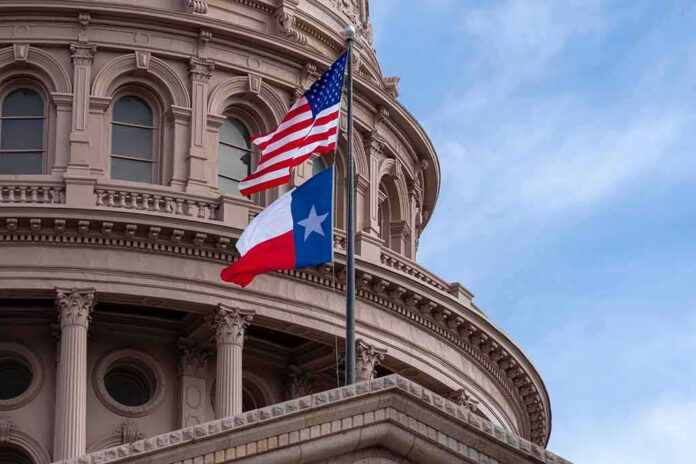
Texas Attorney General Ken Paxton quietly ended his push to bar the Council on American-Islamic Relations from operating in Texas, retreating after court setbacks and public blowback.
Story Snapshot
- Paxton’s office dropped a lawsuit that sought to block the Council on American-Islamic Relations from operating in Texas.
- The move follows recent legal defeats for Paxton in high-profile First Amendment cases.
- Advocacy groups say the federal government has never labeled the group a terrorist organization.
- The decision underscores rising concern about government power used against political or religious speech.
Texas Withdraws Case Against Muslim Civil Rights Group
Texas Attorney General Ken Paxton’s office ended a lawsuit that aimed to bar the Council on American-Islamic Relations from doing business in Texas, according to local reporting. The case had argued the group was tied to extremist networks, a claim the organization has long denied. The group described the Texas action as punishment for its public positions during the Gaza war. Civil rights advocates framed the withdrawal as a First Amendment win for Texas Muslims and their allies.
Florida separately labeled the group a domestic terrorist organization earlier this month, prompting the organization to suspend its Florida operations while it fought the designation. The group rejected the claim and said it works to defend civil rights and empower American Muslims. Supporters pointed out that the federal government has not put the organization on any terrorist list. These cross-state fights show how fast labels can be used to shut down advocacy groups.
Recent Court Rulings Shift the Legal Terrain for Paxton
This retreat came on the heels of a major federal court order that blocked Paxton’s separate lawsuit against ActBlue, a Democratic fundraising platform. A United States District Court judge in Massachusetts issued a preliminary injunction, finding ActBlue was likely to succeed on its First Amendment claims and that Paxton’s action risked chilling political speech. The order barred Texas from continuing the state case or bringing new claims based on the same conduct while the case proceeds.
Paxton had sued ActBlue in Texas state court under the Texas Deceptive Trade Practices Act, saying the platform misled users about donation safeguards. The federal judge’s injunction did not decide the merits of the Texas claims, but it limited Paxton’s ability to enforce them during the case. Paxton appealed that order, which keeps the constitutional fight active on a separate track. The pause signals courts are watching closely when state power touches core political activity.
Why This Matters for Free Speech and Equal Treatment
State efforts to restrict a civil rights group’s operations or to curtail a political fundraising platform both hit the same nerve: speech and association. When a state names a private group as linked to extremism, it can chill donors, partners, and venues. When a state targets a platform central to small-dollar political giving, it can chill political participation. Courts often treat both areas as high-risk for government overreach, which helps explain the strong injunction in the fundraising dispute.
Americans across the spectrum worry that elites in government use labels and lawsuits to control debate rather than solve problems. Conservatives see selective enforcement and culture-war favoritism. Liberals see crackdowns on dissent and religious minorities. The core complaint is the same: the government picks winners and losers, while regular people pay the price. Texas dropping the case against the Muslim civil rights group, and the federal court halting the ActBlue suit, both reflect that shared concern finding traction in courtrooms.
Sources:
actblue.com, jurist.org, courthousenews.com, wfaa.com, texasattorneygeneral.gov, blackbeltnewsnetwork.com