

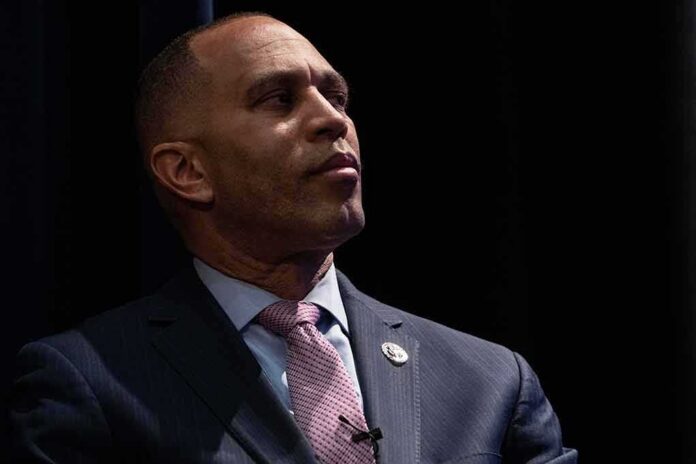
House Democrats vaulted Hakeem Jeffries toward a historic speakership with a 251-11 caucus vote that now puts the full House on the clock.
Story Snapshot
- Democrats nominated Hakeem Jeffries for Speaker in a 251-11 closed-door vote.
- Jeffries would be the first Black Speaker if elected by the full House.
- Jeffries pledged a focus on affordability, accountability, and results.
- The caucus nomination is separate from the formal House floor election.
Democrats Deliver a Lopsided Nomination for Jeffries
House Democrats selected Hakeem Jeffries as their Speaker nominee in a secret-ballot caucus vote reported as 251-11. The tally shows strong support inside the party but also notes a small bloc of dissent. The vote happened behind closed doors, as is common for party leadership choices. The decision sets up the next step: a public roll-call vote when the new House convenes. That formal election, not the caucus result, decides who holds the gavel.
Jeffries framed the moment as a promise to focus on daily costs and good governance. In a public statement, he called the nomination “a high honor and a distinct privilege” and said Democrats are committed to “affordability and accountability.” He also pointed to teamwork, naming Katherine Clark for Majority Leader and Pete Aguilar for Majority Whip as part of a coordinated leadership slate. The message aimed to tie party unity to a results-first agenda.
Historic First, With Work Still Ahead on the House Floor
If elected by the full chamber, Jeffries would be the first Black Speaker in United States history. That milestone is real and widely recognized. Still, the caucus victory does not alone deliver the speakership. The full House must vote in public when the next Congress opens. That vote is a separate step with its own pressure points and potential defections, as recent Speaker elections have shown across both parties.
Congressional procedure makes the distinction clear. Each party first nominates a candidate in its internal meeting. Then the Clerk of the House oversees the official roll call on opening day. Members may vote for their party’s nominee, someone else, or vote present. The winner must secure a majority of members voting for a named candidate. That is why a party’s caucus result is important but not final on its own.
Dissent Inside the Caucus and What It Signals
The 11 no votes underscore that unity is strong but not complete. Progressive-aligned members and others have signaled they want sharper commitments on policy and process. Public comments from outside groups and some members pressed leadership for bolder changes. Their stance highlights a broader trend in modern Speaker races: even large caucus wins can give way to tense floor votes where small groups hold leverage in a closely divided chamber.
Democrats nominated Hakeem Jeffries to lead them in the next Congress, putting him on the precipice of becoming the nation's first Black House speaker. https://t.co/ETCmnYuLiY
— The Buffalo News (@TheBuffaloNews) November 19, 2026
For voters, the stakes come down to cost of living, basic services, and accountability. Families facing high prices want Congress to stop the drama and deliver steady work on budgets, energy, and border enforcement. Workers and small businesses want a plan that grows paychecks and reduces red tape. Many on both the left and right say Washington’s insiders protect their own power first. Clear floor votes and concrete bills will be the test of whether this leadership can break that pattern.
How Today’s Vote Fits a Larger Pattern
House history shows these steps follow a normal path. Parties nominate inside their caucus. Then the full House elects a Speaker by public roll call. That second step is where past contests sometimes broke from party lines. From recent Congresses, it is common to see a handful of defections or protests on the floor. The process is designed that way: public votes, clear tallies, and visible accountability for each elected member.
What to Watch Next
Watch for whether Democratic holdouts receive policy commitments on spending, ethics, or rules changes. Look for how Republicans respond in the minority and whether they coordinate floor tactics to force multiple ballots. Track whether Jeffries’s affordability and accountability themes appear in early bills, committee priorities, and budget outlines. Those choices will tell voters if this leadership aims to cut through gridlock or repeat the same closed-door deals that fuel public distrust.
Sources:
youtube.com, yahoo.com, nbcnews.com, washingtontimes.com, congress.gov