
New York City lawmakers advanced a bill to bar a key police unit from most protest duty while ordering new public reporting on how demonstrations are policed.
Story Snapshot
- The bill would block the Strategic Response Group from First Amendment events and limit crowd-control tactics.
- Supporters say 26 Council members back the measure and that it adds quarterly transparency reports.
- The New York Police Department describes the unit as a critical asset for protests and major events.
- City policy still allows specialized units at protests when public safety requires it.
What the Proposed Law Would Do
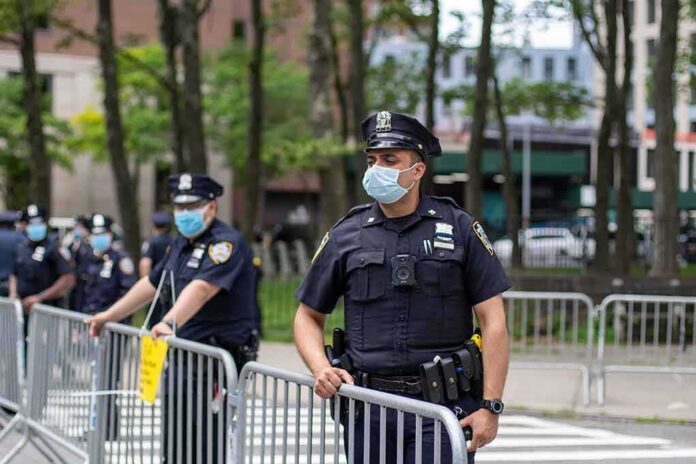
Introduction 0796-2026 would prohibit deploying the New York Police Department’s Strategic Response Group to gatherings with First Amendment activity. The bill would also generally bar the unit from crowd control, restrict tactics like kettling and indiscriminate chemical spray, and require quarterly public reports on deployments and related data. The text aims to draw a clear line between peaceful expression and high-intensity responses often linked to protest clashes, while creating a regular record for public review.
The New York Civil Liberties Union says a majority bloc in the City Council supports the measure. The group reports 26 cosponsors and frames the bill, called the Communities United to Reject Brutality Act, as ending Strategic Response Group use at protests and adding ongoing oversight. The advocacy push ties the measure to past complaints about crowd containment and mass enforcement during large marches, especially in 2020, though those accounts are not paired here with case-level findings.
Why the Unit Matters to Police Leaders
The New York Police Department’s own description presents the Strategic Response Group as a citywide tool for major events, protests, civil disorder, and crime surges. The department calls the unit a critical asset with trained personnel and specialized gear that can move quickly as conditions shift. The unit’s mission also spans responses to shootings and other serious incidents, which supporters argue makes it important during fast-moving protests that may turn unsafe.
City Hall’s protest-response framework, created after 2020 litigation, outlines a tiered approach that can include specialized units when needed. The policy allows positioning such units near a protest if illegal activity is expected or key sites may be blocked. It permits deployment once there is probable cause that crimes occurred and envisions ending a protest if crimes become widespread and targeted steps fail. This model codifies when higher-force options may enter the scene.
Supporters’ Case and Unanswered Questions
Backers of the bill argue that certain tactics harm peaceful protesters along with people breaking the law. They target kettling, tear gas, and broad use of pepper spray, and they cite past lawsuits and complaints tied to the Strategic Response Group during the 2020 Black Lives Matter protests. Reporting notes that aggressive tactics led at times to litigation, but the available record here does not identify specific cases, court findings, or how often misconduct was proven versus alleged.
The bill’s reporting rules seek to fix that evidence gap over time. Quarterly public reports on deployments and misconduct complaints could let the public track when and where the unit is used, which tactics appear most often, and how the department responds to grievances. That data could support better debates on outcomes like injuries, arrests, and property damage. For now, the research provided does not include a New York Police Department impact study or before-and-after safety metrics.
Operational Risks and Political Crosscurrents
Opponents warn that removing the Strategic Response Group from protest duty could strain patrol officers during large, tense events. They point to recent records showing the unit handled dozens of protest-linked deployments this year across the boroughs, reflecting a steady role in public-order work. Critics in the Council also argue that banning one unit’s name will not fix tactics if the department can rebuild the same function under another label the next day.
The politics are sharp inside City Hall. One report describes a dispute over whether committee leaders are slowing a hearing on the bill. That clash adds to the sense that public-safety policy is shaped as much by factional fights as by clear data. Voters across the spectrum see a pattern here: leaders trade press hits while core services wobble. That loss of trust fuels anger on the right and left about a distant, unaccountable government class.
What to Watch Next
Watch for the committee calendar, amendments that define exceptions for violent situations, and the first version of any public deployment report. Look for specifics on how officers will handle mixed events, where most people are peaceful but some commit crimes. Compare any new data against the city’s tiered protest policy to see if results match the promise of targeted, proportionate steps that protect free speech and public safety at the same time.
Sources:
thegatewaypundit.com, nyclu.org, cityandstateny.com, 50-a.org