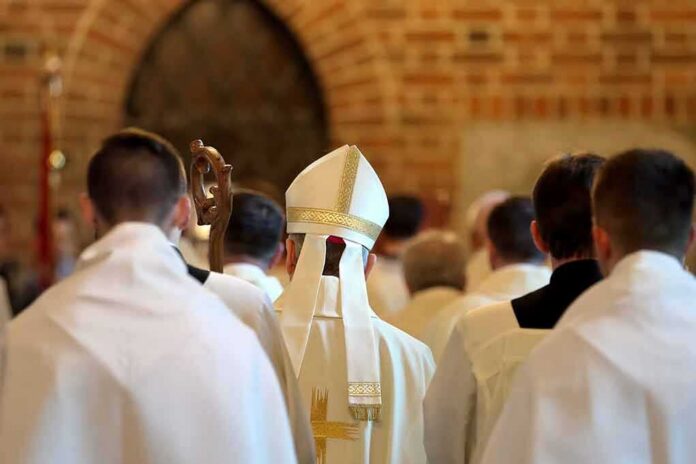
Pope Leo XIV approved a new Catholic bishop in mainland China under the still-secret Vatican–China agreement, signaling that the deal remains active and central to church life there.
Story Snapshot
- The Vatican–China pact on bishops remains in force and was extended to four years in 2024.
- The Vatican says the deal is pastoral and aims to unify Catholics and regularize bishop appointments.
- Human Rights Watch urged Pope Leo XIV to review the agreement over ongoing abuses.
- Analysts say longer renewal suggests rising trust between Rome and Beijing.
What Happened: A New Bishop Approved Under the Pact
Pope Leo XIV approved the appointment of a new bishop for the Catholic Church in China as part of the agreement first signed in 2018. The Holy See and China have kept the text confidential, but the pact covers how bishops are chosen and approved. Vatican statements have framed it as a pastoral tool to serve Catholics on the ground and to mend a split that ran for decades between underground and state-registered communities.
The Holy See renewed the pact for a third time in October 2024 and, for the first time, extended its duration to four years instead of two. That move showed both sides wanted more stability in the process for naming bishops. Coverage from church and secular outlets said the extension reflected practical cooperation, even as debate about costs and benefits continued among Catholics and rights groups.
Why It Matters: Unity, Control, and Everyday Worship
Vatican officials argue the agreement helps heal a long divide in China’s Catholic community by placing all bishops under papal authority. Reported outcomes since 2018 include papal approval rights over new bishops and steps to bring all existing bishops into full communion. Supporters say this reduces confusion for the faithful and helps ensure that each diocese has a lawful shepherd recognized by Rome and the state, lowering daily risks for worshipers and clergy.
Critics counter that secrecy can hide leverage by the state and mute pressure on abuses. Human Rights Watch asked Pope Leo XIV in 2025 to review the deal and press Beijing to end persecution of believers. The group argued that allowing the government a role in selecting church leaders can entrench control over religion. The Vatican has not published the text, which keeps outside scrutiny limited and fuels ongoing concern about transparency and accountability.
Big Picture: A Classic Vatican Diplomatic Trade-Off
Church–state agreements, often called concordats, have a long history. These deals aim to secure space for church life inside national legal systems, especially on sensitive issues like appointments and education. Legal and historical studies note that such pacts are often opaque from the outside. Defenders say ambiguity helps protect believers in tough places. Opponents say the same ambiguity can enable pressure by powerful states over religious practice.
Pope Leo approves a new bishop for China's FALSE "Catholic" Church under secret Vatican deal.
Communist China gets to appoint its own bishops but the SSPX is excommunicated for its consecrations.https://t.co/gTJ7NiiRQK pic.twitter.com/gCQnl63Kqi
— Sign of the Cross (@CatholicSOTC) July 22, 2026
In China’s case, analysts describe the latest renewal and the longer term as signs of greater trust, or at least working ties, between Rome and Beijing. Yet trust does not mean open conditions. The government still restricts faith activity, and the agreement’s text remains secret. That leaves Catholics worldwide split over whether the church gained needed access or traded away leverage. The facts show both progress on structure and real limits on freedom remain.
What to Watch Next: Local Appointments and Measurable Results
Future bishop appointments will test how well the pact works in practice. Key markers include whether local churches receive bishops in a timely way, whether Rome’s approval role holds firm, and whether harassment of clergy declines. If the agreement truly improves daily worship, we should see fewer vacant dioceses and less pressure on priests and lay leaders. If not, calls for a full review will likely grow louder across the Catholic spectrum.
Sources:
lifesitenews.com, thecatholicherald.com, chinaaid.org, hrw.org, vaticannews.va, persecution.org, reuters.com, catholicworldreport.com, cecc.gov